
Emergency General Contractor Near Me: What Enterprise Homeowners Should Do First
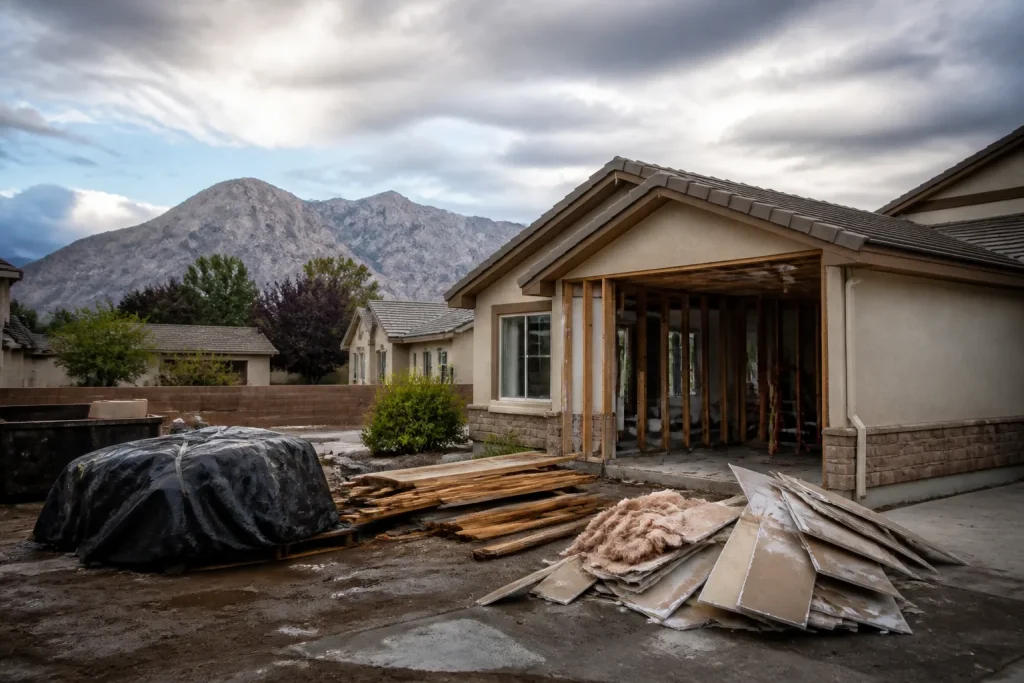
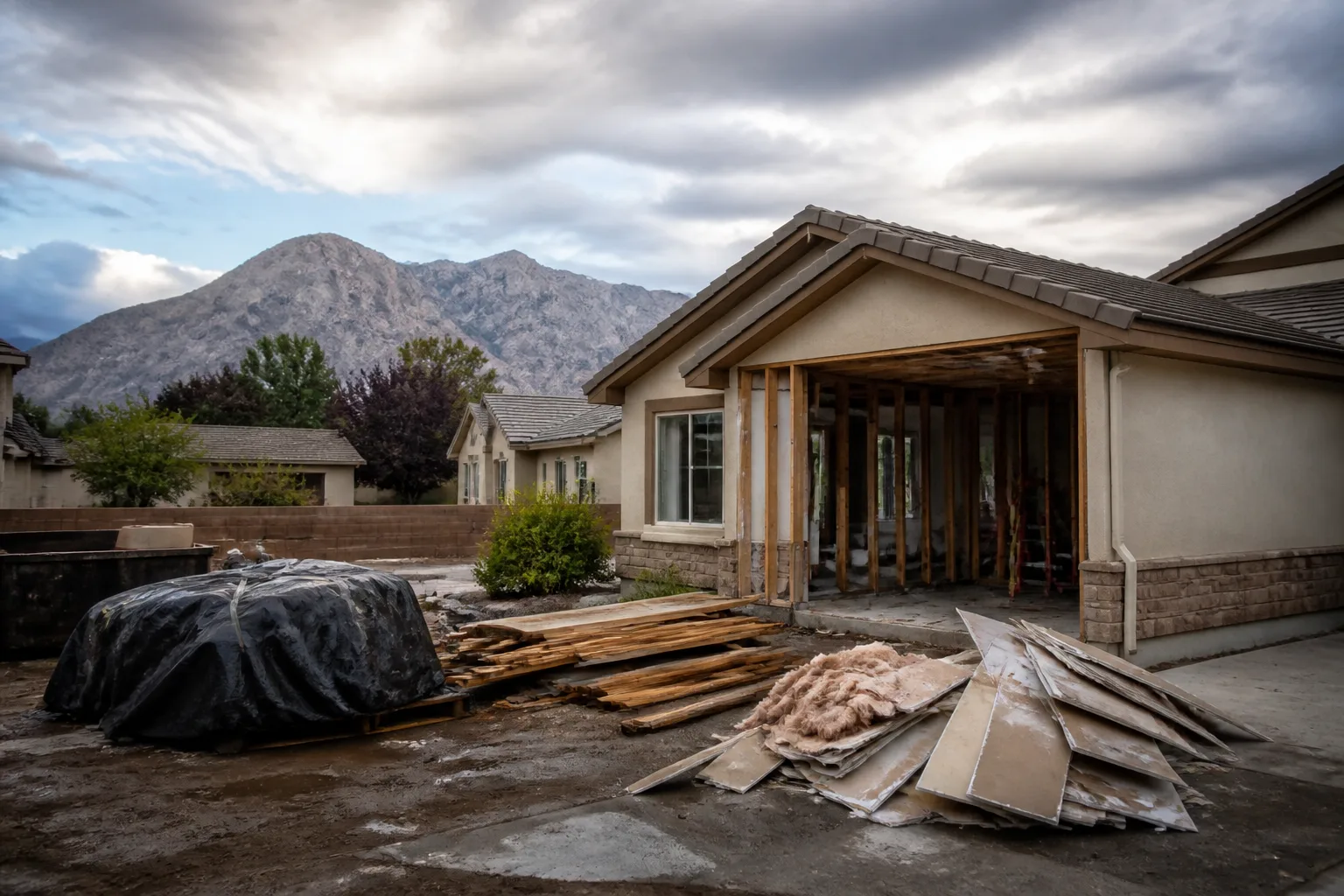
After a burst pipe or storm damage, the first contractor knocking on your door is often not the best choice. They’re the one monitoring emergency scanner traffic, arriving before you’ve had a moment to think. In a home emergency, the contractor you call second matters far less than the three decisions you make in the first 20 minutes. This guide gives Enterprise homeowners a clear action sequence that protects the home, the insurance claim, and your right to choose your own contractor.
If you’re reading this while water is still spreading, here’s the short version: shut off the source, document everything with your phone, and don’t sign anything at the door. When you’re ready to bring in help, call (844) 797-6157 and a live person will answer, day or night.
What Should You Do in the First 20 Minutes of a Home Emergency?
The first 20 minutes decide how much damage your Enterprise home takes and how smoothly your insurance claim goes. Work through this list in order, and don’t skip ahead to calling contractors until the source is controlled.
- Stop the water or power. For a burst pipe, find your main shutoff valve, usually where the supply enters the house or in a garage utility corner. For electrical damage or a flooded ceiling near a fixture, kill the breaker at the panel. If you can’t reach the panel safely, leave it and call your utility.
- Photograph before you touch anything. Wide shots of each affected room, then close-ups of the damage. Include a shot of a tape measure against the water line on drywall so the adjuster has scale.
- Film a slow walkthrough. A two-minute video with narration (“this is the hallway ceiling, water started at 6:40 p.m.”) is worth more to an adjuster than twenty stills.
- Move what you can save. Furniture off wet carpet, electronics out of the room, documents into a dry space. Pile damaged items where they are visible for the adjuster rather than hauling them to the curb.
- Write down the time and cause. A torn supply line under the sink reads differently in an insurance file than a failed water heater, and the adjuster will ask.
This is the sequence that protects you. Everything a contractor tells you in the next hour is secondary to having your own record of what happened.
Why You Shouldn’t Sign a Contractor’s “Authorization to Begin Work” at the Door
That clipboard at your front door is not a formality. An “authorization to begin work” form often assigns the contractor a claim on your insurance payout, commits you to their scope and price before you’ve compared anyone, and can include a lien or assignment-of-benefits clause buried in the fine print. Once signed, the contractor may be entitled to the insurance check for their chosen scope, and you’ve given up your leverage to negotiate. That is a real risk in Enterprise neighborhoods after a hail or wind event, when door-to-door crews move in fast.
Legitimate emergency contractors don’t need a signed authorization to stop active damage. What a legitimate contractor will do instead:
- Provide a written scope and price before any work beyond emergency stabilization starts.
- Accept a return call after you’ve had time to read the paperwork.
- Coordinate directly with your insurance adjuster at your request, not around you.
- Show a state license number you can verify yourself, in under three minutes (see below).
- Never pressure you on a timeline, and never tell you the price is “today only.”
The one thing worth signing at the door is an emergency mitigation authorization limited to stopping active damage, with a dollar cap and an explicit line that you’ll approve the full repair scope in writing before it starts.
How Do You Verify a Contractor’s Nevada License in Under 3 Minutes?

Nevada’s online license lookup lets you confirm a contractor in about the time it takes to make coffee. Here’s the sequence:
- Ask the contractor for their Nevada State Contractors Board license number. A legitimate contractor gives it without hesitation; a storm chaser often can’t.
- Open the State Contractors Board’s online lookup and enter the number, or search by the business name.
- Confirm three things: the license is active, the license class matches the work (residential remodeling is a different class than some specialty trades), and the business name on the license is the business name on the paperwork in front of you.
- Check for complaints or disciplinary actions, listed on the same record.
One quick note for any Enterprise homeowner doing this: if the name on the license and the name on the written quote don’t match, stop. That is a red flag, plain and simple. We’ve watched homeowners over in the vicinity of the neighborhoods near the 215 get burned exactly this way.
What Do Legitimate Emergency Contractors Do Differently?
The difference between a legitimate emergency contractor and a storm chaser shows up in what they put in writing. A crew that’s going to be around to honor a warranty works differently than a truck that’s four hours from home.
- A written scope before the price. What’s being fixed, what’s excluded, and how the work gets phased from stabilization through finished repair.
- Pricing in writing before work begins. No verbal estimates that grow on the final invoice. The price you’re quoted is the price you sign.
- Insurance coordination you control. They work with your adjuster on your behalf but with you making the decisions, never sidelining you from the claim.
- A no-pressure timeline. They’ll tell you honestly what has to happen now (stopping water, boarding up) versus what can wait for your decision.
- A crew whose identity is verified. In our case, every Mason Remodeling technician is background-checked and introduced to you by name and photo before arrival, then shows a photo ID badge at the door under Mason Remodeling Enterprise’s Threshold Standard. That verification matters most when you’re letting strangers into a home that’s already in chaos.
- Specification-grade materials. For a roof or exterior repair, brands like GAF or Owens Corning mean the shingles and flashing will match what’s already on the house, not whatever’s on the truck.
What a storm chaser skips: the written scope, the license number, the follow-up. What they ask for: a signature on the spot.
How Do You Tell Your Insurer You’re Choosing Your Own Contractor?

In Nevada, choosing your own licensed contractor is your right. Your insurer may recommend a preferred provider, but they can’t force you to use one, and you can decline their recommended contractor and still have the claim honored. Here’s how to communicate it clearly:
- Tell your adjuster directly. “I’m selecting my own licensed Nevada contractor and will submit the written scope and invoice for reimbursement under my policy.” That’s one sentence, and it’s all it takes.
- Send the written scope your contractor provides. A line-item scope makes the adjuster’s job easy and keeps the claim moving.
- Ask for an itemized approval. Get the insurer’s reimbursement decision in writing so there’s no dispute later about what was approved.
- Keep your documentation together. Photos, the walkthrough video, the cause-and-time note, and the contractor’s scope live in one folder. When a question comes up months later, you have the answer.
We’ve helped Enterprise homeowners through claims after everything from exterior water damage to whole-home water intrusion. The ones who keep their own record and choose their own contractor, in our experience, get claims resolved more smoothly than the ones who let a door-knocker take over.
When Should You Call a Pro Instead of Handling It Yourself?
Some tasks are genuinely yours to do safely: shutting off the water, moving furniture, photographing damage, sweeping broken glass. Others are not. Call a professional right away if the damage involves an electrical panel or exposed wiring, a gas line, structural sagging or a compromised ceiling, or anything above your reach on a ladder. Those aren’t DIY moments; a live wire or a sagging ceiling can seriously hurt someone, and no homeowner should be up on a ladder in a damaged room. For the work that follows the mitigation stage, professional coordination saves a claim and a home from becoming a much bigger problem. If you’re weighing a larger repair, the general contractor services in Enterprise page lays out how a full scope gets priced.
Related services in Enterprise: if the storm or water event reached the interior, you may be looking at kitchen remodeling in Enterprise or bathroom remodeling in Enterprise once the mitigation stage is done, and both are worth a written estimate rather than a door-to-door quote.
Key Takeaways
- In the first 20 minutes, control the source and document everything before you call anyone but the utility.
- Don’t sign an “authorization to begin work” at the door. It can commit your insurance payout and limit your choice of contractor.
- Verify a Nevada license in under three minutes on the State Contractors Board lookup.
- Legitimate emergency contractors provide a written scope and price before work and coordinate with your insurer without sidelining you.
- In Nevada, choosing your own licensed contractor is your right. Say so to your adjuster in one sentence.
The Bottom Line
The decisions you make in the first 20 minutes are the ones that matter most. Stop the damage, document it, and keep control of your claim and your contractor choice. When you’re ready for the next step, Mason Remodeling Enterprise offers free estimates, a written price before any work starts, and the 365-Day Done Right Promise. If a repair or installation ever fails, a free return visit is on us. Call (844) 797-6157 and a live person will answer, whatever the hour.
Frequently Asked Questions
Yes. In Nevada you can choose your own licensed contractor, and your insurer cannot require you to use a preferred provider. Tell your adjuster directly that you’re selecting your own licensed Nevada contractor and will submit the written scope and invoice for reimbursement. Call (844) 797-6157 for a free estimate and a written scope you can send straight to your insurer.
No, not in most cases. An “authorization to begin work” can commit you to a contractor’s scope and price before you’ve compared anyone, and sometimes assigns them your insurance payout. If you must sign anything after an emergency, limit it to stopping active damage, with a dollar cap and an explicit line that you’ll approve the full repair in writing first. Call (844) 797-6157 to talk through a written quote instead, and it’s free.
Ask for their Nevada State Contractors Board license number, then check it on the Board’s online lookup. Confirm the license is active, the class matches the work, and the business name matches your paperwork. It takes under three minutes. For our part, every Mason Remodeling technician is background-checked and introduced by name and photo before the visit. Call (844) 797-6157 to schedule your free estimate.
A legitimate emergency contractor gives you a written scope and written price before work starts, a verifiable license, a no-pressure timeline, and an insurance coordination process you control. A storm chaser asks for a signature at the door, skips the paperwork, and disappears after the check clears. Call (844) 797-6157 for a written, no-surprise price on a free estimate.
We give written price ranges for every scope so you can self-qualify before you commit, and the written price you sign is the price you pay, never a verbal estimate that grows on the final bill. Call (844) 797-6157 for an exact quote on a free estimate.
Written by the team at Mason Remodeling Enterprise.
Need Construction Help?
Call Mason Remodeling Enterprise - licensed & insured, here with fast after-hours help in Enterprise.
(844) 797-6157