
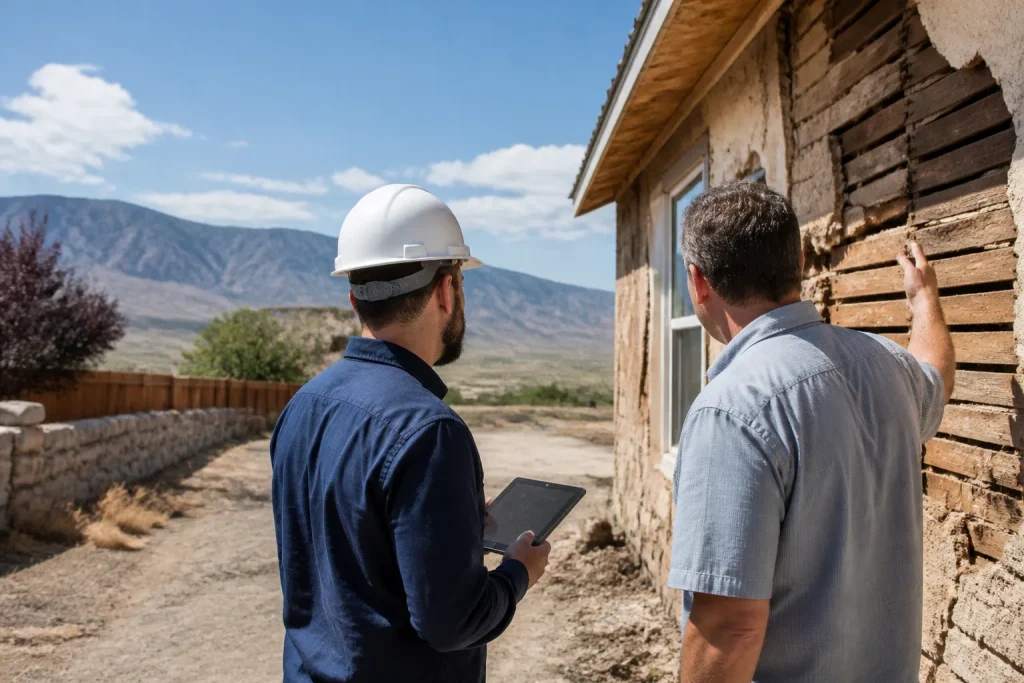
General Contractor: Repair or Replace? How Enterprise Homeowners Decide
Here’s the uncomfortable truth about the repair-or-replace question: the person answering it often has a financial stake in the answer. A contractor who only builds replacements will lean replacement. A handyman who only patches will lean patching. So the real decision has to rest on numbers you can check yourself, not on whoever is standing in your living room. We’ve watched Enterprise homeowners wrestle with this on roofs, kitchens, and whole-home projects, and the ones who decide well use three measurable factors: the 50% rule, the climate clock, and the true cost of patching twice.
If you’d rather not run the math alone, call (844) 797-6157 and we’ll walk you through it with a written, itemized estimate in hand.
Key Takeaways
- When repair costs cross half the price of replacement, replacement almost always wins over a decade.
- Enterprise’s desert heat, UV load, and winter freeze-thaw cycles speed up failure on roofing, siding, and exterior surfaces.
- An itemized written estimate reveals repair viability; a verbal lump sum hides it.
- Fixing the same problem twice usually costs more than deciding correctly the first time.
- The questions you ask a contractor matter as much as the quote they hand you.
What Is the 50% Rule, and Why Does It Settle Most Debates?
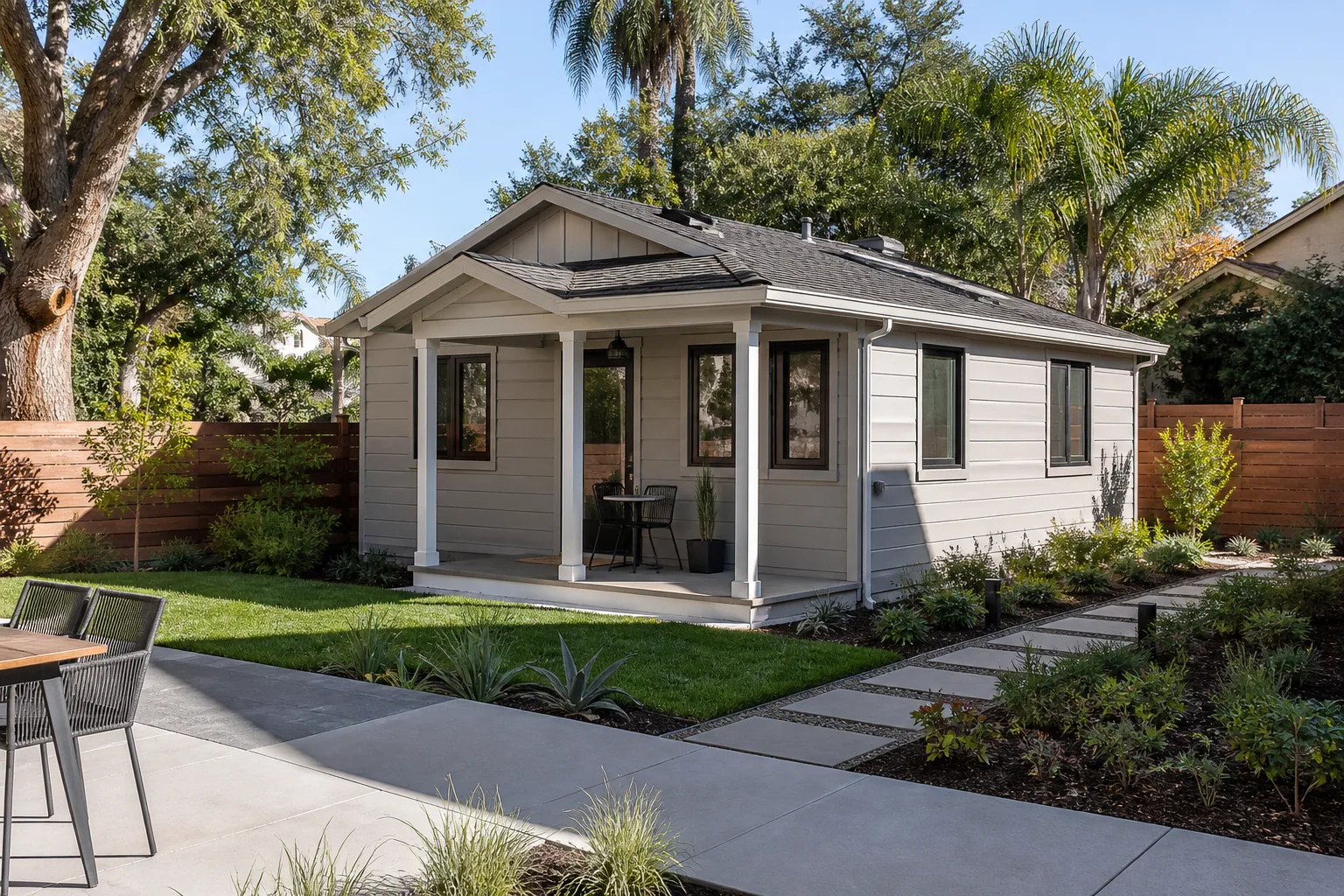
The 50% rule is a simple threshold: if a repair costs more than half of what full replacement would cost, replacement is usually the smarter long-term move. The logic is straightforward. Once you cross the halfway mark, you’re pouring real money into a component that’s already failing, and the next failure isn’t far behind. You end up paying twice for the same wall, the same deck, the same subfloor.
Walk through it with numbers. Say a bathroom subfloor in a 1990s Enterprise home needs partial replacement, and the fix runs $3,400 against a full floor rebuild at $6,000. That’s 57%. Repair technically works, but you’ve spent more than half toward a brand-new floor and still own the old one’s lifespan. Flip the scenario: same floor, repair at $1,800 against $6,000 replacement. That’s 30%, and repair is the clear call.
The rule isn’t gospel. Age matters, condition matters, and how long you plan to stay matters. But it forces a real comparison instead of a vibe. In our experience, homeowners who apply the 50% rule stop guessing and start negotiating from a position of clarity.
- Under 30%: repair almost always wins.
- 30% to 50%: judgment call, weigh age and remaining life.
- Over 50%: replacement math wins over the long haul.
How Does Enterprise’s Desert Climate Change the Repair Timeline?
Enterprise sits in the Mojave, and that changes the clock on material failure in ways coastal or midwestern advice never accounts for. Summer surface temperatures on a dark asphalt roof routinely hit 150°F to 170°F, and the UV load is relentless. Roofing shingles here can shed their granules and go brittle years ahead of the national average. Sealants, caulk, and exterior paint fail fast. Then winter brings overnight freezes and afternoon thaws that work moisture into every crack the summer opened.
What does that mean for repair-or-replace? Three things:
- Repair lifespans are shorter here. A patch that buys 8 years in a mild climate might buy 4 or 5 in Enterprise. Shrink your repair timeline assumptions by roughly a third.
- Certain materials age out faster. Standard three-tab shingles and cheap sealants degrade quickly. When we specify roofing products, we lean on lines from IKO and Atlas rated for high-heat exposure, because the same shingle that’s fine elsewhere can fail early here.
- Freeze-thaw finds the weak spots. If you’re already seeing water intrusion in Enterprise after a cold snap, the material has likely reached end of life, not just a bad season.
The practical takeaway: a repair that looks reasonable on paper needs a harder look in Enterprise because the environment eats it faster. Ask any contractor how their timeline accounts for local heat and freeze-thaw. If they shrug, keep asking.
What Does an Itemized Written Estimate Reveal That a Verbal Quote Hides?

A verbal quote tells you a number. An itemized written estimate tells you a story, and that story is where the real decision lives. When repair costs break down line by line, you can see whether the fix is isolated to one failed component or whether it’s a symptom of something systemic. You can also compare repair against replacement using the same scope of work, which is the only fair comparison.
Here’s what a written, itemized estimate exposes:
- Whether the repair touches structure or just surface. Cosmetic patching over a compromised substrate is money down the drain.
- Whether the scope is complete. A verbal “about $2,000” often omits permits, disposal, and the second problem hiding behind the first.
- Whether the numbers are comparable. You can’t apply the 50% rule to a repair estimate that doesn’t itemize against the replacement scope.
- Whether the contractor is confident enough to commit. A written price is a real number someone is willing to stand behind. A verbal estimate grows on the final bill.
At Mason Remodeling, a written price is delivered before any work starts, on every project, and it’s never an upgrade or a favor. That standard exists precisely so homeowners can make the repair-or-replace call with real numbers in front of them, not a number spoken in a doorway. It’s part of The Threshold Standard that every crew member meets, and it’s why we verify each technician by name and photo before they ever reach your door.
What’s the Hidden Cost of Sequential Repairs?
Patching the same problem twice almost always costs more than deciding correctly once. This is the trap Enterprise homeowners fall into most often, and it’s easy to miss because each individual repair feels affordable at the time.
Run the math. You pay $1,200 to patch a failing roof section in year one. In year two, a different section fails, so that’s another $1,400. In year three, the decking underneath shows rot and you’re facing $4,000 just to get back to the same decision point you could have made at the start. Total spent patching: $6,600. A full replacement done correctly at the outset might have run $9,000 and carried a guarantee. You spent most of the way there and still own the old roof.
Sequential repairs also stack risk. Every re-entry into a wall or roof creates another opportunity for moisture, another permit, another point where a shortcut could hide. In our experience, the projects that cost homeowners the most grief are the ones patched three or four times before someone finally asks whether replacement was the answer all along. If you’re heading into your second round of repairs on the same system, stop and run the 50% rule before you schedule a third.
What Questions Surface a Contractor’s Conflict of Interest?
A recommendation is only as good as the incentive behind it. The right questions don’t accuse anyone; they simply reveal whether the person advising you on repair-or-replace has a reason to lean one way. Ask these before you commit:
- “Does your company do both repairs and full replacements?” If they only do one, their recommendation is loaded. A contractor who does both can give you an honest read either way.
- “Can you show me the numbers side by side?” A real pro will itemize repair against replacement. A reluctance here is a red flag.
- “What happens if this repair fails within a year?” The answer reveals how much confidence they have in the fix. At Mason Remodeling, we cover every completed project with our 365-Day Done Right Promise: if the work isn’t right within a year of the completion date, we make it right at no cost.
- “Are you pulling the permits?” Work done without permits can hide problems and complicate resale. In Enterprise, permit requirements vary by scope, so get a clear yes or no in writing.
- “Who exactly is doing the work?” Vague answers about subcontractors deserve follow-up.
These questions cost nothing and surface a lot. Use them on every general contractor conversation, and if you want a framework for evaluating whole-home decisions, our General Contractor in Enterprise page lays out how we approach structural and whole-home work.
When to Call a Pro
Some repairs are genuinely dangerous to touch. If the failing component involves structural framing, roof access at height, gas lines, or electrical, stop and call a trained professional. We’ve pulled into Mason Remodeling Enterprise home projects over the years where a homeowner’s good-faith patch on a steep roof pitch turned a $2,000 fix into a $9,000 repair. Angle and pitch in Enterprise rooftops are steeper than they look from the ground, and falls happen in seconds.
Related services in Enterprise: If your repair-or-replace debate sits in a kitchen or bath, our Kitchen Remodeling in Enterprise and Bathroom Remodeling in Enterprise teams handle the same evaluation with itemized numbers in hand.
The Bottom Line
The repair-or-replace decision doesn’t have to be a gut call or a sales pitch. Apply the 50% rule, adjust your repair timelines for Enterprise’s heat and freeze-thaw swings, demand an itemized written estimate, factor in the real cost of patching twice, and ask the five questions that expose a conflict of interest. That framework lets you decide before anyone walks through your door with a quote.
If you’re in Enterprise and want help running the numbers, Mason Remodeling Enterprise offers free written estimates – call (844) 797-6157. A live person answers around the clock, and every crew member shows up identity-verified, uniformed, and announced by name and photo before the visit.
Frequently Asked Questions
It depends on the ratio. When repair costs stay under about 30% of replacement, repair is usually cheaper over time. Once repair crosses the 50% mark, replacement wins over the long haul. In Enterprise specifically, shorter repair lifespans from desert heat push that crossover point lower, so replacement starts winning sooner than it would elsewhere.
Some do because they only offer replacements, so it’s the only answer they can give. That’s a conflict of interest, not necessarily dishonesty. The fix is to ask whether a contractor handles both repairs and replacements, and to request the numbers side by side. Call (844) 797-6157 for an itemized comparison.
Assume less time than national averages suggest. Summer surface heat and relentless UV speed up material failure, and winter freeze-thaw works into every gap. A repair that buys 8 years in a mild climate might buy 4 to 5 here, so shrink your timeline assumptions accordingly and plan for the next decision point sooner.
Line-item scope of work, permits if required, disposal, timeline, and a clearly stated price. Anything missing is something that can grow on the final bill. A written price should be delivered before work starts, every time – that’s our standard, and it’s the reason homeowners can compare repair against replacement fairly.
Written by the team at Mason Remodeling Enterprise.
Need Construction Help?
Call Mason Remodeling Enterprise - licensed & insured, here with fast after-hours help in Enterprise.
(844) 797-6157