
Kitchen Remodeling: Repair or Replace? How Enterprise Homeowners Decide
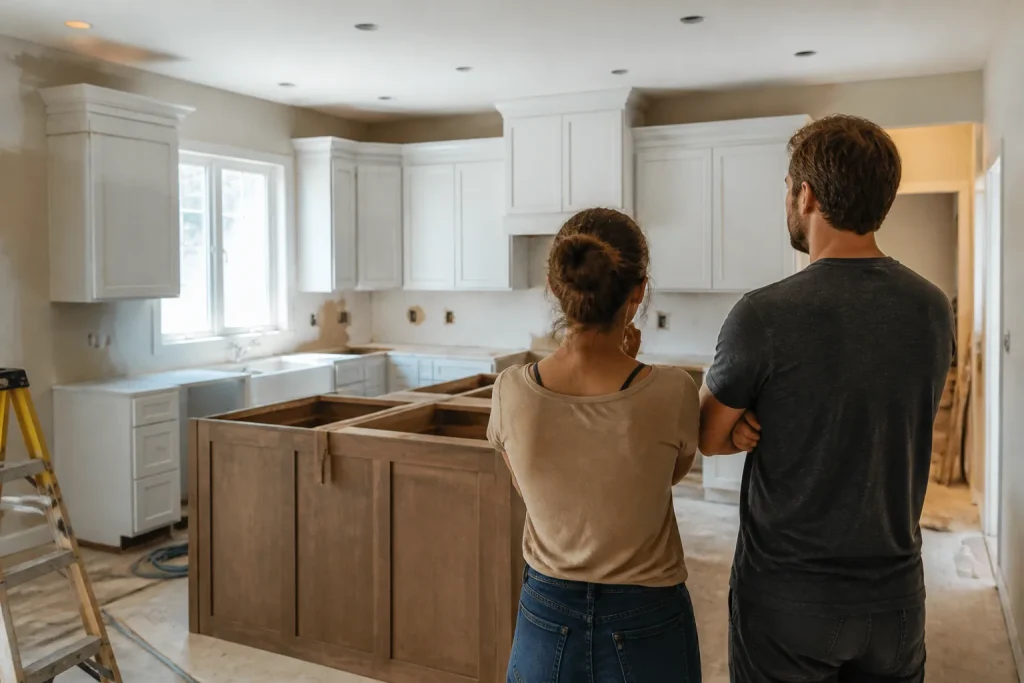
The number one reason kitchen remodel budgets blow up in Enterprise isn’t bad tile taste. It’s discovering rotted cabinet boxes or failed substrate after demolition begins, when it’s too late to change the contract price. The repair-or-replace call in a kitchen almost never hinges on the cabinet door or the countertop surface you can see. It hinges on the box behind the door and the substrate under the counter, and both stay hidden until someone pulls things apart.
Here’s the inspection sequence we walk Enterprise homeowners through before a single estimate gets written. If you’d rather not run it yourself, call (844) 797-6157 and we’ll look with you.
Start With the Cabinet Box, Not the Door
Cosmetic wear on a door is a $40 hinge or a $15 knob. Structural failure in the cabinet box is a full-room decision. In our experience, the box is where Enterprise kitchens surprise people, particularly in older homes where a slow leak under the sink ran for years behind a closed door.
You need two tools: a flashlight and a flathead screwdriver. That’s it. Here’s the sequence.
- Open every cabinet and point the flashlight at the back panel. Look for dark staining, soft spots, or a back panel that has separated from the frame. A back panel pulling away is a structural signal, not cosmetic.
- Press the screwdriver handle (not the tip) into the bottom shelf near the corners. Solid plywood or solid wood resists. Particleboard that has taken on water crumbles or dents easily. If the tool sinks in, the box is compromised.
- Check the drawer tracks and the cabinet face frame for square. A face frame that’s out of square means the carcass has shifted, and new doors won’t hang correctly on it.
- Look under the sink cabinet specifically. This is the highest-failure zone in any kitchen. Water sits, wood swells, and the floor of that cabinet is usually the first to go.
If the boxes are sound and only the doors are tired, you’re looking at a cosmetic decision. If the boxes fail, you’re looking at replacement, and the estimate should reflect it.
When Is Refacing a Real Solution, and When Is It a Cover-Up?
Refacing is legitimate when the cabinet boxes are structurally sound and only the doors and drawer fronts are dated. It replaces the visible faces, adds new veneer to the exposed frame, and takes a fraction of the time of a full replacement. A refaced kitchen can be a solid long-term result in an Enterprise home where the boxes are healthy and the layout already works.
Refacing becomes a cosmetic cover on a structural problem when the boxes are failing underneath. New veneer hides water damage, but it doesn’t stop it. The failure continues behind the new face, and in our experience, a refaced cabinet with a rotted bottom will show the problem within a couple of years, usually at the hinges and the shelf supports.
The test is simple: if the boxes pass the flashlight-and-screwdriver sequence, refacing is on the table. If they don’t, refacing is a delay tactic, not a repair. When you’re pricing a refacing quote in Enterprise, ask directly whether the box inspection was part of the assessment. If it wasn’t, the quote is incomplete.
The Countertop Substrate Is the Real Determinant
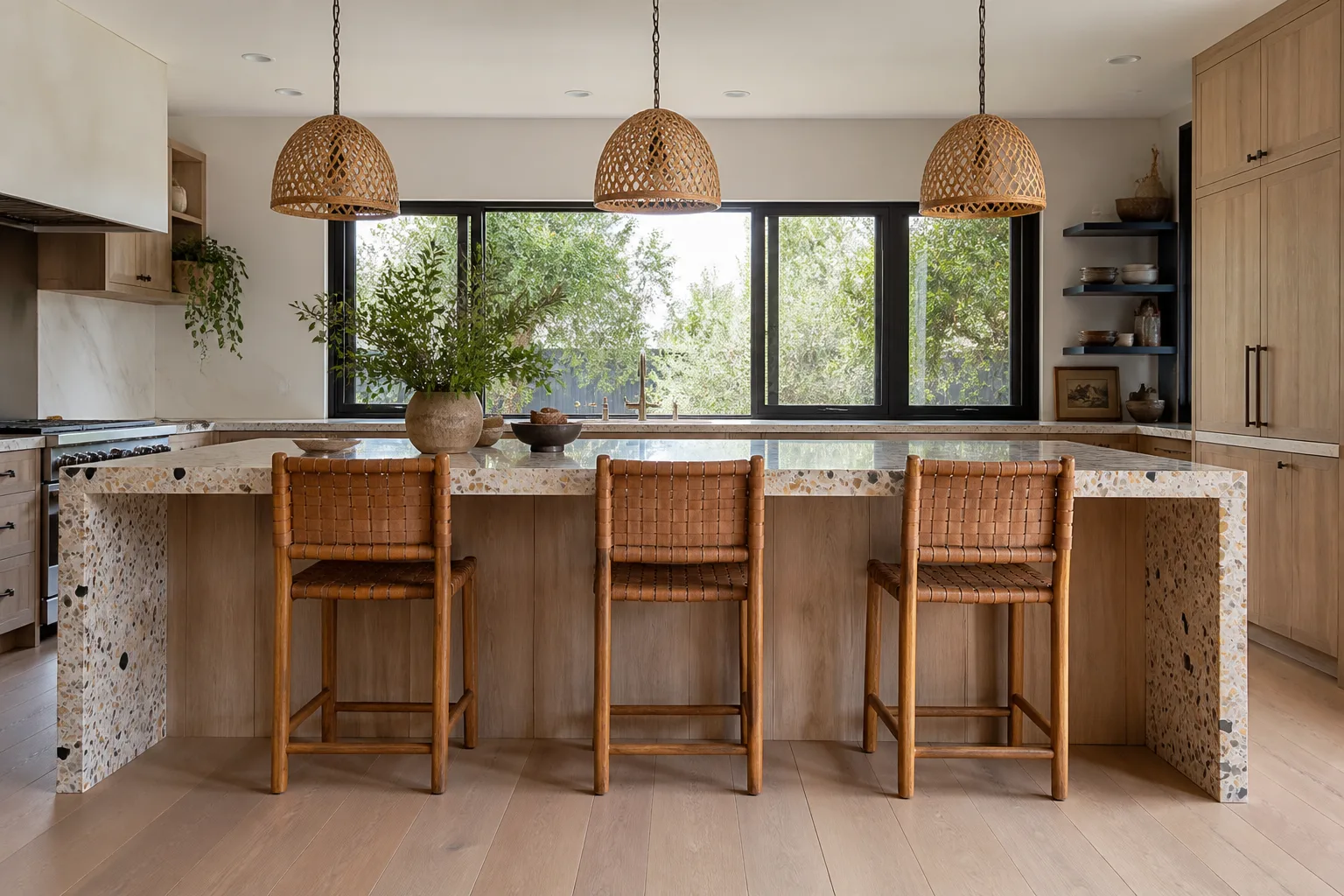
Most homeowners judge a countertop by the surface. Granite with a chip, quartz with a stain, laminate that’s peeling at the edge. In our experience, that’s the wrong layer to look at. The substrate underneath, the plywood or cement board the counter sits on, is what determines whether you’re replacing a countertop or rebuilding the whole run.
Here’s how to read substrate condition.
- Check for a spongy counter. Press down firmly on the countertop near the sink and the edges. Any give or flex means the substrate has failed or wasn’t installed correctly in the first place.
- Look for separation at the backsplash. A caulk line that keeps opening up, or a small gap between counter and backsplash, usually means the substrate has swollen or shifted.
- Check for staining under the sink and around the dishwasher. Both are water sources. Where the substrate has taken on water, it has failed.
- Check the overhang at the seating edge. A sagging overhang is a substrate failure, not a surface failure.
If the substrate is solid, replacing the surface alone is a legitimate project. If it isn’t, the surface replacement becomes a substrate rebuild, and that’s a full replacement decision. When we spec surfaces for Enterprise kitchens, we recommend surfaces like Cambria or Silestone only after the substrate has been verified, because a premium surface over a failing base is a waste of a premium surface.
The Hidden Cost of Keeping Original Plumbing Rough-Ins
When an Enterprise kitchen gets a full cosmetic replacement (new cabinets, new counters, new surfaces) but the plumbing rough-in stays original, the savings look tempting on the estimate. It rarely holds. Original rough-in from an older home usually means a mix of aging supply lines and drain fittings that weren’t designed for the layout you now want, and any of it can fail within the new kitchen’s life.
Here’s what we watch for in Enterprise:
- Galvanized supply lines. If they’re original to an older home, restricted flow is a matter of time, and the failure happens behind a new cabinet wall.
- Old shutoff valves. A shutoff that won’t fully close means any future repair requires shutting water at the main, which turns a small fix into a bigger job.
- Drain alignment. A sink moved even a few inches usually needs the drain rough-in adjusted. If it isn’t, the trap doesn’t sit correctly and the drain is slow.
- Dishwasher supply location. Older kitchens often have the supply and drain in the wrong spot for a modern dishwasher, and the fix is behind the cabinet.
Keeping original rough-in is sometimes the right call, but only when it’s been inspected and the estimate says explicitly what’s staying and why. That’s part of the written price we deliver before any work starts, and it’s why our General Contractor in Enterprise scope covers the plumbing rough-in as a named line item rather than a footnote.
Get the Estimate Before Demolition, and the Discovery Clause With It

This is the part that protects your budget, and it’s where a lot of Enterprise kitchen projects go sideways. You need two documents, not one.
The first is a written, itemized pre-demolition estimate. Every line item named, every dollar range stated, no verbal numbers, no “we’ll figure it out on site.” At Mason Remodeling, a written price before any work starts is standard on every project, not an upgrade. Every completed project is covered by a written guarantee with terms stated plainly: what’s covered, what’s excluded, and for how long. If a repair or installation fails, a return visit is free of charge, no dispute process.
The second is a separate post-demolition discovery clause. This is the line that says what happens if a contractor opens a wall and finds something the pre-demolition walkthrough couldn’t see, like a rotted subfloor or a failed substrate behind a cabinet run. A fair discovery clause states that any additional cost gets a new written price, approved by you before the work continues. No clause means the discovery becomes a surprise invoice.
Ask for both before you sign. A contractor who won’t put a discovery clause in writing is one to walk away from.
When to Call a Pro
You can run the flashlight-and-screwdriver sequence yourself, and we’d encourage it. Where it becomes a pro call: if the boxes fail the test, if the counter is spongy, if you see staining in the plumbing wall, or if the discovery walkthrough turns up anything behind the wall. Those are the points where the repair-or-replace call affects structural scope and the plumber needs to be in the room. Our technicians have up to 22 years of experience and have seen these decisions play out in every kind of Enterprise kitchen, from a galley in an older home to a full open-plan rebuild.
And if the scope reaches into the adjacent room, that’s a wall and rough-in decision, not a cabinet decision. We handle that under a full Kitchen Remodeling in Enterprise scope, and it keeps the plumbing and the cabinet work under one written price instead of two contractors pointing at each other when something goes wrong.
Related services in Enterprise
If the kitchen scope reaches into the bath, or the whole-home flow needs to be coordinated, we handle those under the same written-price and written-guarantee standard. See Bathroom Remodeling in Enterprise for the adjacent room scope, and start at Mason Remodeling Enterprise home to see how the crews are verified before anyone reaches your door.
Key Takeaways
- The repair-or-replace call is about the cabinet box and the substrate, not the visible surface.
- Run the flashlight-and-screwdriver test on every cabinet before you call a contractor.
- Refacing is legitimate only when the boxes are structurally sound.
- Spongy counters, opening backsplash caulk, and staining under water sources mean substrate failure.
- Original plumbing rough-in is a named cost, not a hidden one, and it belongs in the estimate.
- Ask for a written, itemized pre-demolition estimate and a separate post-demolition discovery clause.
The Bottom Line
Most Enterprise kitchen budgets don’t blow up because of the tile choice. They blow up because a structural problem in the cabinet box or the substrate stayed hidden until demolition. Run the inspection sequence on this page, get the pre-demolition estimate in writing with a discovery clause attached, and the repair-or-replace call becomes a clear decision instead of a mid-project surprise.
We’ll say one more thing: a photograph is not a contract. A contractor who can’t put the pre-demolition scope and the discovery clause in writing, line by line, hasn’t given you an estimate. They’ve given you a conversation.
If you’re in Enterprise and need help deciding, Mason Remodeling Enterprise offers free estimates. Call (844) 797-6157 and we’ll walk the kitchen with you, run the inspection, and put the price in writing before any work starts. A live person answers around the clock, every day of the year, including weekends and holidays. The Threshold Standard means every crew member is identity-verified, and you’ll get the technician’s name and photo before the visit, plus a photo ID badge at the door on arrival.
Frequently Asked Questions
Refacing or repairing cabinets in Enterprise typically runs well below the cost of a full replacement, because refacing keeps the boxes and only replaces the visible faces, while replacement includes new carcasses, new boxes, and the labor to set them. The exact number depends on the run length and the door style you pick. Get a written, itemized estimate before demolition, and call (844) 797-6157 for an exact quote. Estimates are free.
It only changes if something behind the wall wasn’t visible in the pre-demolition walkthrough, like a rotted subfloor or a failed substrate. That’s what the post-demolition discovery clause is for, and it should trigger a new written price that you approve before the work continues. No clause, no protection. Call (844) 797-6157 to see how we put that in writing.
Yes. Permits and inspections are part of the scope, not an add-on, and the written price reflects them. On a repair-only project, we’ll tell you plainly whether the work needs a permit; on a full replacement, it almost always does. Call (844) 797-6157 to schedule a free estimate and get the permit scope in writing.
Refacing takes much less time than a full replacement, because the boxes stay in place. A full replacement takes longer, mostly because of demolition, plumbing adjustments, and the countertop fabrication window. We’ll give you a realistic timeline in the written estimate, not a verbal promise. Call (844) 797-6157 for a free estimate and a written schedule before anything starts.
Yes, when the cabinet boxes are structurally sound and the layout already works. It’s not worth it when the boxes have taken on water, because the failure continues behind the new veneer. Run the flashlight-and-screwdriver test first. Call (844) 797-6157 if you want us to look with you before you commit.
Written by the team at Mason Remodeling Enterprise.
Need Construction Help?
Call Mason Remodeling Enterprise - licensed & insured, here with fast after-hours help in Enterprise.
(844) 797-6157