



Free written scope consultation - allowances, timeline, and change-order rules on paper before a single trade is scheduled
Plant Prefab Driveway & Pavers: The Enterprise Owner’s Guide
We install Plant Prefab-compatible driveways and paver systems for Enterprise homeowners, and typical installed pricing runs from $7,000 to $18,000 for a paver driveway, with smaller repair or partial replacement scopes landing between $5,000 and $14,000. Plant Prefab homes arrive as a complete prefab package, but sitework, driveways, and hardscape are almost always finished on-site by a local contractor after the modules set, and that’s where most of the failures we see begin. Owners usually notice the problem the same way: a paver that rocks underfoot at the garage apron, a rut forming along the same wheel path every rainy season, or a section near the street that has settled below the surrounding grade and starts holding water.
Key Takeaways
- Plant Prefab modules are engineered in-factory, but the driveway and paver package is finished on-site, so compatibility comes down to knowing the site plan and the module set points.
- Installed paver driveways in Enterprise run $7,000 – $18,000; driveway replacement runs $5,000 – $14,000.
- Most “part failures” we see are base failures under the pavers, not the pavers themselves.
- We’re an independent service provider, not affiliated with Plant Prefab, and we verify the right paver spec and edge restraint against your home’s site drawings before quoting.
Which Plant Prefab Models This Applies To

Plant Prefab builds modular and panelized homes across several product lines, and the driveway and paver scope isn’t a catalog part in the way a window or cabinet is. It’s a site-assembled package specified against the module set and the graded building pad. That distinction matters: there’s no single “Plant Prefab paver” model number stamped on the block. What does exist is a specification set in your project documents, and that’s what we work from.
To identify the right replacement or extension for your home, we look at four things:
- Your site plan and civil drawings. These show the driveway centerline, width, drainage slope, and the module set points where the home meets the hardscape.
- Existing paver dimensions and thickness. Plant Prefab installations we see in Enterprise typically use 60mm or 80mm interlocking pavers. Thickness determines the base depth and edging the driveway was built for.
- Edge restraint and joint system. The plastic or aluminum edge restraint and the joint sand type (polymeric vs. regular) need to match so the section you replace performs like the section you keep.
- The grading apron at the garage. The transition from module floor to driveway slab is often the first spot to crack or heave, and it’s the spec that gets skipped in a rough quote.
On the OEM-versus-aftermarket question, there’s good news: pavers are a commodity category, not a proprietary Plant Prefab part. Quality aftermarket pavers from Belgard, Unilock, or Techo-Bloc can match or exceed the original spec if the thickness, compressive strength, and color are matched. That said, if your HOA or the original design used a specific series, we match it rather than substitute. We’re an independent service provider and not affiliated with Plant Prefab, so we don’t carry their proprietary documentation; we work from what you have.
Styles & brands we work with
- Kitchen remodeling
- Bathroom remodeling
- Home additions & ADU
- Roofing
- Windows & doors
- Driveway & pavers
- Fence
Signs Your Plant Prefab Driveway & Pavers Is Failing
The pavers are rarely the problem. Here’s what we actually find when an Enterprise homeowner calls about their Plant Prefab driveway:
- Pavers that rock or feel loose underfoot. This is almost always a base compaction failure or a missing/worn edge restraint, not a bad paver. Once the base loses compaction, individual units migrate and the pattern opens up.
- Ruts along the wheel path. Repeated loading on an under-compacted aggregate base shows up as two parallel depressions. In Enterprise’s heat, the base can also lose moisture and settle differently from what was planned at install.
- Heaving or lifting at the garage apron. This is the transition point between the module floor and the driveway slab. If the subgrade wasn’t prepped to the same depth as the main drive, that section lifts during our monsoon-season moisture swings.
- Water pooling at the street or against the foundation. A slope that has drifted out of tolerance, or a clogged drainage channel, sends water to the wrong place. Over time, that standing water undermines the base and accelerates the failure.
- Efflorescence and sand loss from the joints. White mineral bloom plus joint sand washing out points to either a poor polymeric joint installation or water finding its way under the pavers. Once joints open, weeds and further settling follow.
Each of these looks like a paver problem. In our experience, four out of five are a base, drainage, or edge-restraint problem that a paver swap alone won’t fix.
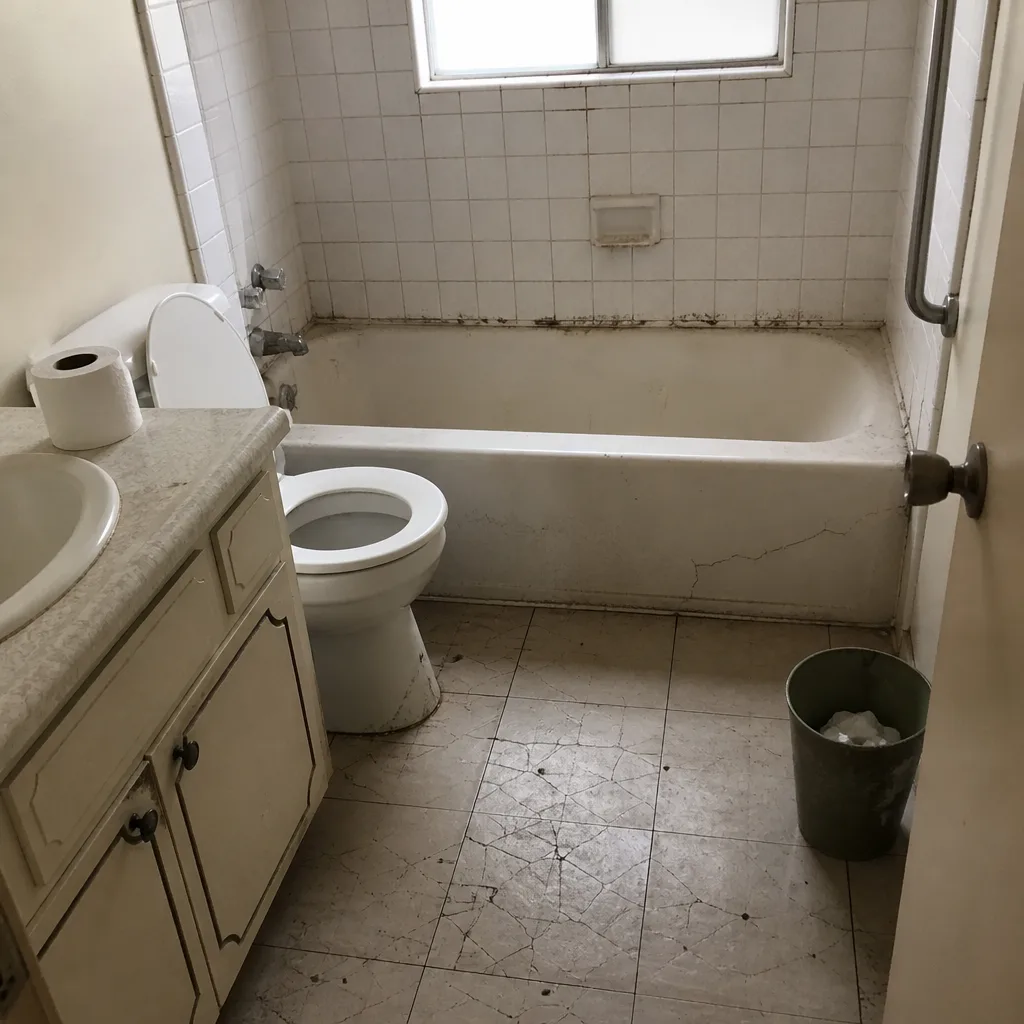
See the difference
 Before
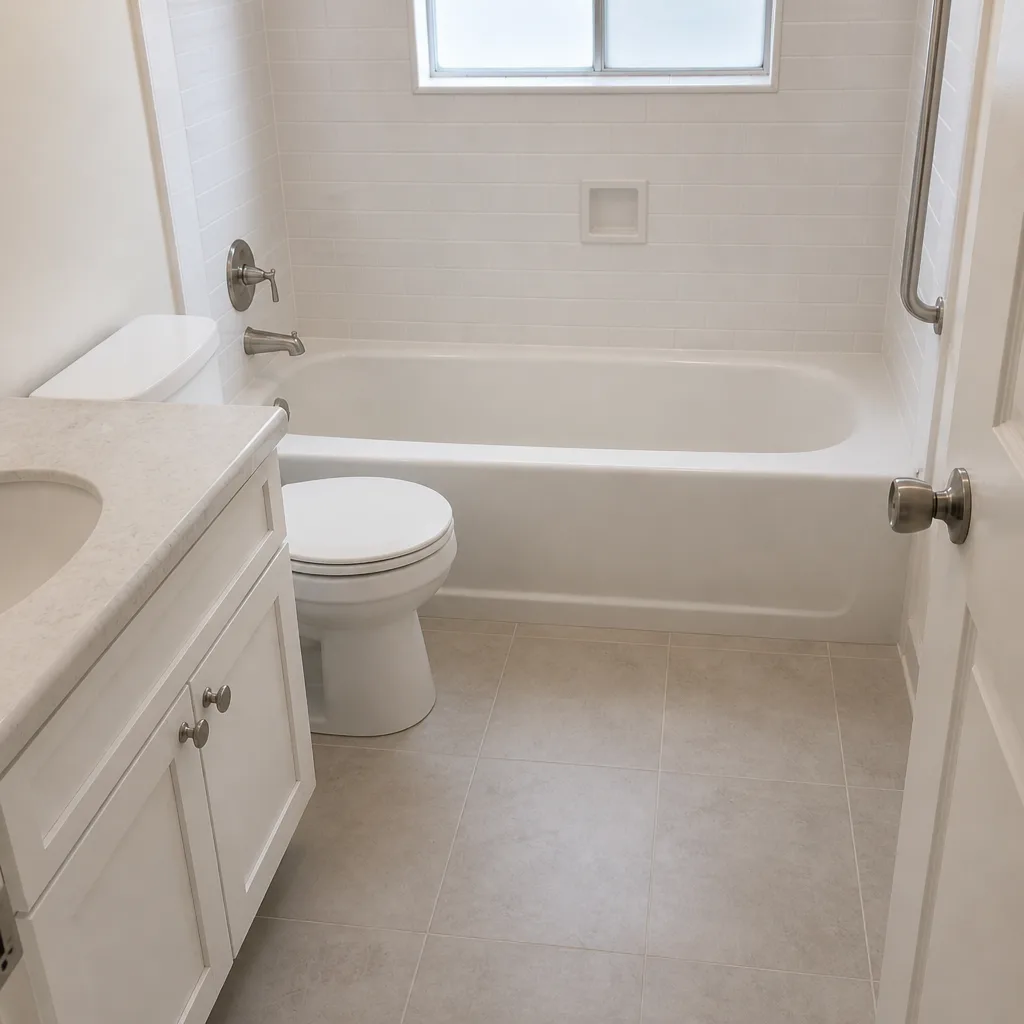 After
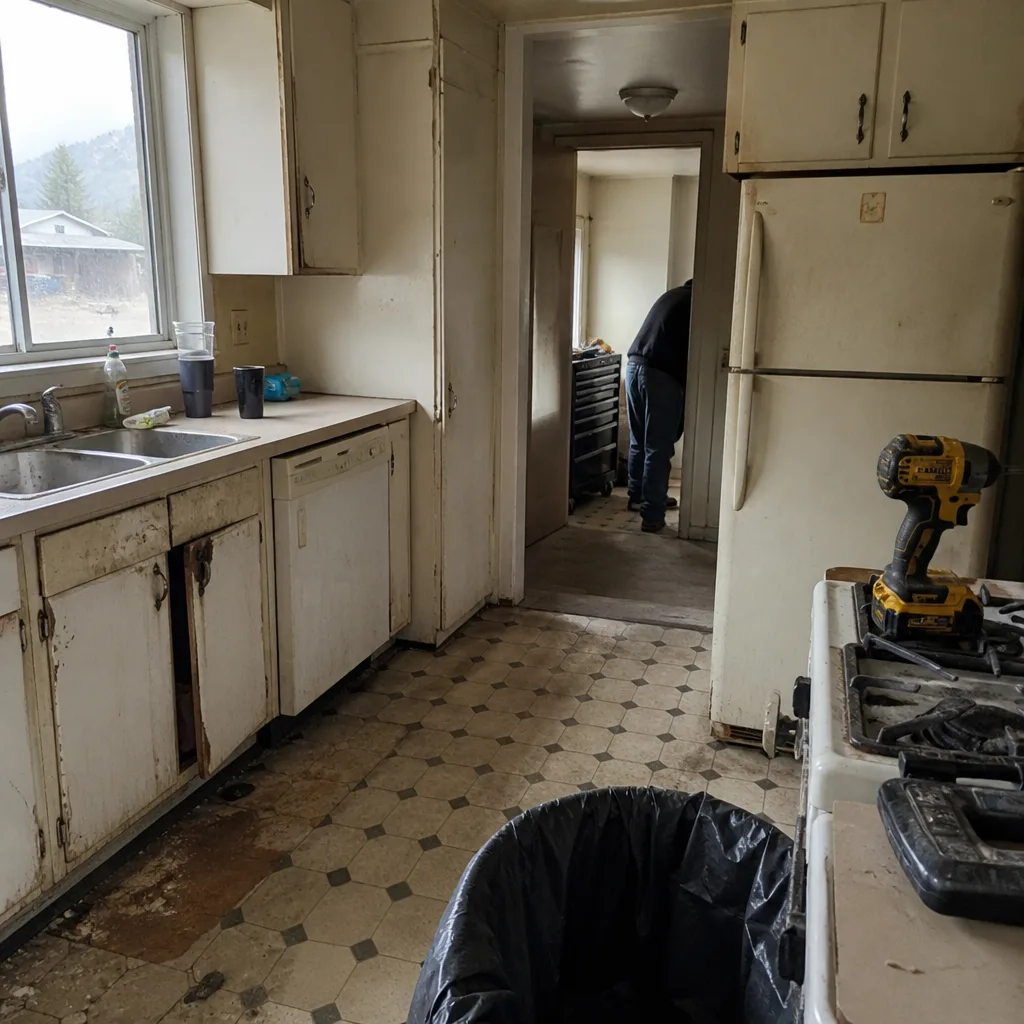 Before
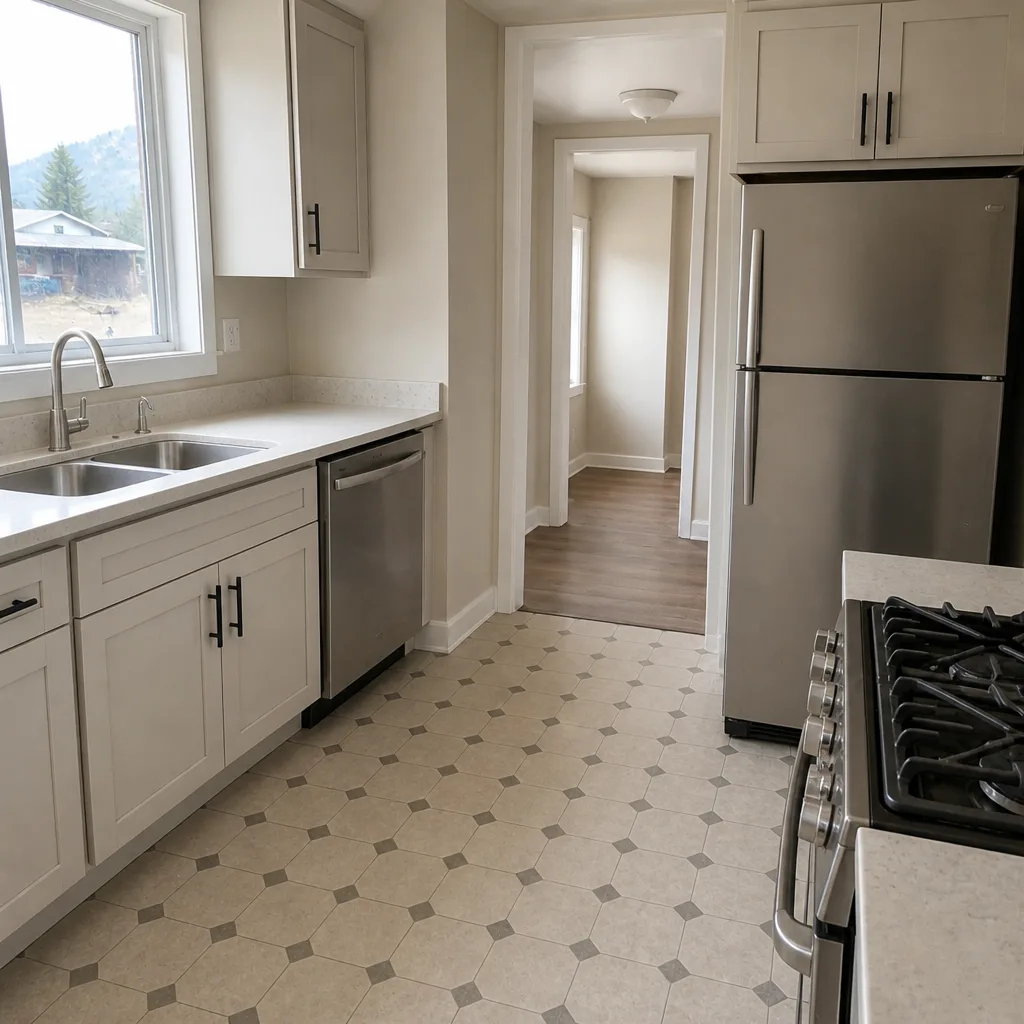 After
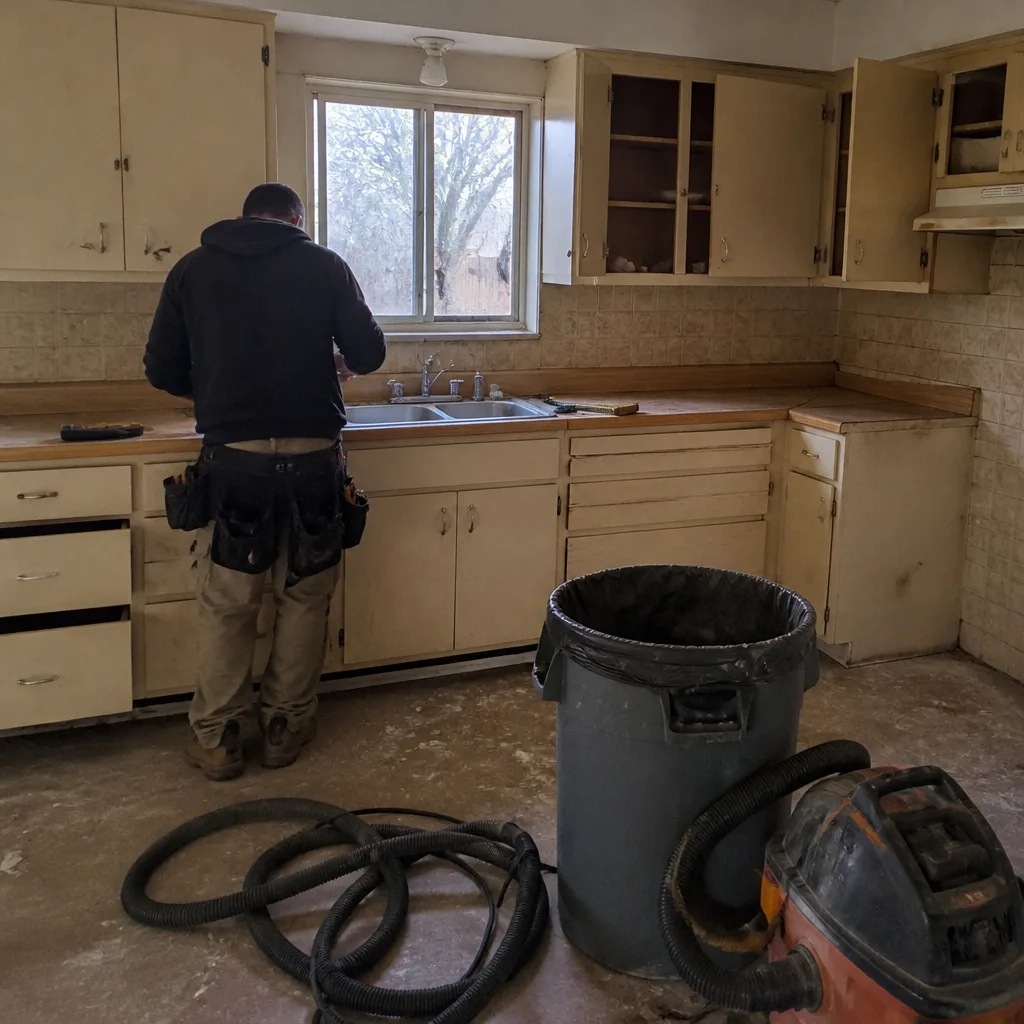 Before
 After
Replacement Cost & What’s Included
Installed paver driveway pricing in Enterprise runs $7,000 to $18,000, and a full driveway replacement runs $5,000 to $14,000. For a partial repair or re-set of failed sections, expect to land in the lower end of that range. Here’s what drives the number:
- Square footage and pattern complexity. A herringbone or ashlar pattern takes more cuts and more labor than a running bond.
- Base depth and subgrade prep. If the existing base failed, we remove, re-grade, and re-compact. That’s the most common cost driver.
- Edge restraint and drainage. Replacing a failed restraint or adding a channel drain adds to the scope but prevents the same failure from returning.
- Paver selection. Belgard, Unilock, and Techo-Bloc products are all available to you through the same material partnership network we use for cabinets and surfaces, so you’re not limited to a single series.
We deliver a written, line-item price before any work begins. That’s not a promotion or an upgrade; it’s standard on every project. Every completed paver installation is covered by a written guarantee with clearly stated terms: 365 days from the completion date, and if a repair or installation fails within that window, we return at no charge.
DIY or Call Us?
There’s a short list of things you can safely check on your own. Walk the driveway after rain and note where water sits. Press on the pavers at the garage apron to see if any rock. Look at the edge restraint along the street and sides to see if it’s cracked or pulling away. Snap a few photos, measure the area, and check if your joints have lost sand.
What we don’t recommend is pulling up and re-setting pavers yourself, especially if the base failed underneath. It looks like a weekend project, but the failure almost always lives in the compacted aggregate base, the edge restraint, or the slope, and re-laying pavers over a failed base just resets the same problem a season later. The base compaction requirements and slope tolerances are also where most DIY jobs go wrong, and getting it right means the repair lasts. Call us at (844) 797-6157 and we’ll walk your driveway with you.
FAQs
A properly installed paver driveway should last 25 to 30 years or more, and the pavers themselves often outlast that. What fails first in Enterprise is almost always the base and the edge restraint, not the pavers. If the base was under-compacted or the drainage wasn’t right, you can see failure in 3 to 7 years, which is a common reason homeowners call us. Call (844) 797-6157 for an honest assessment of what’s actually failing.
Yes, in most cases. If a section has settled or a few pavers are cracked, we can often lift the affected area, re-compact the base, and re-set the same pavers, which is far less expensive than a full replacement. The exception is when the base failure runs the full length of the drive or the edge restraint is gone entirely; then a full rebuild is the honest answer. We’ll tell you which one applies after we see it. Call (844) 797-6157 to schedule a free estimate.
A typical driveway replacement in Enterprise runs 2 to 4 days for the tear-out, base prep, and re-install, depending on square footage and whether drainage work is needed. Smaller repairs are often done in a single day. We schedule the work in writing, so you know the start and end dates before anything begins, and the written price is delivered before the first tool comes out.
We work from your site plan and existing paver dimensions to match the thickness, compressive strength, joint system, and color, then source from the same material partner network we use for Belgard, Unilock, and Techo-Bloc products. If your HOA or original design specifies a series, we match that series rather than substitute a generic block. We’re an independent service provider, not affiliated with Plant Prefab, so we don’t have access to their internal spec archives, but we can read your documents and match what’s on the ground. Call (844) 797-6157 with your site plan handy and we’ll walk through it.
If your Plant Prefab driveway is rocking, holding water, or showing ruts along the wheel path, the sooner we look at it the cheaper the fix tends to be. We give you a written price before any work starts, and we back every paver installation with a written 365-day guarantee. Call (844) 797-6157 for a free estimate in Enterprise.
Written by the team at Mason Remodeling Enterprise, serving Enterprise and nearby areas.