
Last updated November 17, 2026








Free written scope consultation - allowances, timeline, and change-order rules on paper before a single trade is scheduled
Kitchen Remodeling Maintenance Schedule: What to Do and When
Quartz countertops are sold as maintenance-free. The grout lines around your backsplash are not, and when that grout fails next to the sink, it’s the cabinet box underneath that pays the price. We’ve seen it in Enterprise more than once: a two-year-old kitchen with a soft, swollen cabinet base because a hairline caulk joint let water wick behind the backsplash for eighteen months. A remodeled kitchen has six surface systems on different clocks, and this guide syncs all of them into one schedule you can actually keep.
Quick Answer
Maintain a remodeled kitchen on four rhythms: weekly cleaning with material-appropriate products, monthly checks on caulk, drains and faucet aerators, quarterly deep tasks like stone resealing and disposal descaling, and an annual inspection of every joint, seal and appliance that a manufacturer’s warranty depends on. Hard water in Enterprise means at least two descaling cycles a year, not one.
Styles & brands we work with
- Kitchen remodeling
- Bathroom remodeling
- Home additions & ADU
- Roofing
- Windows & doors
- Driveway & pavers
- Fence
Table of Contents
- The annual maintenance calendar at a glance
- Countertop and surface care by material
- The under-sink inspection routine
- Hard water in Enterprise: descaling faucets, dishwashers and disposals
- Caulk joints and grout sealing that protect warranty coverage
- Appliance tasks tied to manufacturers’ warranty terms
- Common mistakes to avoid
- When to call a professional
The Annual Maintenance Calendar at a Glance
Think of your kitchen as six systems running on four clocks. The monthly clock is about catching small failures early. The quarterly clock handles sealing and descaling. The annual clock covers anything a warranty relies on. And the post-service clock applies after any repair or resealing project, when you re-check the work at the 30-day mark.
Here’s the shape of a full year:
- Every week: Wipe countertops with the right cleaner for their material. Wipe down cabinet fronts with a damp cloth only.
- Every month: Open the cabinet under the sink with a flashlight. Look for moisture rings, discoloration on the cabinet floor, and drips at the supply lines.
- Every quarter: Descale faucet aerators and the dishwasher filter. Check caulk at the sink, backsplash edges and countertop seams.
- Every 6 months: Descale the dishwasher with a citric acid cycle. Clean the garbage disposal with ice and citrus peel. Inspect cabinet hinges and drawer glides for screws backing out.
- Every 12 months: Reseal natural stone, seal grout lines, replace refrigerator water filters, clean range hood filters, and inspect the whole perimeter of the kitchen for soft spots or lifting edges.
If your kitchen was completed by Kitchen Remodeling in Enterprise, you already have a written guarantee that covers the work itself. This calendar is what keeps the materials under that guarantee doing their job, because the 365-Day Done Right Promise covers craftsmanship, not damage from a leak you didn’t catch.
Countertop and Surface Care by Material
Every surface in your kitchen was sold under a different promise, and the promises don’t match. Sealed natural stone needs resealing. Quartz doesn’t. Butcher block needs oiling. Laminate needs dry wiping and a light touch. Get the schedule wrong and you’ll either over-treat a surface that doesn’t need it or let a surface dry out until it cracks.
- Sealed natural stone (granite, marble, quartzite): Reseal every 12 months for most stones, every 6 to 9 months for marble or any stone near the sink and cooktop. To test, drop a half-inch of water on a quiet spot and wait 15 minutes. If the surface darkens or the water absorbs, reseal now. Use a penetrating sealer rated for food-contact surfaces.
- Quartz (Cambria, Silestone, Caesarstone): No sealing required. Wipe weekly with mild soap and water or a quartz-safe cleaner. Avoid sitting hot pans directly on the surface (use a trivet) and avoid bleach-based cleaners, which dull the finish over time.
- Laminate: Wipe with a damp cloth and a mild cleaner. Never flood it, because seams and edges are the weakest points. Reseal exposed edges every 2 years if they show lifting.
- Butcher block: Oil every 4 to 6 weeks with food-safe mineral oil (never vegetable or olive oil, which turn rancid). Reseal with a beeswax-and-oil blend twice a year. Wipe up water immediately.
- Backsplash tile and grout: Gently scrub grout quarterly with a soft brush and a pH-neutral cleaner. Seal cement-based grout every 12 months. Epoxy grout does not need sealing.
Here’s the number most homeowners don’t hear at the end of a project: resealing an average stone countertop costs a homeowner $150 to $350 to hire out, or about $25 in sealer and an hour of their own time. Do it once a year and your surface will outlast the cabinets.
The Under-Sink Inspection Routine
The cabinet under your sink is the most vulnerable box in the kitchen and the easiest to forget. It holds the supply lines, the drain tailpiece, the P-trap, the dishwasher and disposal connections, and the shutoff valves. Any one of them can fail slowly, and slow failure is the kind that destroys a cabinet rather than a floor, because the leak travels behind the cabinet face and soaks the particleboard or plywood for weeks before you notice.
Do this once a month. It takes four minutes.
- Clear everything out of the cabinet (don’t store cleaners here; the humidity warps bottles and hides leaks).
- Shine a flashlight along the cabinet floor at a low angle. Moisture rings show up better under raking light.
- Look at every connection point on the supply lines and P-trap. Wipe each with a white paper towel. Any color on the towel is a slow leak.
- Run the faucet hot for 30 seconds, then cold for 30 seconds, and watch under the sink the whole time.
- Fill the sink and pull the plug. Watch the trap and the tailpiece while it drains. That’s where most slow leaks live.
- Run the dishwasher through a short cycle and check the supply line and drain hose connection.
- Check the cabinet floor near the back wall for soft spots, swelling, or dark staining.
If you spot any of it, shut off the supply valves and call a plumber rather than waiting. Water damage to a cabinet box is not a cosmetic issue; replacing a single box in a fitted run usually means removing and re-fitting the adjacent cabinets, which is a several-hundred-dollar job minimum.
Hard Water in Enterprise: Descaling Faucets, Dishwashers and Disposals
Southern Nevada water is famously hard, and it leaves visible mineral scale on faucets, aerators and showerheads within a few weeks. In the kitchen, the scale shows up as reduced flow at the faucet, cloudy glassware out of the dishwasher, and a garbage disposal that grinds more loudly every month. None of it is a defect in the fixture. It’s the water, and the fix is regular descaling.
Faucets: unscrew the aerator at the end of the spout (Delta and Grohe aerators both unscrew by hand or with a small wrench) and soak it in white vinegar for 30 minutes. Rinse, scrub with a soft brush, and reinstall. Do this every 3 months, and every 6 weeks if you’re noticing low flow. A clogged aerator doesn’t just cut water pressure; it forces the cartridge to work harder and shortens its life.
Dishwashers: once every 4 to 6 months, run an empty cycle with a cup of white vinegar in the upper rack, then a second short cycle with a half-cup of baking soda. Check the filter at the bottom of the tub (most modern units pull straight out) and rinse it monthly. Hard water scale clogs the filter basket faster than food debris does, and a clogged filter is the number-one cause of poor cleaning in Nevada homes.
Garbage disposals: monthly, drop half a cup of coarse salt and a tray of ice cubes into the disposal and run cold water while it grinds for 20 seconds. That scours the inside of the chamber and knocks off scale. Quarterly, descale with a cup of white vinegar followed by hot water. Never pour grease down the drain, and never use chemical drain cleaner, which corrodes the disposal’s housing and voids most manufacturers’ coverage, including on Toto and American Standard fixtures connected to the same line.
Caulk Joints and Grout Sealing That Protect Warranty Coverage
Not every joint in your kitchen is the same. Caulk is flexible and goes where two materials move against each other. Grout is rigid and goes between tiles on the same plane. Getting this wrong is the most common maintenance error we see in Enterprise kitchens, and it’s often the reason a warranty claim is denied.
Inspect these caulk joints every 6 months and reapply as needed:
- Where the countertop meets the backsplash (the joint that fails first in most kitchens, because it’s next to the sink and the cooktop).
- Where the backsplash meets the wall and where the backsplash meets the counter at either end.
- Around the sink rim, even on undermount sinks (there’s still a caulk bead at the cutout edge).
- At the base of the backsplash where it meets the countertop behind the range.
- Around the dishwasher opening and any pass-through openings that meet counter or wall.
Grout lines between tile need sealing every 12 months. Epoxy grout does not, but cement-based grout does, and resealing is what keeps water from wicking into the substrate behind the tile. In a wet area behind the sink, water in the substrate is what causes the backer to soften and the tile to debond. If your kitchen uses a Schluter strip (the metal trim that seals the edge where tile meets flooring or a vertical surface), check the caulk line where the strip meets tile. That joint needs the same 6-month inspection as everything else.
Here’s the warranty angle: most installation warranties, including the workmanship coverage on a Mason Remodeling project, exclude damage caused by failure to maintain caulk and grout. That means a leak behind a failed caulk joint is a maintenance problem, not a warranty claim. Reapplying caulk costs about $10 in materials and 30 minutes a joint. Replacing a water-damaged segment of backsplash runs several hundred dollars.
Appliance Tasks Tied to Manufacturers’ Warranty Terms
Appliance warranties are conditional. They cover defects, not neglect, and most manufacturers state in writing that certain cleaning and maintenance tasks must be performed on schedule. Skip them and a covered repair can be denied. How do we know? We’ve seen the service tickets. Appliance techs ask for maintenance records, and “I didn’t know I had to do that” is not a covered reason.
The big four for a kitchen:
- Refrigerator: Replace the water filter every 6 months (or as the manufacturer specifies). Clean the condenser coils every 6 to 12 months, which matters more in a Nevada climate where dust builds up and the unit runs harder. A dirty coil is the single most common cause of a compressor working overtime; a compressor failure is usually not covered past the first year.
- Dishwasher: Clean the filter monthly and run the descaling cycle quarterly. Check the door gasket every 3 months; a torn gasket that leaks is not a defect, it’s wear, and wear isn’t covered.
- Range hood: Clean or replace the grease filter every 1 to 3 months depending on how often you cook. Many hood warranties exclude motor failure if the filter has clearly never been cleaned, because restricted airflow overheats the motor.
- Garbage disposal: Descale monthly and never run without cold water. Chemical drain cleaners void almost every disposal warranty on the market.
Keep a simple maintenance log; a note on your phone with dates works fine. If a covered repair comes up, having the dates is the difference between a paid repair and a denied claim.
Common Mistakes to Avoid
- Treating quartz like it needs sealing. It doesn’t, and penetrating sealer can leave a film on quartz that dulls the finish. Save the sealer for stone and grout.
- Ignoring the caulk line behind the sink until it’s black. Mold in caulk means the joint has been wet for months; the cabinet behind it may already be damaged.
- Storing cleaners under the sink. In Enterprise’s dry climate, most people don’t think about humidity, but the cabinet under the sink is a humid microclimate, and bottles leak. Store cleaners elsewhere.
- Using chemical drain cleaner in a kitchen with a disposal. It’s corrosive to the disposal housing and can damage the seals on connected fixtures.
- Skipping the refrigerator coil cleaning. Dust and pet hair build up faster in a dry, dusty climate, and the coil is the difference between a fridge that lasts 12 years and one that quits at year 7.
- Not keeping appliance maintenance records. When a warranty claim is denied, the first thing the service tech asks for is proof of maintenance, and memory doesn’t count.
- Resealing grout without cleaning it first. Sealer applied over soap scum or hard water scale won’t bond, and you’ve just paid for a job that does nothing. Clean, dry 48 hours, then seal.
See the difference
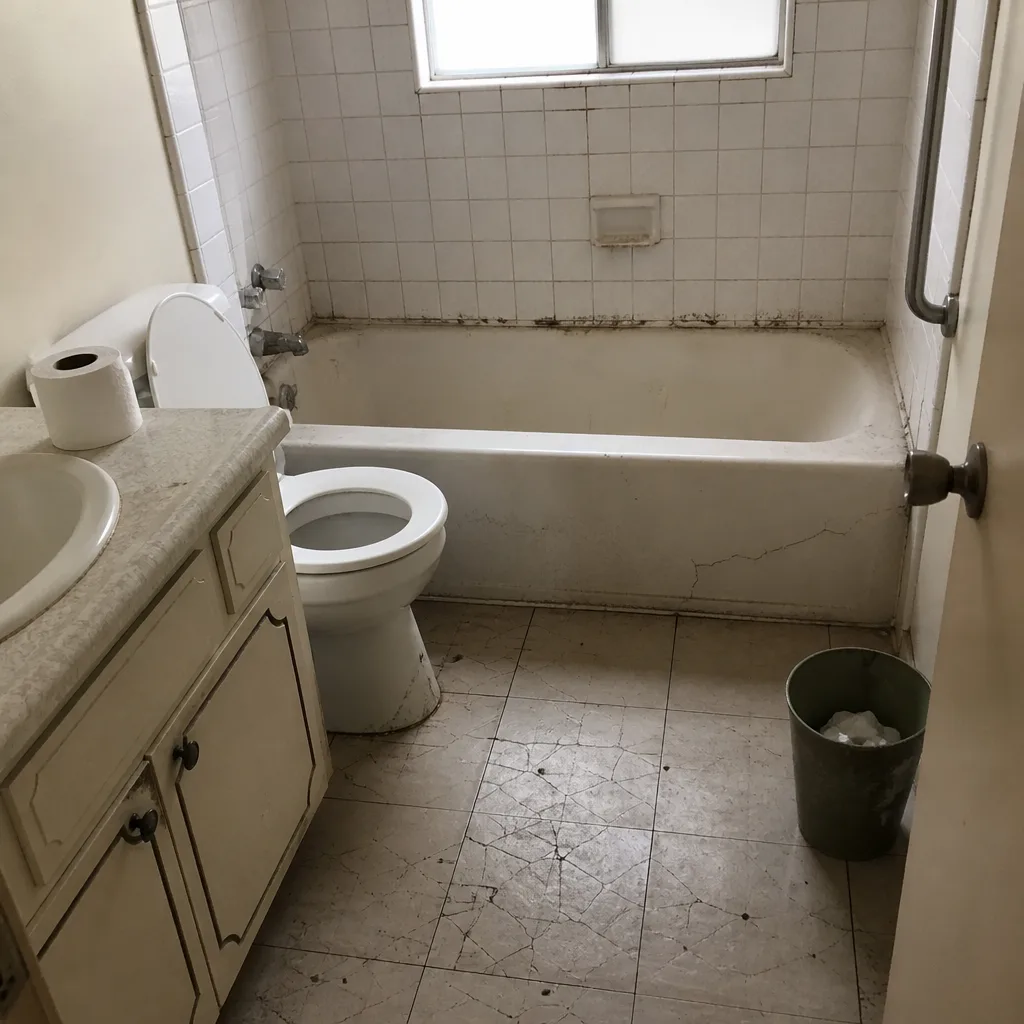 Before
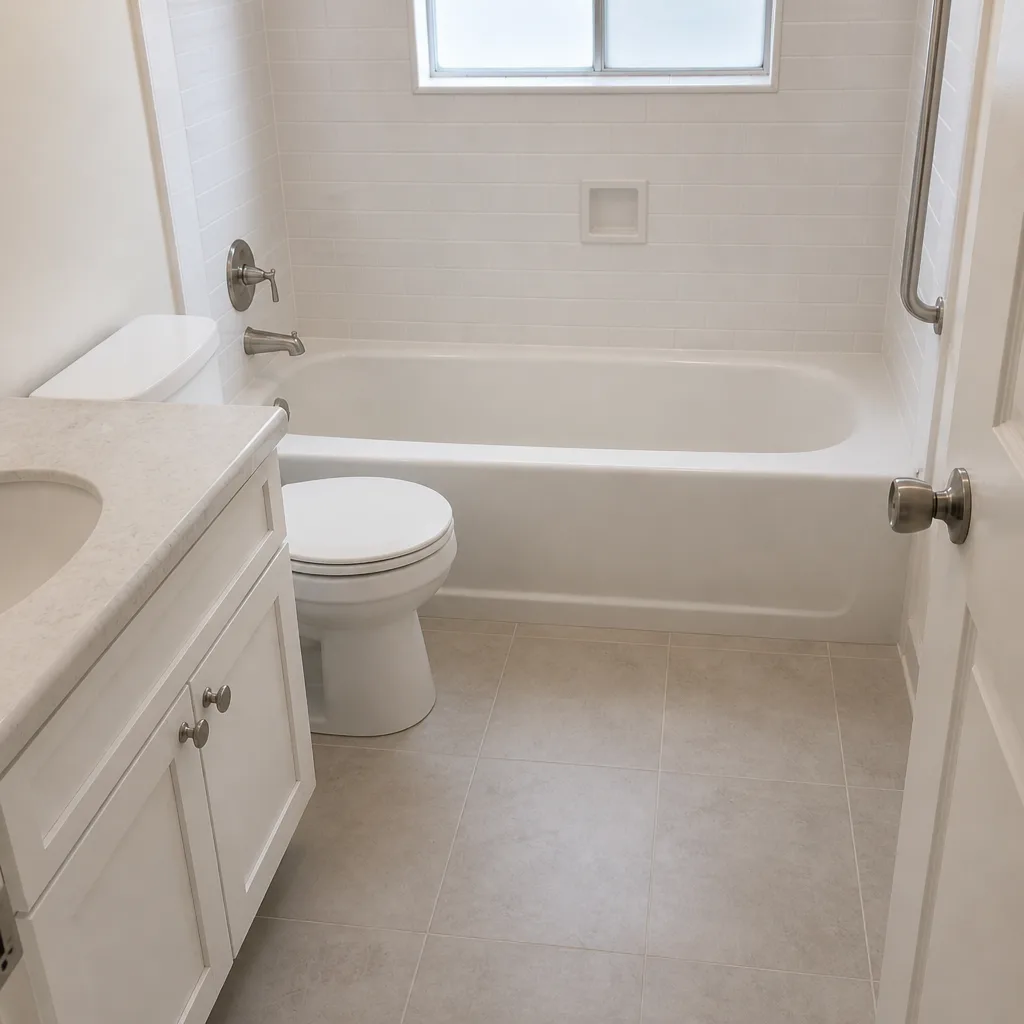 After
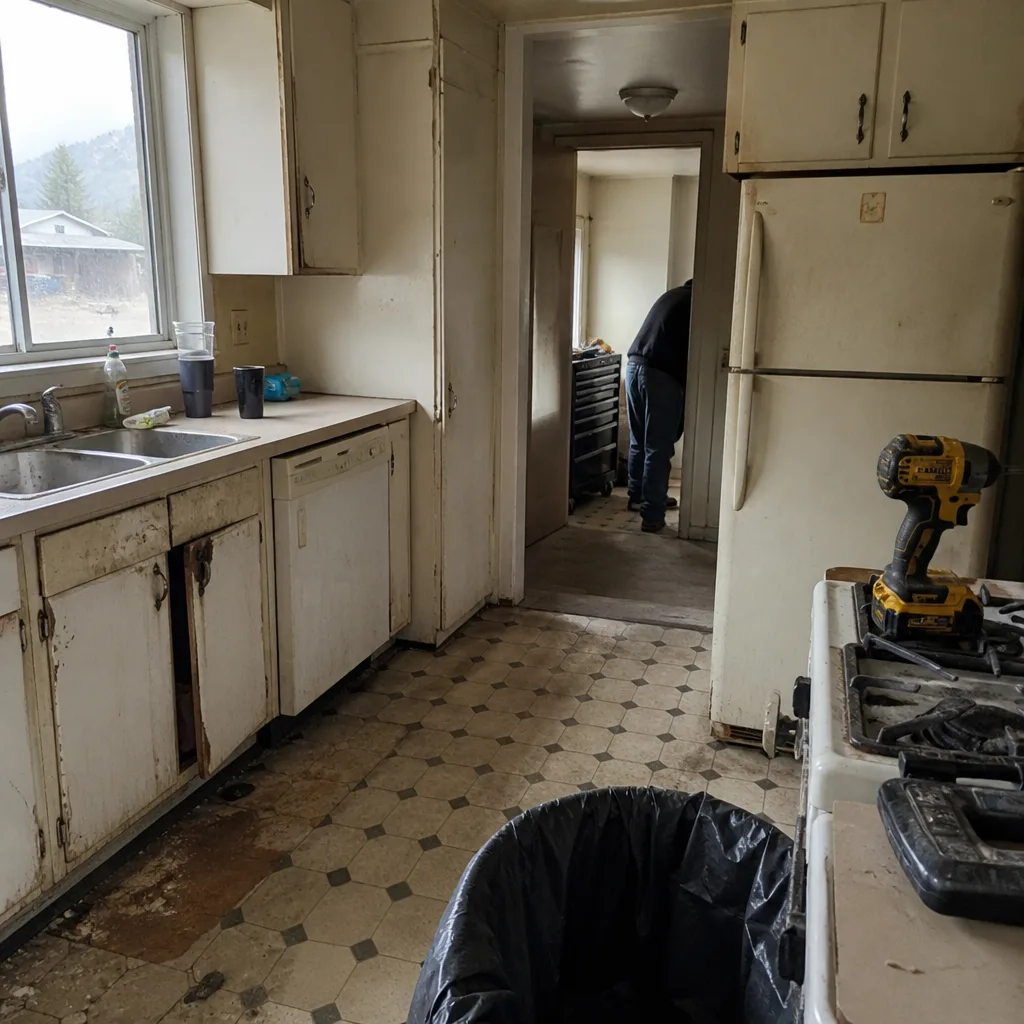 Before
 After
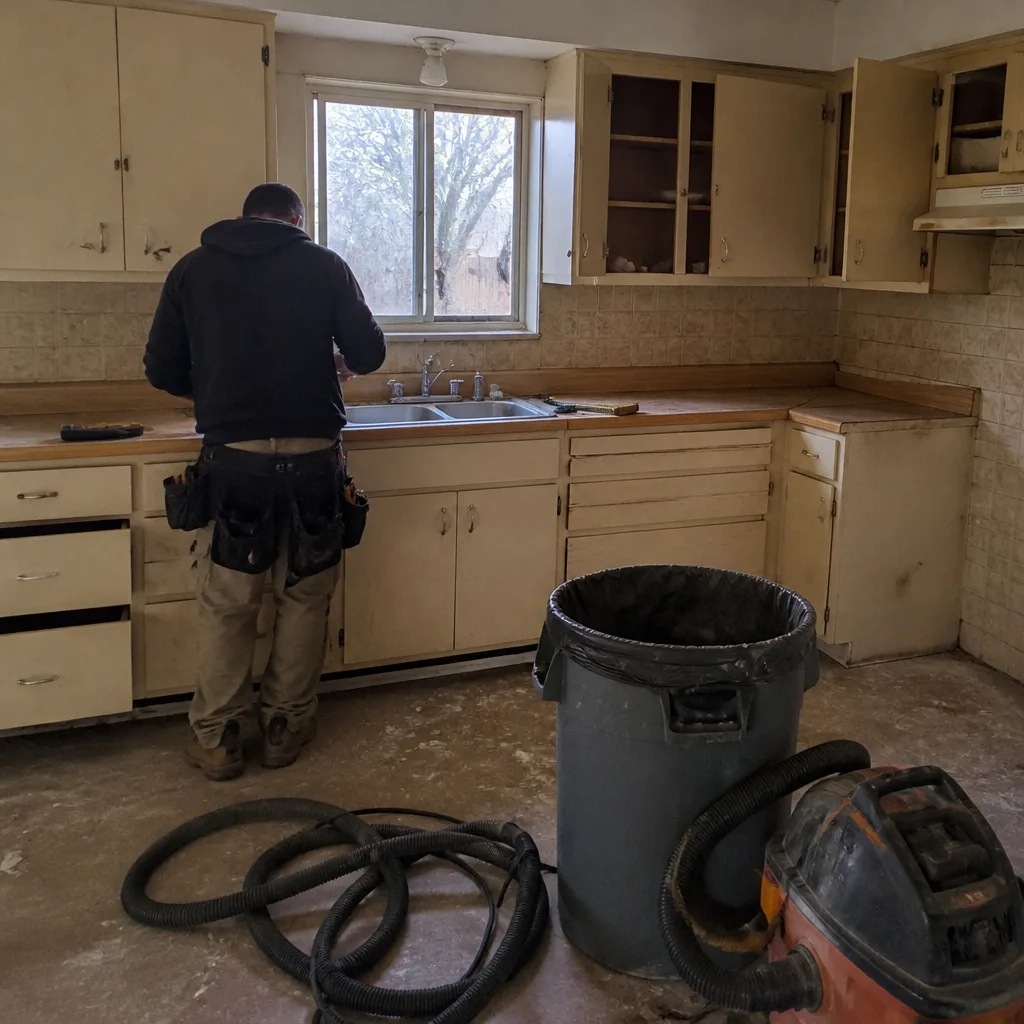 Before
 After
When to Call a Professional
Some maintenance is yours. Other issues need a trained eye and, in some cases, a licensed trade. Call us if you’re seeing any of these:
- Water staining, swelling or a soft spot on the cabinet floor under the sink (that means the leak has been running long enough to damage the box, and often the wall behind it).
- Grout lines that have cracked, tiles that sound hollow when tapped, or caulk that keeps failing at the same joint after re-caulking. Repeated failure is a sign of movement or moisture behind the surface.
- A garbage disposal that trips the breaker, hums without spinning, or leaks from the housing.
- Any sight of moisture where a countertop seam meets the cabinet.
- Any project you’d rather not take on yourself, from replacing a faucet cartridge to re-caulking a full backsplash, because a botched DIY job can cost more to undo than to have done right the first time.
Mason Remodeling Enterprise offers free estimates in Enterprise. Call (844) 797-6157 to schedule a visit. You’ll get a written price before any work starts, the name and photo of the technician who’s coming to your door, and the Threshold Standard on every job.
Frequently Asked Questions

Once every 12 months for most stone, and every 6 to 9 months for marble or any stone near the sink or cooktop. To test whether it’s time, put a half-inch of water on a hidden corner and wait 15 minutes; if the water darkens the surface, reseal now. Call (844) 797-6157 for a free estimate if you’d rather have it professionally done.
Quartz needs no sealing, but it isn’t maintenance-free. Wipe weekly with mild soap and water, use trivets under hot pans, and avoid bleach-based cleaners and abrasive scouring pads. Skip those habits and the finish dulls rather than the surface staining. Free estimates for any countertop work are available by calling (844) 797-6157.
Check the cabinet floor once a month with a flashlight held at a low angle; moisture rings, dark staining and soft spots show up under raking light. Wipe every supply line and P-trap connection with a white paper towel after running hot and cold water. Any color on the towel means a leak. Call (844) 797-6157 if you spot one, and we’ll take a look.
Hard water scale. Southern Nevada water leaves mineral deposits in aerators, dishwasher filters and inside disposal chambers, and those deposits cut flow and cause poor cleaning. Descale aerators every 3 months and run a vinegar-and-baking-soda dishwasher cycle every 4 to 6 months. Call (844) 797-6157 for a free estimate on any fixture replacement.
Often, yes. Most installation warranties, including the workmanship coverage on our projects, exclude damage caused by failure to maintain caulk and grout. Check every caulk joint twice a year and reseal cement-based grout annually. Call (844) 797-6157 to schedule a free estimate if a joint keeps failing at the same place.
Most of it is DIY, including monthly leak checks, faucet aerators, and refrigerator filter swaps. Hire it out for anything involving water damage behind a cabinet, cracking grout, or a fixture that needs replacement. Call (844) 797-6157 for a free estimate, and we’ll tell you plainly whether the job is worth hiring or a 20-minute fix you can do yourself.
The Bottom Line
Six systems, four clocks. Weekly wiping, monthly under-sink checks, quarterly descaling, and the annual list covering stone resealing, grout sealing, coil cleaning and every task a manufacturer’s warranty depends on. Hard water in Enterprise makes descaling a twice-a-year minimum, and the caulk joints around your sink and backsplash are the ones that fail first and cost the most if ignored. A written maintenance log takes five minutes to start and can save you the cost of a cabinet replacement. If you’d rather have the work done once and done right, call (844) 797-6157 for a free estimate from Mason Remodeling Enterprise, backed by the 365-Day Done Right Promise.
Written by the team at Mason Remodeling Enterprise.