Last updated November 17, 2026






Free written scope consultation - allowances, timeline, and change-order rules on paper before a single trade is scheduled
DIY vs Professional Home Remodeling: What’s Safe to Do Yourself
In Nevada, replacing a single electrical outlet without a permit isn’t just a paperwork problem. If a fire starts at that outlet and the work was never inspected, the claim can be reduced or denied on a $400,000 home – because the policy language around “improper installation” and “unpermitted work” is written to protect the insurer, not you. That’s the part of the DIY conversation nobody covers on a home-improvement YouTube channel. This guide draws the legal and financial line, not just the technical one: what you can safely do yourself in Enterprise, what the state requires you to hire out, and how a homeowner ends up paying for the same work twice. If you’re weighing a remodel, this is the short version we give before any free estimate.
Quick Answer
Cosmetic, reversible, low-risk work – painting, swapping a faucet, changing a light fixture on an existing circuit, installing shelving, refinishing cabinet fronts – is generally safe to do yourself in Enterprise. Anything involving the electrical panel, new circuits, plumbing behind a wall, gas lines, structural changes, roofing, or work that requires a permit is not safely DIY and is legally restricted to licensed contractors in Nevada. The dividing line isn’t your skill level. It’s what happens to your insurance claim, your permit record, and your resale value if the work goes wrong.
Styles & brands we work with
- Kitchen remodeling
- Bathroom remodeling
- Home additions & ADU
- Roofing
- Windows & doors
- Driveway & pavers
- Fence
Table of Contents
- Which Projects in Nevada Legally Require a Licensed Contractor?
- The Insurance Consequence Most Homeowners Discover Too Late
- Three Categories of Safe DIY Work
- Three Categories That Always Need a Professional
- How Unpermitted Work Shows Up at Inspection and What It Costs You
- How to Verify a Contractor’s License Before You Sign
- Enterprise-Specific Considerations
- Common Mistakes to Avoid
Which Projects in Nevada Legally Require a Licensed Contractor?
Nevada doesn’t treat licensing as a suggestion. The Nevada State Contractors Board regulates anyone who builds, repairs, or improves a structure for compensation, and Clark County issues building permits for work that changes the structure, systems, or occupancy of a home. If a permit is required and you do the work yourself, the permit is still required – you’re just the one holding the inspection appointment and the liability.
Here’s the no-gray-area list for Enterprise homeowners. The work below requires a licensed, permitted contractor:
- Any electrical wiring beyond a fixture swap – new circuits, panel upgrades, adding outlets, moving switches, EV charger installs.
- Gas line work of any kind – running a line to an outdoor kitchen, converting a cooktop, installing a gas dryer or range.
- Plumbing that moves supply or drain lines – relocating a sink, adding a bathroom, replacing a main line, anything that goes into a wall.
- Structural changes – removing a wall, widening a doorway, anything affecting load-bearing framing.
- Roofing, re-roofing, and major roofing repairs.
- Adding square footage – additions, conversions, and covered patios.
- Water heaters – replacement and installation both require permits and a licensed trade.
What does not require a licensed contractor in Enterprise: interior painting, replacing a faucet with like-for-like plumbing (no moving pipes), swapping an existing light fixture on an existing switch, refinishing cabinets, installing floating shelves, and hanging window treatments. That’s the gap you get to work with. For the projects that live above it, a general contractor in Enterprise holds the license, the permits, and the inspections.
The Insurance Consequence Most Homeowners Discover Too Late
Here’s the part that surprises people: your homeowner’s policy doesn’t usually cover a fire or flood caused by work you did on your own home without a permit. The standard exclusions for “faulty workmanship” and “improper installation” are broad. And the moment an adjuster sees an unpermitted electrical outlet, an unpermitted water heater, or a wall that got moved without a permit, the claim shifts from “covered loss” to “investigation.”
What that looks like in practice:
- The fire happens. A DIY outlet feeds a space heater and starts a fire. The claim goes in for $80,000 in repairs.
- The adjuster inspects. They find the outlet was never permitted or inspected. Policy language around “improper workmanship” or “work not performed by a licensed contractor” applies.
- The claim is reduced or denied. The insurer may cover the damage to the neighbor’s property but not your own, depending on the findings.
- You carry it. A denied claim on a $400,000 Enterprise home isn’t a small financial problem. It’s the value of the home, minus nothing.
That’s not a scare tactic. It’s the reason we put wording in writing before any job begins – a written price, a written scope, and a written guarantee with terms you can actually read. The insurance question and the licensing question wind up in the same place: who is on record for the work?
Three Categories of Safe DIY Work
We’ve seen hundreds of Enterprise homeowners who could have saved money by doing some of the work themselves. Here’s the honest map of what’s safe, organized by the kind of risk involved:
- Cosmetic, reversible, low-risk. Paint. Cabinet refinishing or painting. Hanging art and shelves. Replacing hardware on doors, cabinets, and closets. Swapping curtains and blinds. Refinishing a scratched floor. If you get it wrong, you redo it – nothing breaks, nothing leaks, nothing catches fire.
- Like-for-like swaps on existing connections. Replacing a faucet where the plumbing lines are already in place. Swapping a light fixture on an existing switch. Replacing a doorknob or a shower head. The plumbing and wiring systems are already legal and inspected; you’re just changing the finish.
- Non-permitted landscaping and outdoor improvements. Planting, laying pavers, building raised garden beds, and installing low-voltage landscape lighting. Watch this one carefully: certain hardscaping can require a permit depending on grade and drainage, and anything that touches the exterior envelope of the home (retaining walls, decks over a certain height) is a different conversation.
Three buckets. If the work fits one of them, do it and put the savings toward the work that matters. If it doesn’t, it belongs on the professional side of the line.
Three Categories That Always Need a Professional
For the record, there are three categories of work we would never encourage a homeowner in Enterprise to take on, regardless of experience:
- Electrical panel work and new circuits. A panel carries enough current to kill. The work also has to be inspected to be legal, and the inspection is where the real value is: it’s what your insurance company later relies on to know the work was done right.
- Gas lines and anything connected to them. Including range and cooktop installation, water heater gas supply, and outdoor kitchen lines. A gas leak isn’t a slow problem. It’s a fast one.
- Anything structural or envelope-critical. Removing a wall, moving a window, roofing, and any work on load-bearing framing. Even if you have the carpentry skill, the permit and inspection record is part of what makes the work real.
The right way to think about it: what’s the worst-case cost of getting this wrong? A bad paint job costs – $300 in paint and a weekend. A bad electrical job costs a fire. A bad gas job costs a family. The math writes itself once you frame it that way.
How Unpermitted Work Shows Up at Inspection and What It Costs You
If you’re selling a home in Enterprise – and most homeowners eventually do – unpermitted work is not a private matter. It shows up on an inspection report, and it shows up in a specific pattern:
- The inspector’s report flags it. A new outlet that doesn’t match the home’s wiring era. A wall that doesn’t line up with the original framing plan. A water heater with an install date inside the last three years, no permit on record. These are what we call “open” items.
- The buyer’s agent negotiates it down. A typical demand: the seller obtains retroactive permits and passes inspection, or credits the buyer for what the repairs will cost. On a bathroom or kitchen, that can easily be five figures.
- Retroactive permits aren’t cheap. Getting a permit after the fact requires opening walls where opening walls is expensive, paying the original permit fee plus penalties, and satisfying the current code – not the code in effect at the time of install.
- Your lender may require it resolved. Lenders and appraisers flag unpermitted structural work, which can delay a closing or kill it entirely.
The value of doing it right the first time isn’t abstract. It’s the difference between a clean inspection report and a $15,000 negotiation at the closing table. Licensed and permitted work is the version of a remodel you can actually sell.
How to Verify a Contractor’s License Before You Sign
Anyone can print “licensed” on a business card. Verification takes five minutes and prevents the nightmare scenarios that hire a contractor to fix. Run these steps before you sign a contract:
- Pull the license number and search it. In Nevada, look up the license through the Nevada State Contractors Board website. Confirm the license is active, the classification matches your project, and there are no disciplinary actions on record.
- Pull the permit history. Ask the contractor to show you the permits that will be pulled for your project. Any contractor who resists this is a contractor you don’t want for this work.
- Ask who is coming to the house. Any legitimate operation can tell you who’s showing up, when, and what their identification looks like. At Mason Remodeling, the Threshold Standard is our answer to that: every technician is background-checked, identity-verified, arrives in a clean marked uniform, and the homeowner gets the technician’s name and photo before the visit, plus a photo ID badge at the door.
- Read the guarantee terms in writing. Not “backed by our guarantee.” A written document with the covered scope, the exclusion list, and the coverage period. Ours is 365 days from the completion date on every project.
- Confirm the price is in writing before work starts. Not a verbal estimate. A written price with line items. If any contractor won’t put the number in writing, that’s the answer to your question.
For any project you can’t legally do yourself, these steps are what stand between you and a remake. A bathroom remodeling project in Enterprise or a kitchen remodel in Enterprise is a five-figure investment – a license check and a written price aren’t optional niceties, they’re the minimum bar.
Enterprise-Specific Considerations
Enterprise isn’t a generic market, and the DIY line shifts a little with the local conditions. Three things matter here:
Desert heat and exterior work. Roof work in Enterprise happens in some of the hottest conditions in the country. Heat-related failure modes – adhesive and sealant breakdown, roofing membrane degradation – show up on a roof that got installed in July by a homeowner working alone. Roofing is a professional category for a reason. Same for any exterior envelope work.
Water heater location and code. Many Enterprise homes have garages or exterior closets with water heaters, and Clark County has specific requirements on bracing, venting, and T&P valve discharge. A replacement done by a homeowner not only voids the manufacturer’s warranty in most cases – it also fails the inspection at the worst possible time, which is the sale of the home.
Rapid new construction means rapid adjacent remodeling. Enterprise has a lot of neighborhoods built within the last 15-20 years, which means a lot of 15-20-year-old kitchens and bathrooms being updated right now. That also means a lot of contractor choices. Verify the license. Get the written price. Read the guarantee terms. The market is crowded with people who will undercut on price and disappear after the check clears.
We handle the work that needs a license, a permit, and an inspection in Enterprise: full bathroom remodels, kitchen remodels, and whole-home remodels. Our technicians have up to 22 years of experience, and the written price arrives before a single tool is unpacked. For the projects that live inside your skill set, we’re glad to talk you through the safe ones at no charge.
Common Mistakes to Avoid
- Doing electrical work under the “small enough to not need a permit” assumption. In Clark County, adding an outlet or opening a circuit is permitted work even when it feels small. A licensed electrician is cheaper than a denied insurance claim.
- Assuming homeowner’s insurance covers DIY work. The “improper workmanship” exclusion is broad and applies after the fact, when the claim is already filed.
- Hiring a contractor who won’t put the price in writing. Verbal estimates that grow on the final bill are the single most common complaint we hear. A written price, before work starts, on every project – that’s the standard.
- Replacing a water heater without a permit. It’s the most common unpermitted install we see, and it shows up on every home inspection within three years.
- Removing a wall without a structural engineer’s confirmation. In some Enterprise subdivisions, wall removal is permitted work even when the homeowner is confident the wall isn’t load-bearing. Verify before you swing a sledgehammer.
- Skipping the license check because the price felt right. The cheapest licensed bid usually beats the cheapest unlicensed bid when you factor in the resale issue and the insurance issue.
- Doing a major renovation in stages without a scope. Half-finished projects and mismatched phases cost more to clean up than to do at once. Get a written scope from day one.
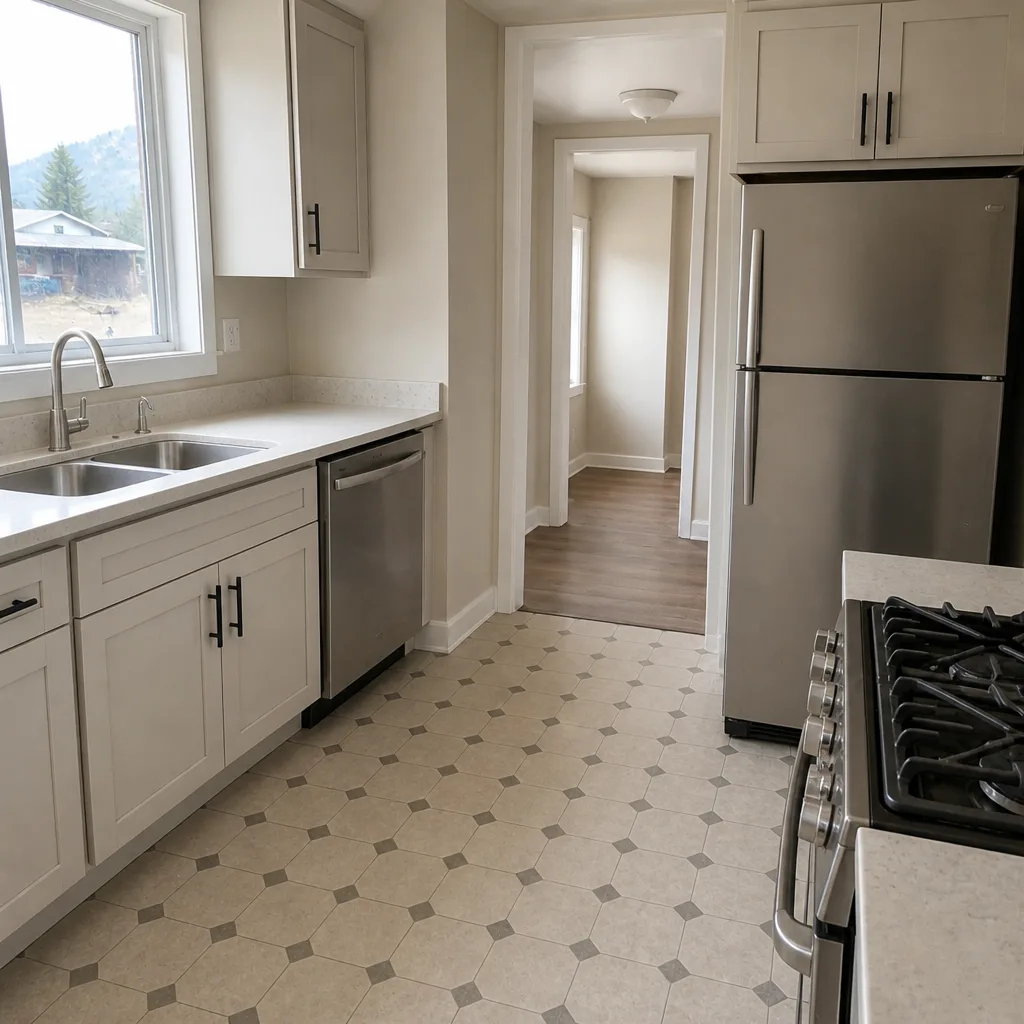
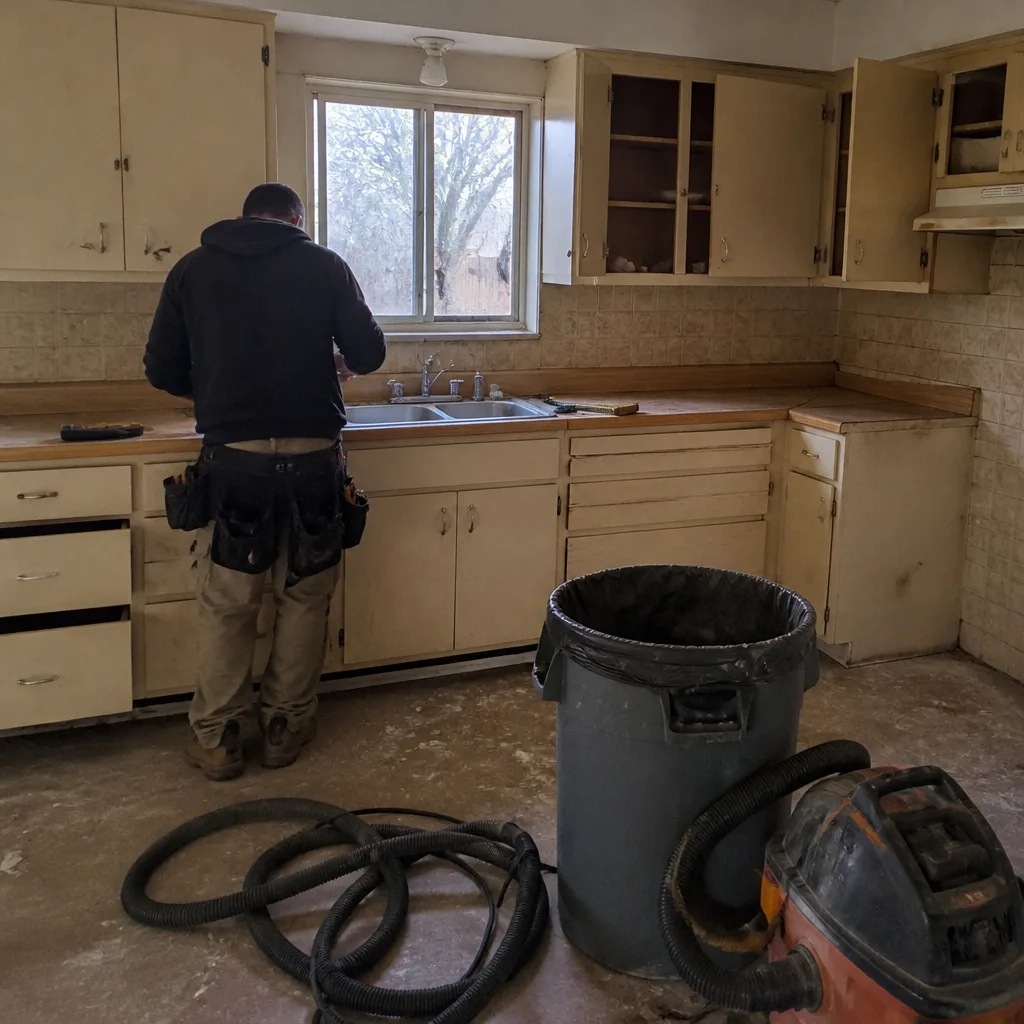
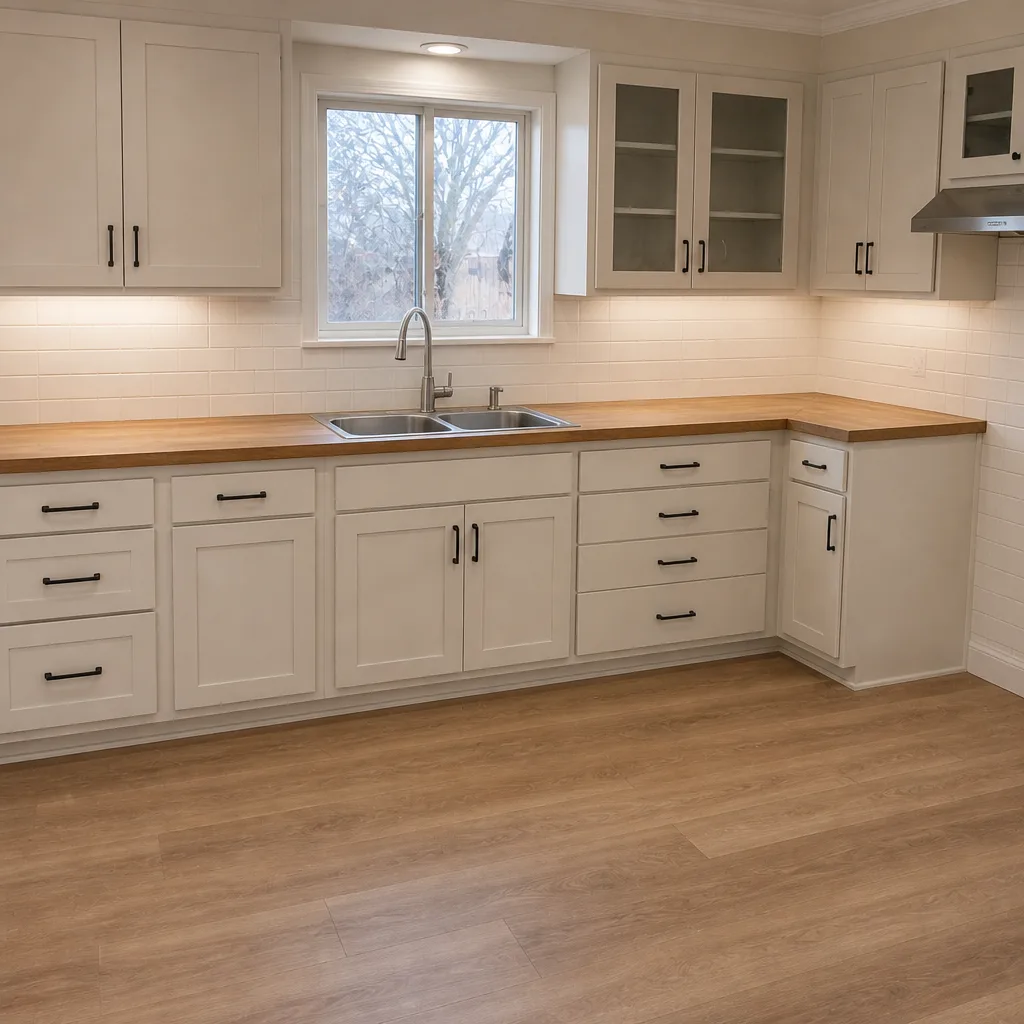
See the difference
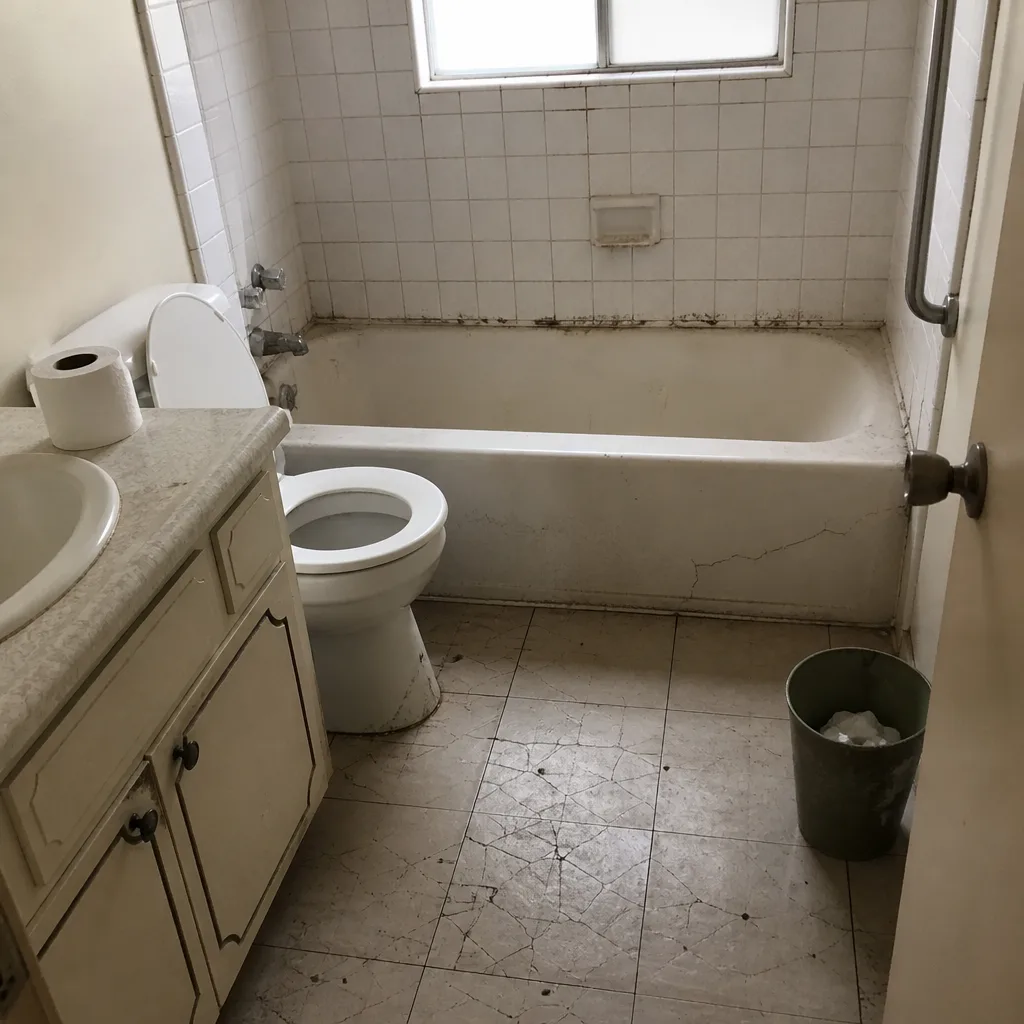 Before
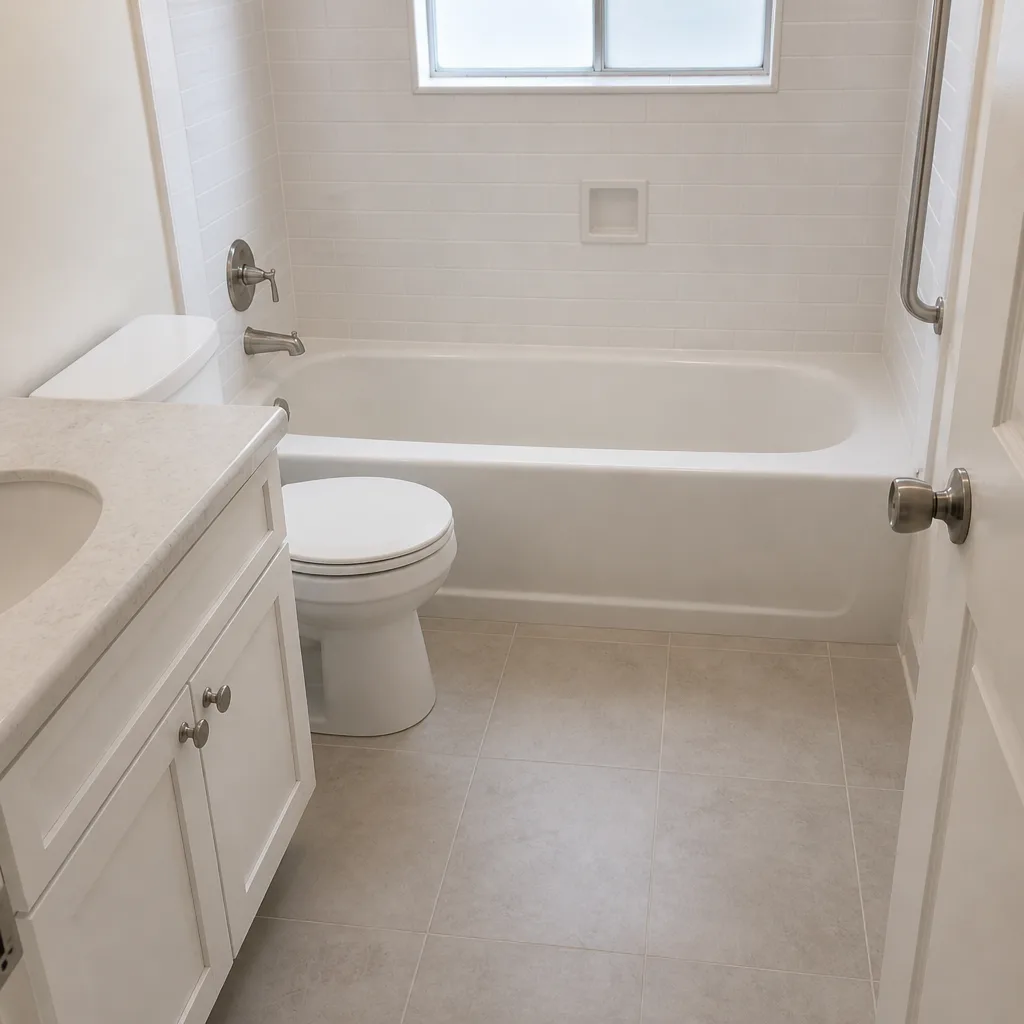 After
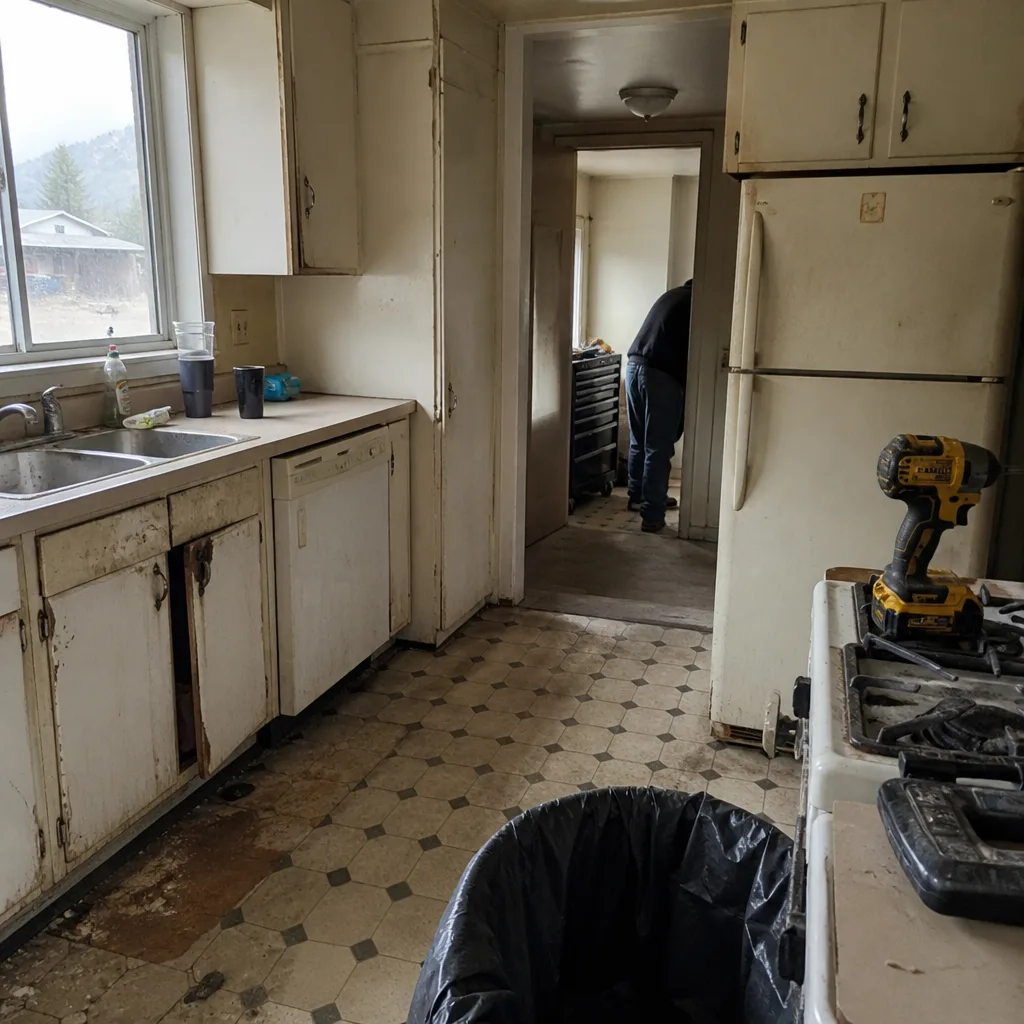 Before
 After
 Before
 After
When to Call a Professional
Call a professional the moment the work involves the electrical panel, new circuits, gas, plumbing behind a wall, structural changes, roofing, water heaters, or anything that requires a permit. If you’re selling your home in the next 24 months, call before you do any work that might land on the inspection report – the negotiation cost almost always exceeds the DIY savings. If you’re remodeling a kitchen or bathroom in Enterprise and you’re not sure where the DIY line falls, call before you make the plan. Mason Remodeling Enterprise offers free estimates in Enterprise – call (844) 797-6157. You’ll get a written price with line items and a written guarantee with clear terms, both in hand before you make a single decision. That’s a fair way to start.
Frequently Asked Questions
In Nevada, homeowners may replace a light fixture or a switch on an existing circuit, but any work on the electrical panel, new circuits, added outlets, or relocated wiring is legal only when performed by a licensed electrician and permitted through the local jurisdiction. A homeowner can pull a permit for some work on their own residence, but the inspection and liability considerations land on you. For any work that goes past a like-for-like-fixture swap, use a licensed electrician – and call (844) 797-6157 for a free estimate if you’re unsure.
Usually not, or not fully. The standard homeowner’s policy excludes damage caused by faulty workmanship or improper installation, and an unpermitted, uninspected electrical job is a strong case for the insurer to reduce or deny the claim. The safest way to keep the coverage intact is to have any electrical work done by a licensed, permitted electrician. Call us at (844) 797-6157 for a written estimate and permit documentation.
A bathroom remodel in Enterprise requires a building permit, plus plumbing and electrical permits for any work that moves supply/drain lines or adds circuits, and a mechanical permit if you’re adding or relocating bathroom ventilation. Cosmetic work (paint, tile over existing substrate, replacing a faucet) does not require a permit. A licensed contractor pulls all permits in one scope – call (844) 797-6157 for a free estimate on a permitted bathroom remodel.
Unpermitted work shows up on a buyer’s home inspection and triggers a negotiation – typically a demand that the seller get retroactive permits or credit the buyer for the cost of removing and redoing the work. That cost usually runs thousands of dollars and, on a kitchen or bathroom, easily exceeds five figures. Getting permits at the time of the work is far cheaper than getting them retroactively. Free estimates: (844) 797-6157.
Search their license number on the Nevada State Contractors Board website, confirm the license is active and matches your project classification, and check for disciplinary actions. Then ask which permits will be pulled for your job. A licensed contractor will show you both without hesitation. Mason Remodeling Enterprise pulls permits and passes inspections on every project that requires them – call (844) 797-6157 to start with a free estimate.
If the work isn’t right within 365 days from the completion date, Mason Remodeling makes it right at no cost to the homeowner. The coverage terms are stated in writing – what’s covered, what’s excluded, and for how long – on every project. There’s no dispute process, and a free return visit is provided at no charge if a repair or installation fails. That’s the standard on every project in Enterprise. To see it in writing on your estimate, call (844) 797-6157.
The Bottom Line

The real DIY question isn’t whether you can do the work. It’s what happens to your insurance, your permit record, and your resale value if you do it without a license. Cosmetic, reversible, like-for-like work is yours for the taking – paint, fixtures, hardware, refinishing. Electrical panels, gas lines, plumbing behind walls, structural changes, roofing, and water heaters belong to a licensed, permitted contractor working under inspection. Do the safe work yourself, put the savings toward the parts that need a license, and verify the contractor before you sign. That’s the line. If you’re near it, call Mason Remodeling Enterprise at (844) 797-6157 for a free estimate – written price, written guarantee, before a single tool comes out of the truck.
For the full picture of how we handle permitted, guaranteed remodeling in Enterprise, explore Mason Remodeling Enterprise home and see the projects we cover.
Written by the team at Mason Remodeling Enterprise.