Last updated November 17, 2026








Free written scope consultation - allowances, timeline, and change-order rules on paper before a single trade is scheduled
How Long Does General Contractor Take? Timelines and What to Expect
If a contractor quotes you a kitchen remodel in four weeks without asking about your permit status, material lead times, or HOA approvals, that four weeks is a sales number, not a schedule. Real timelines are built from phases, inspections, and order dates, not optimism. In Enterprise, the gap between the quoted schedule and the real one often comes down to Clark County permit queues, summer heat holds, and back-ordered materials nobody flagged early. This guide gives honest, phase-by-phase timelines for kitchen, bath, and whole-home work, plus the buffers you should insist on before you sign. We’ll show you what’s realistic, what causes legitimate delays, and how to protect yourself in the contract.
Quick Answer
A bathroom remodel typically takes 3 to 6 weeks, a kitchen remodel runs 6 to 12 weeks, and a whole-home remodel generally takes 4 to 9 months. Add 2 to 6 weeks in Enterprise for Clark County permit and inspection scheduling, plus extra time for any material still affected by lead-time delays. The biggest variable isn’t labor speed; it’s how well permits and material orders are front-loaded before demolition starts.
Styles & brands we work with
- Kitchen remodeling
- Bathroom remodeling
- Home additions & ADU
- Roofing
- Windows & doors
- Driveway & pavers
- Fence
Table of Contents
- Phase-by-Phase Timelines for Kitchen, Bath, and Whole-Home Projects
- How Clark County Inspection Scheduling Adds Days or Weeks
- The Material Lead Time Problem and How to Front-Load Orders
- What Legitimately Causes Delays vs. Signs of an Overbooked Contractor
- How to Build Realistic Buffers Into Your Schedule
- Delay Penalties in Your Contract Without Poisoning the Relationship
- Enterprise-Specific Variables: Heat, HOA, and Code
- How to Choose a Contractor Whose Timeline You Can Trust
Phase-by-Phase Timelines for Kitchen, Bath, and Whole-Home Projects
Every honest timeline breaks into phases. A contractor who can’t walk you through each phase with dates isn’t giving you a schedule; they’re giving you a wish. Here’s what a realistic plan looks like for the three most common project types we quote in Enterprise.
Bathroom remodel (3 to 6 weeks):
- Design and selections (1 to 2 weeks): Tile, fixtures, vanity, and shower door chosen and ordered before demo. Cambria, Kohler, and Moen selections are locked in now, not later.
- Permit and inspection scheduling (3 days to 2 weeks): Small bath work can move fast, but rough-in and final inspections still need booking.
- Demo and rough-in (3 to 5 days): Tear-out, plumbing and electrical moved, framing for the new layout.
- Waterproofing and tile (5 to 8 days): Schluter strip and membrane installed, then tile set and grout cured.
- Fixtures and finish (3 to 5 days): Vanity, toilet, shower door, trim, paint.
Kitchen remodel (6 to 12 weeks): Cabinet lead times drive this one. KraftMaid and Wellborn orders can run 3 to 6 weeks, so ordering cabinets before demo is non-negotiable. Demo and rough-in take about a week. Drywall and painting take another. Countertop template and install (1 to 2 weeks for Cambria or Caesarstone) then tile and finish.
Whole-home remodel (4 to 9 months): This is where you need to see our general contracting in Enterprise process written out phase by phase. Expect overlapping trades, multiple rough-in and final inspections, and the longest material lead times. A whole-home job is a set of projects running in sequence with scheduling buffers between them. For the bath and kitchen components, see our bathroom remodeling in Enterprise and kitchen remodeling in Enterprise pages for the specific timelines we quote.
How Clark County Inspection Scheduling Adds Days or Weeks
This is the part of the schedule most online guides ignore. Clark County’s inspection process is required and reasonable, but you can’t always get a same-week slot, especially during peak building season. Rough framing, electrical, plumbing, and mechanical inspections each need a booked appointment, and a failed inspection means a redo and a re-inspection usually a week or more later.
In our experience, plan for the following:
- Permit review: 2 to 6 weeks depending on scope and how complete the submittal is.
- Rough-in inspection: 3 to 10 days after the work is ready, driven by the county’s calendar.
- Re-inspection after a correction: another 5 to 10 days.
- Final inspection: booked near the end; don’t leave it to the last day.
The fix is sequencing. A good contractor books rough-in inspections as soon as the trades are done and has the finish work planned around the inspector’s calendar, not against it. If your contractor treats inspection scheduling as an afterthought, add two weeks to their quoted timeline right now, because the county will add it for you.
The Material Lead Time Problem and How to Front-Load Orders
Supply chains have improved since the worst of the disruptions, but they haven’t normalized everywhere. Windows and specialty doors are the biggest remaining wild card. A custom order from PGT or ES Windows can run 6 to 10 weeks, and a missed window order can stall an entire exterior remodel. Cabinetry, certain tile lines, and specialty plumbing fixtures from Grohe can still run longer than the old standard.
Here’s how you protect the schedule:
- Order long-lead items before demo starts. Windows, doors, cabinets, and specialty fixtures get ordered once selections are locked. Ordering after demo is how a project loses a month.
- Confirm the order date in writing. Not the delivery estimate, the order date. A lead time without a start date means nothing.
- Have a verified backup. For windows, an in-stock alternative from CGI or CWS listed on the manifest means a delay doesn’t stop the job.
- Stage materials on site before the trades need them. Tile and fixtures sit in boxes in the garage, not on a truck five states away.
When a homeowner asks us where the time goes, this is usually the honest answer. The labor is fast. The waiting is what eats the calendar.
What Legitimately Causes Delays vs. Signs of an Overbooked Contractor
Not all delays are the same. Some are real and unavoidable. Others are a scheduling problem dressed up as bad luck. Knowing the difference protects you from both.
Legitimate delays:
- Inspection scheduling and re-inspections. County calendar, not the contractor’s choice.
- Weather holds for exterior work. In Enterprise, summer heat can suspend certain outdoor and roof work during peak afternoon hours for crew safety.
- Back-ordered materials with a documented order date. The paperwork shows the order was placed early.
- Hidden conditions after demo. Old plumbing, rot, or framing issues that couldn’t be seen until the wall opened.
Signs of an overbooked contractor:
- Crews appear for a day, then vanish for a week while they work another job.
- Your project has no single point of contact who can tell you what’s happening next.
- Subcontractors arrive unscheduled, or several show up at once with no sequence.
- The contractor can’t produce an updated schedule when you ask for one.
- Delays are explained vaguely (“waiting on the county”) with no appointment confirmation.
A contractor who runs too many jobs at once creates delays that look like the legitimate kind. Ask for a written phase schedule and a named contact, and you’ll see the difference fast.
How to Build Realistic Buffers Into Your Schedule
A timeline without a buffer is a promise you can’t keep. The right way to plan is to estimate each phase honestly, then add a buffer to the phases most likely to slip, not one lump sum at the end where it hides.
Here’s what we recommend for Enterprise projects:
- Permit buffer: add 2 to 4 weeks if your scope needs plan review.
- Inspection buffer: add 3 to 5 days per rough-in phase for scheduling.
- Material buffer: add the full lead time of the longest item, then add 1 week for shipping.
- Contingency buffer: add 5 to 10 percent of total project days for hidden conditions.
A kitchen that “takes six weeks” in a sales pitch is more honestly an eight to ten week project once permits, inspections, and cabinet lead times are on the calendar. Building that in from the start means the plan holds instead of getting revised in month two. This is why we deliver a written price before any work starts, phase by phase, so the schedule and the scope match.
Delay Penalties in Your Contract Without Poisoning the Relationship
Delay penalties protect you from a contractor who disappears, but badly written penalties can turn a cooperative job into an adversarial one. The goal isn’t to punish your contractor; it’s to align incentives so the schedule holds.
A fair penalty clause does three things:
- Excludes delays outside the contractor’s control. County inspections, weather holds, and documented back-orders don’t count. Only the contractor’s own scheduling failures trigger a penalty.
- Uses a reasonable daily amount. Enough to matter, not enough to fund a lawsuit. A daily figure tied to a small percentage of the contract is typical.
- Includes a cure period. If the contractor catches up within a stated window, the penalty doesn’t apply. This keeps the focus on finishing.
Keep the conversation collaborative. Ask for the phase schedule and the penalty as part of the same conversation: “We both want this done on time, so let’s put the dates and the protection in the same place.” A contractor who structures the schedule well won’t fear the clause. One who won’t discuss it at all is telling you something about their timeline.
Enterprise-Specific Variables: Heat, HOA, and Code
Enterprise has a few local characteristics that shape timelines in ways national guides never mention. Planning for them now is how you avoid a surprise later.
- Summer heat. Afternoon temperatures in the summer can force roof and exterior work to be scheduled early, which can stretch those phases across more days.
- HOA approvals. Many Enterprise neighborhoods require architectural review for exterior changes before a permit is even filed. That adds 2 to 4 weeks you should build in at the start.
- Clark County code and permits. Every permitted scope runs through the county’s process, and the inspection calendar is real. Factor it in, don’t fight it.
- Material access. Specialty items still take longer to arrive in the valley than the coast, which is one more reason to order early.
In our experience, Enterprise projects that start with permits, HOA, and material orders mapped out before demo run noticeably closer to their quoted timelines than ones that don’t. Local expertise shows up in the calendar, not just the craftsmanship.
How to Choose a Contractor Whose Timeline You Can Trust
The single best predictor of a project finishing on time is how the contractor quotes the job in the first place. A written, phase-by-phase schedule attached to a written price is the mark of a contractor who has actually done the work. At Mason Remodeling Enterprise, every project starts with a written price before any work starts, and every completed project is covered by the 365-Day Done Right Promise: if something isn’t right within a year of completion, we make it right at no cost to you.
Look for these signs of a trustworthy timeline:
- The contractor asks about your permit status, material selections, and HOA before quoting a number.
- The schedule is written and broken into phases with dates.
- You know by name and photo who is coming to your door. The Threshold Standard means every technician is background-checked, identity-verified, arrives in a clean marked uniform, and shows a photo ID badge at the door. You receive their name and photo before the visit.
- A live person answers the phone, 24 hours a day, every day, so a scheduling question never sits in a voicemail loop until Monday.
- The price is fixed and in writing, with no surprise after-the-fact invoices.
Those are the things that keep a schedule honest. If a contractor can’t show you any of them, their timeline is a guess.
Common Mistakes to Avoid
- Accepting a quote with no phase schedule. A number without dates is not a plan. Ask for a phase-by-phase schedule before you sign anything.
- Ordering materials after demo. Windows, cabinets, and specialty fixtures should be ordered before the first hammer swings. Ordering late is the most common cause of a blown timeline in Enterprise.
- Ignoring the Clark County inspection calendar. Plan rough-in inspections as soon as trades finish; don’t wait until ready to finish to book them.
- Skipping the HOA review step. Many Enterprise neighborhoods need architectural approval before permits. Skipping it stops the project cold while you catch up.
- Forgetting the summer heat hold. Roof and exterior work often schedules early in the day during July and August, so build extra days into those phases.
- Never reviewing the schedule mid-project. Ask for an updated schedule at every phase transition. A contractor who can’t produce one is falling behind.
- Letting the price go verbal. A verbal estimate is the start of a surprise invoice. Get the price in writing before work begins.
See the difference
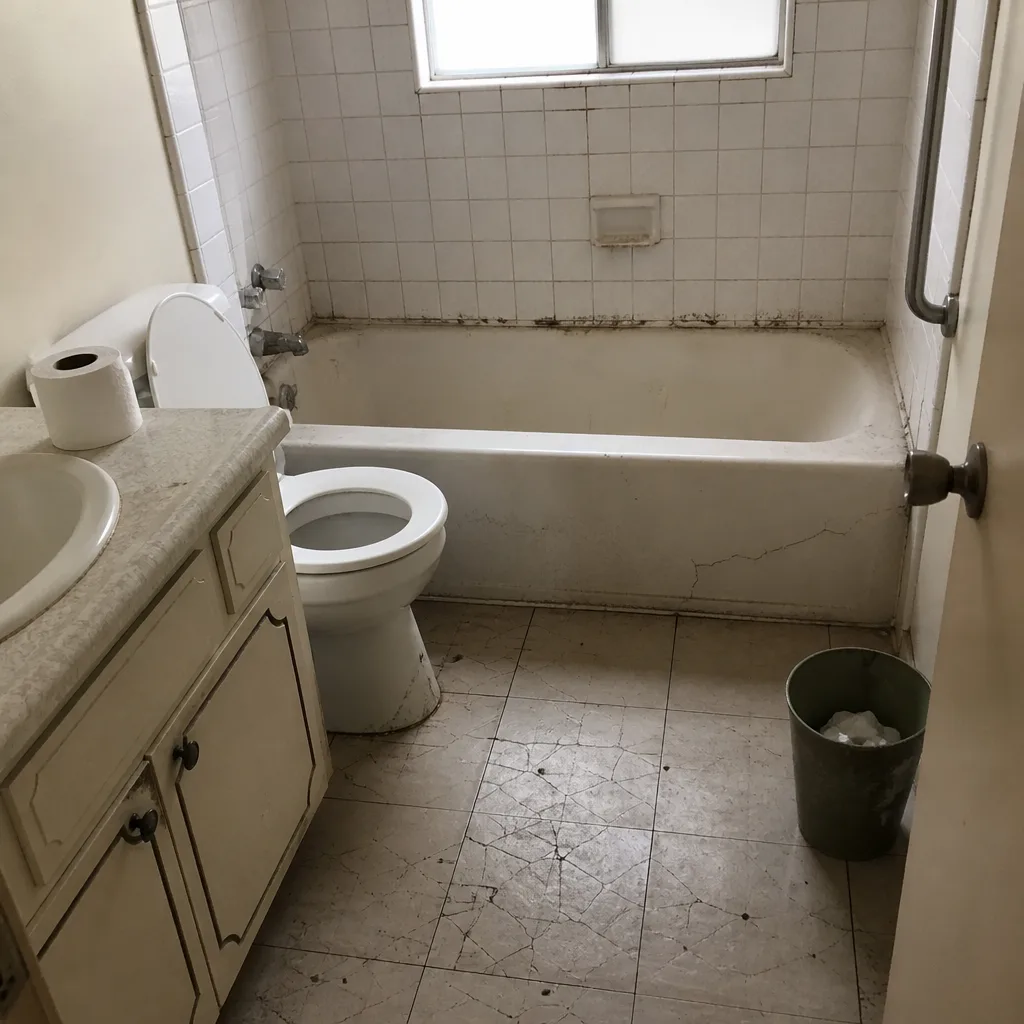 Before
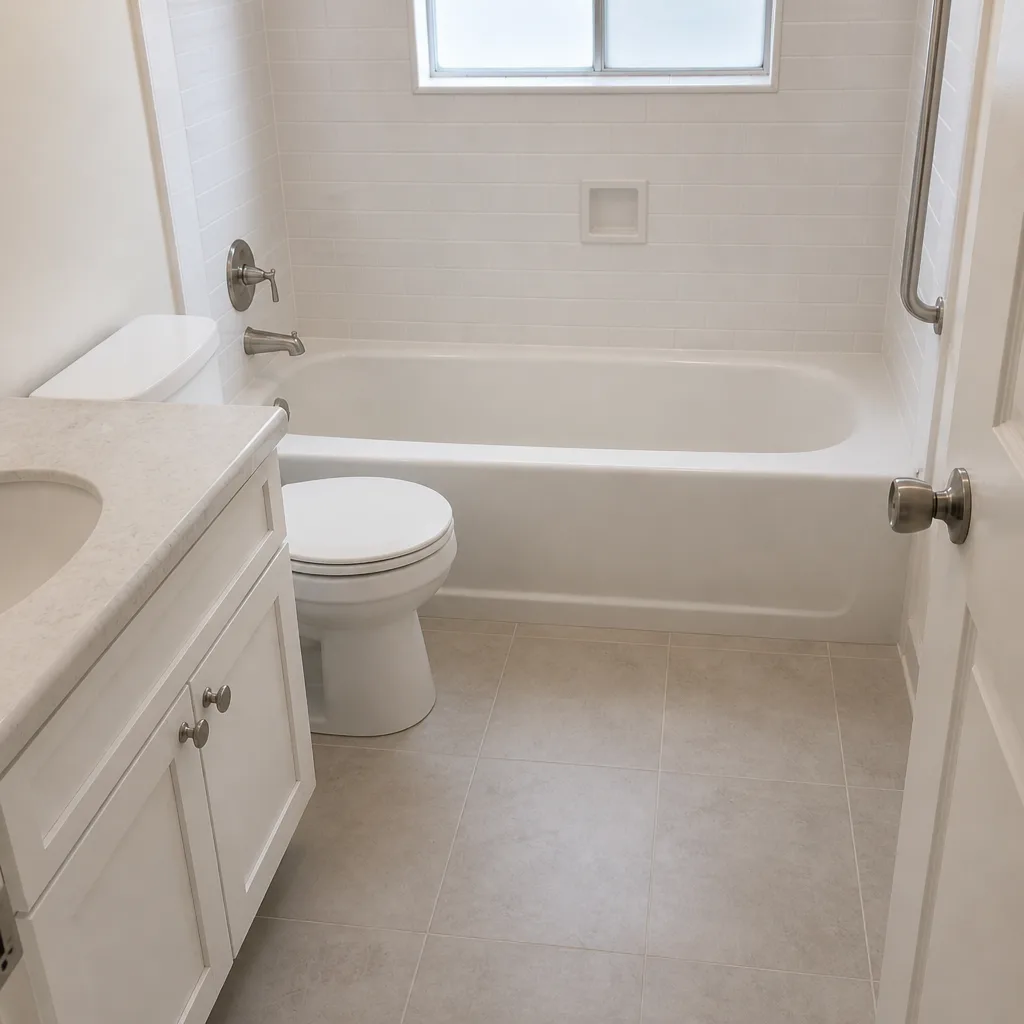 After
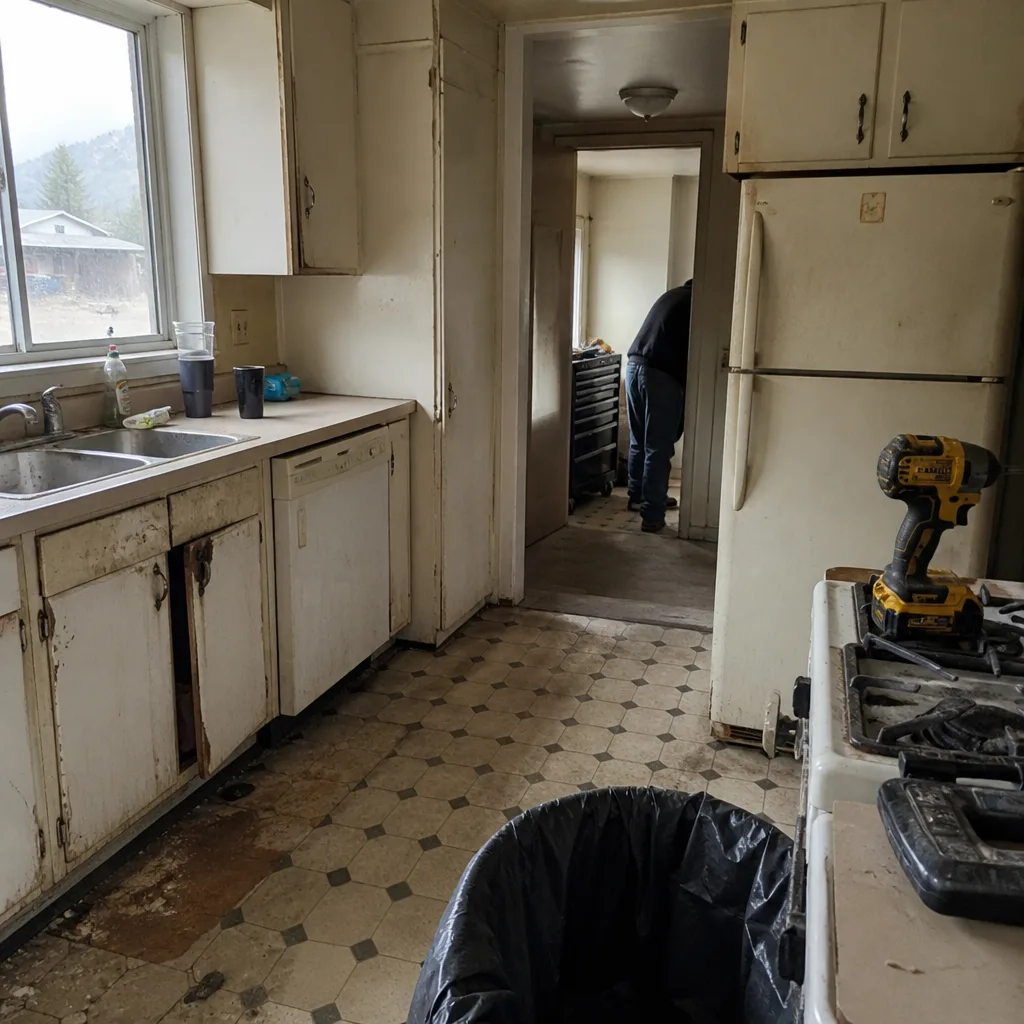 Before
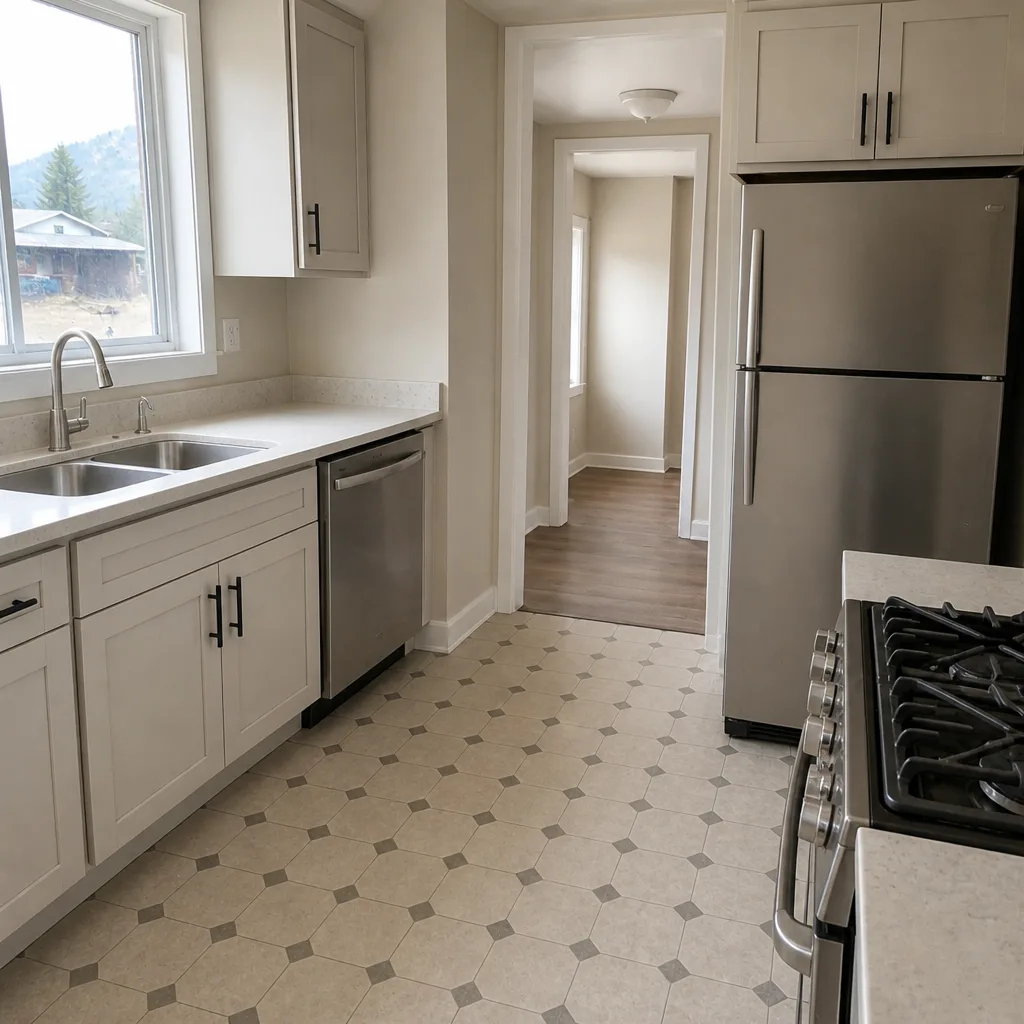 After
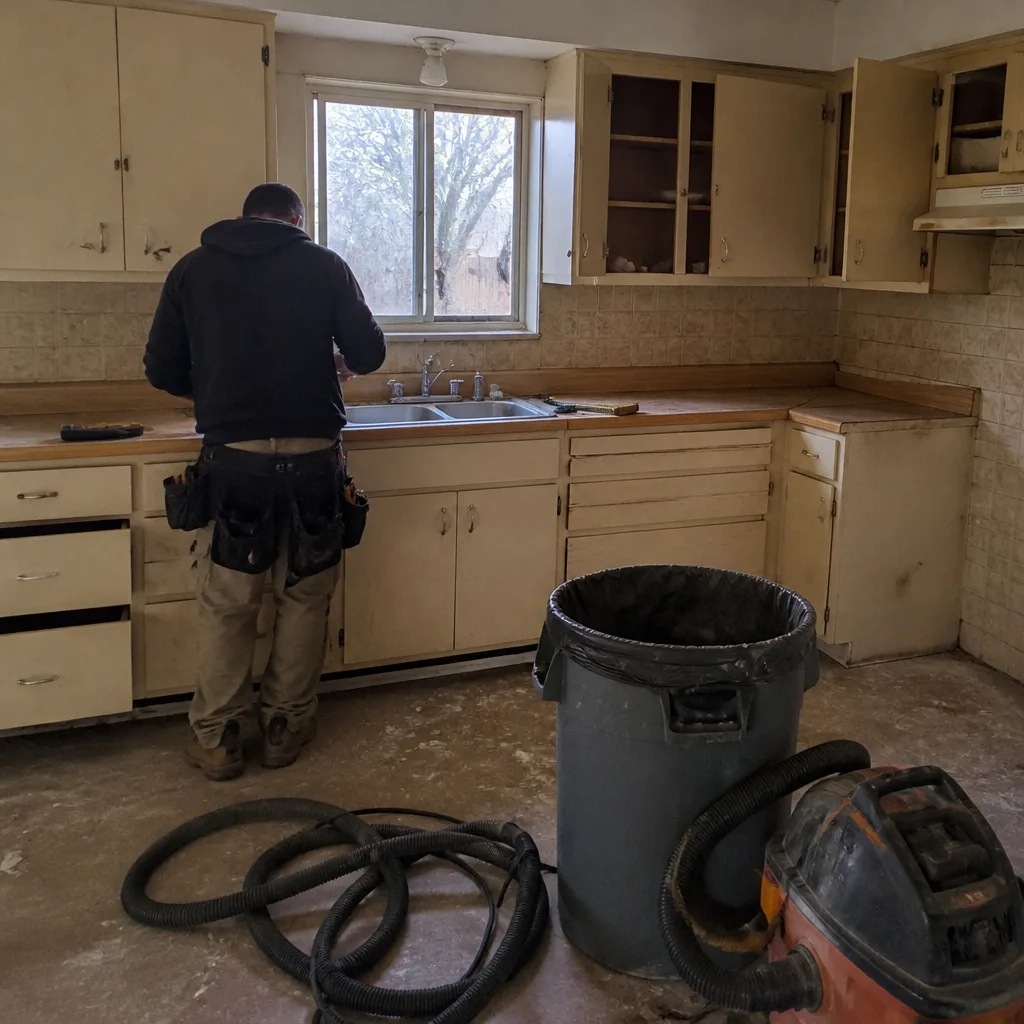 Before
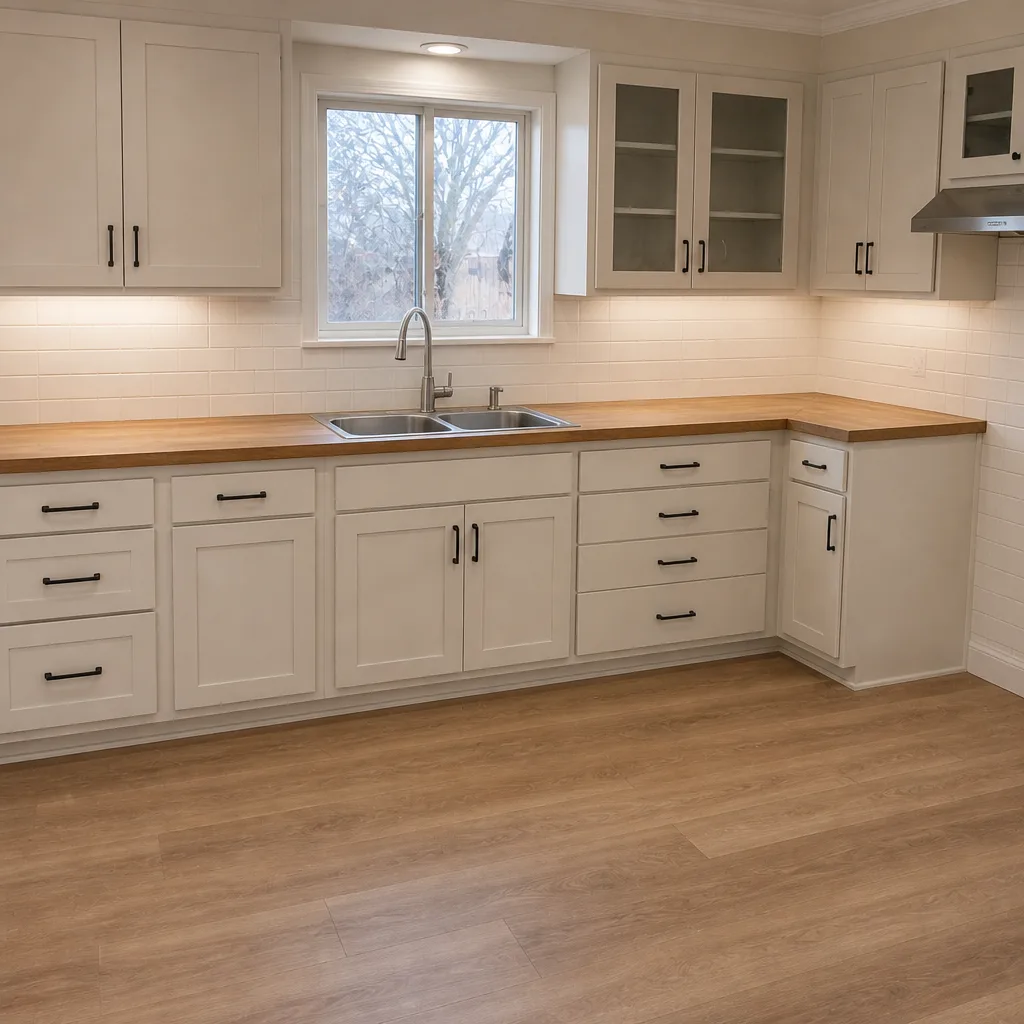 After
When to Call a Professional
Call a licensed contractor when the work touches structure, electrical, plumbing, gas, or a permit, and when the timeline itself matters to your family. A kitchen without a working sink and a house full of kids is not a DIY weekend. If your scope involves moving walls, reworking a bathroom layout, or a whole-home remodel, the permit and inspection path is required, and a professional who knows the Clark County calendar will finish faster than a self-managed job. Mason Remodeling Enterprise offers free estimates in Enterprise. Call (844) 797-6157 for an exact quote and a clear phase-by-phase timeline, with a written price before any work starts.
Frequently Asked Questions
A kitchen remodel in Enterprise typically takes 6 to 12 weeks, with cabinet lead times being the biggest factor. Order KraftMaid or Wellborn cabinets before demo and add 2 to 4 weeks if plan review and inspections are required. Call (844) 797-6157 for a phase schedule tied to your exact scope.
A bathroom remodel usually takes 3 to 6 weeks, with tile, waterproofing, and fixture install driving the timeline. Small bath permits can add several days for rough-in and final inspection. Call (844) 797-6157 for an estimate and a written schedule.
No. At Mason Remodeling Enterprise, the price is fixed and written before any work starts, so the final invoice matches the quote. If hidden conditions appear after demo, you’ll hear about it before any scope change is made. Call (844) 797-6157 to see the written price before you commit.
Yes. Every permitted scope runs through the contractor with the Clark County process, and we build the inspection calendar into your timeline. That’s a big reason our Enterprise schedules hold. Call (844) 797-6157 to talk through your permit needs.
The most common delay in Enterprise is material lead time, especially for windows and cabinetry ordered after demo. Inspection scheduling and summer heat holds for exterior work come next. Call (844) 797-6157 and we’ll front-load your order dates to prevent them.
Every technician is background-checked and identity-verified under the Threshold Standard, and you receive their name and photo before the visit. They arrive in a clean marked uniform with a photo ID badge at the door. Call (844) 797-6157 for a free estimate, and we’ll introduce your crew before they arrive.
The Bottom Line
Timeline estimates that skip permits, inspections, and material lead times aren’t really schedules; they’re sales pitches. Real timelines in Enterprise add 2 to 6 weeks for Clark County permit and inspection scheduling, front-load long-lead material orders before demo, and build inspection and weather buffers into each phase. Kitchens run 6 to 12 weeks, baths 3 to 6, and whole-home projects 4 to 9 months. The right contractor gives you a written price and a phase-by-phase schedule before work starts, and stands behind both with a guarantee. That’s the difference between a promised timeline and a plan.
Ready to plan your project? Call (844) 797-6157 for a free estimate from Mason Remodeling Enterprise, backed by a written price and the 365-Day Done Right Promise.
For more on our approach, start at the Mason Remodeling Enterprise home.
Written by the team at Mason Remodeling Enterprise.