Last updated November 17, 2026






Free written scope consultation - allowances, timeline, and change-order rules on paper before a single trade is scheduled
How to Hire a Construction Contractor in Enterprise: A Step-by-Step Guide
Nevada’s contractor licensing board logs hundreds of complaints a year, and a striking share come from homeowners who did check the license. They verified the number, saw “active,” and hired. What they never checked was the complaint history, the bid structure, or who would actually show up at the door. In a high-growth market like Enterprise, where new subdivisions keep adding homeowners faster than reputations can mature, those blind spots cost real money. This guide walks you through the vetting sequence that closes them: license verification in four minutes, the estimate-versus-bid distinction that decides who eats a cost overrun, the crew question most people never ask, and the payment schedule that tells you whether a contractor is solvent or desperate.
Quick Answer
To hire a construction contractor in Enterprise, verify the contractor’s Nevada State Contractors Board license and read its complaint history, insist on a written line-itemized bid rather than a lump-sum estimate, get the names of the people who will physically be on your property, and never pay more than a modest deposit before work begins. A written price before any tool is unpacked is the single best protection you have.
Styles & brands we work with
- Kitchen remodeling
- Bathroom remodeling
- Home additions & ADU
- Roofing
- Windows & doors
- Driveway & pavers
- Fence
Table of Contents
- Step 1: Verify the Nevada License and Its Complaint History
- Step 2: Demand a Line-Itemized Bid, Not an Estimate
- Step 3: Ask Who Will Actually Be on Your Property
- Step 4: Surface Undisclosed Subcontracting
- Step 5: Read the Payment Schedule Before You Sign
- Step 6: Confirm Insurance and Workers’ Comp the Hard Way
- What’s Different About Hiring in Enterprise
Step 1: Verify the Nevada License and Its Complaint History
Every legitimate contractor working on a home in Nevada holds a license from the Nevada State Contractors Board (NSCB). The license number is public, and so is the disciplinary record attached to it. You can pull both in under four minutes if you know where to look.
Here’s the sequence we walk homeowners through, and it’s the same sequence we’d want used on us:
- Go to the NSCB website and open the license search. This is the official state database, not a review site.
- Enter the license number from the contractor’s bid or business card. Confirm the license is active, not expired or suspended.
- Check the classification. Nevada licenses are classified by the type of work allowed (residential, commercial, specialty). Make sure the classification actually covers your project. A specialty license may not permit whole-home remodel work.
- Open the complaint and disciplinary history tab. This is the step almost everyone skips. You’re looking for patterns: multiple complaints about incomplete work or payment disputes tell you more than any five-star review.
- Verify the name on the license matches the legal entity on your contract. If the license says one company and the paperwork says another, ask why before you sign anything.
In our experience working across Enterprise and the surrounding valley, the contractors who welcome this check are the ones you want. A company that gets skittish when you mention the NSCB search is answering your question for you.
Step 2: Demand a Line-Itemized Bid, Not an Estimate
This is where a lot of Enterprise homeowners get burned, and it has nothing to do with the license. A written estimate and a written bid are legally different things, and the difference matters the moment your project hits a surprise.
An estimate is a good-faith guess at what the work will cost. It’s a projection. If the job runs long or a material price moves, an estimate gives the contractor room to adjust the number, and the adjustment lands on your final invoice.
A line-itemized bid is a fixed promise. Each line states the scope, the material, and the price: framing, drywall, tile, fixtures, labor. It’s itemized so you can see exactly what you’re paying for and what isn’t included. When the bid is fixed, the contractor absorbs the overrun, not you.
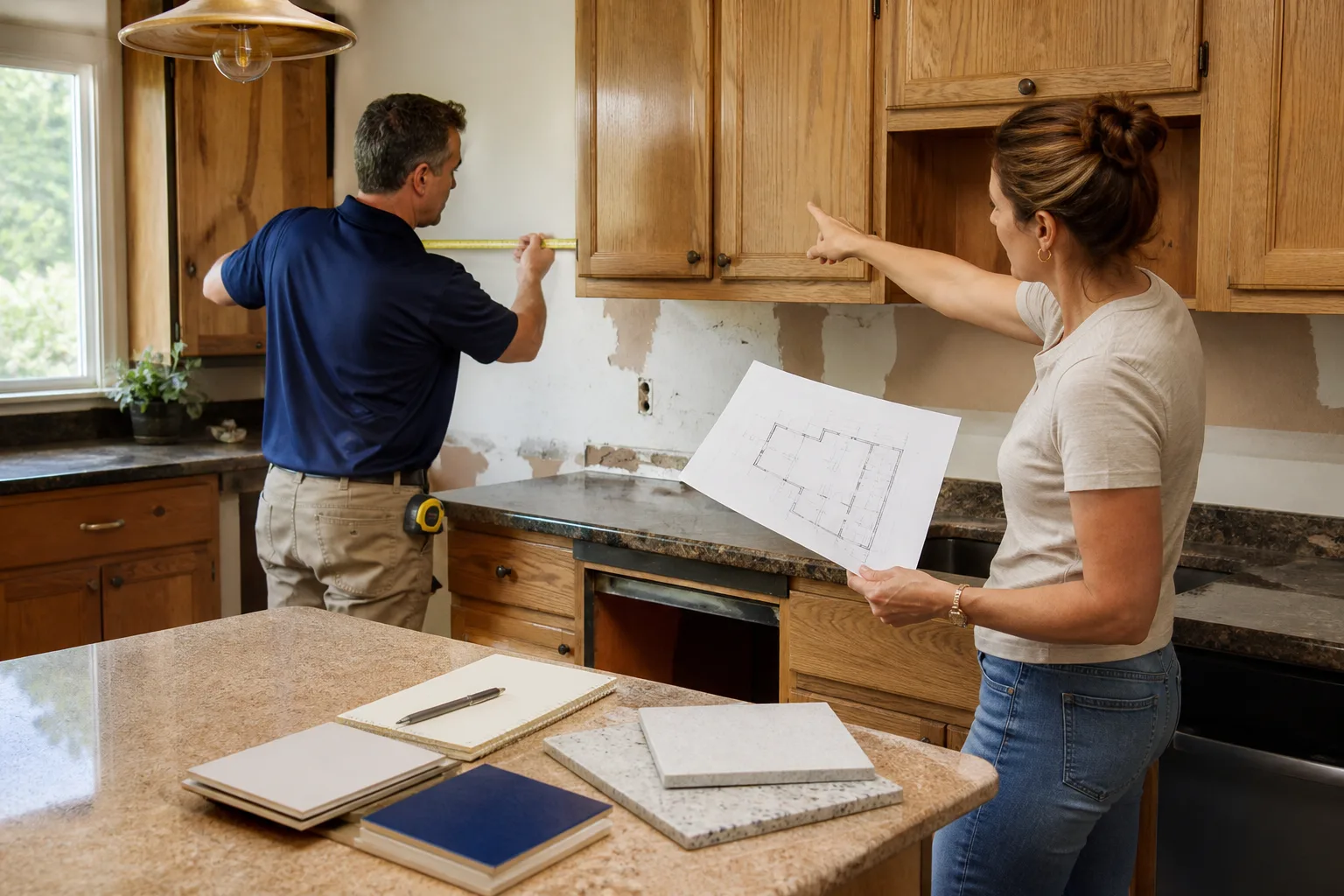
When you’re pricing a kitchen or bath, ask for the bid in writing before work starts. A written price before any work begins isn’t a favor or an upgrade; it’s the baseline. If a contractor can only give you a verbal number, or a single lump-sum figure with no breakdown, you’re looking at an estimate dressed up as a bid. The line items also protect against a quiet scope creep – the “we didn’t include that” conversation that shows up on the final bill.
At Mason Remodeling, a written price on every project is standard, never an optional line. For a closer look at how itemized bids break down on remodeling work, see our general contractor services in Enterprise.
Step 3: Ask Who Will Actually Be on Your Property
Most homeowners ask about the company. Very few ask about the people. The company name on the contract tells you almost nothing about the strangers who will be walking through your home for weeks.
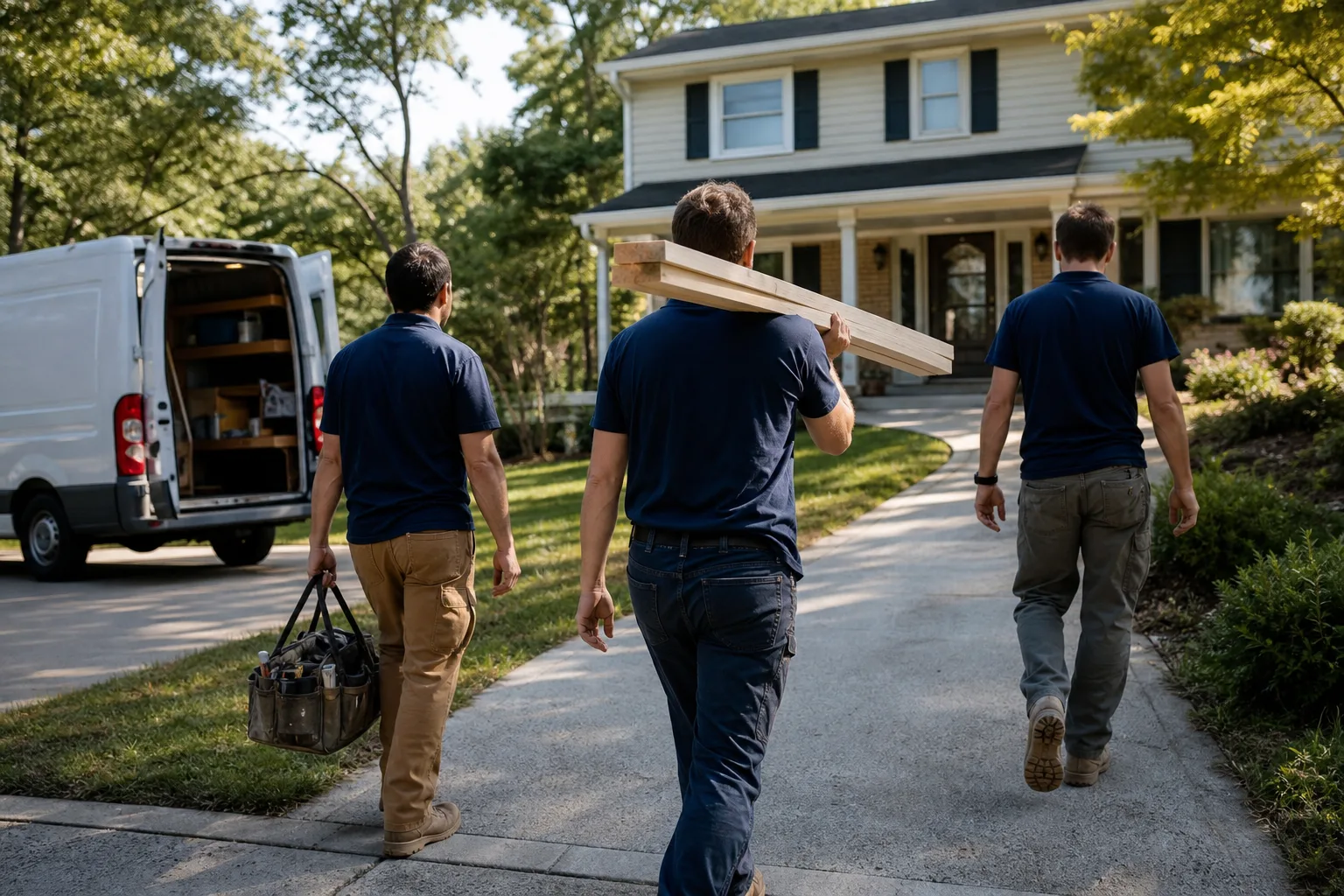
Ask this directly, in the first conversation: “Who will physically be on my property, and how will I know them?” A contractor with a real crew-verification process can answer without hesitating. Under The Threshold Standard, every crew member is background-checked, identity-verified, arrives in a clean marked uniform, and shows a photo ID badge at the door. The homeowner receives the technician’s name and photo before the visit, not after.
Why does this matter so much in Enterprise? Because a lot of the housing here serves families with young children and older adults who are home during the day. Opening the door to a stranger is a safety decision, and it deserves a real answer, not a handshake and a promise. If a contractor can’t tell you the names of the people coming, or brushes off the question, that’s your signal.
The question also surfaces something practical: a company that can name and verify its crew usually has one. A company that can’t is often farming the labor out, which we’ll get to next.
Step 4: Surface Undisclosed Subcontracting
In fast-growth markets, it’s common for a contractor to carry a license and a sales operation while subcontracting 100% of the actual labor. Sometimes that’s fine and disclosed. Sometimes it means the people in your home were hired last week and nobody verified them. The homeowner pays for the difference in quality, timing, and safety.
You can surface this without being confrontational. Ask these in the first meeting:
- “What percentage of this job will be done by your own crew versus subs?” A straight answer is a good sign. A vague one is not.
- “Will I get the names of the subcontractors before they show up?”
- “Who verifies the background of anyone who isn’t on your payroll?”
- “Is the subcontractor licensed and insured separately, and can I see proof?”
In a post-growth market, “we use a network of vetted partners” can be true, or it can mean nobody is really accountable. The follow-up question is the one that tells you which: who verifies them, and can I see it in writing? Get the answer on paper in the contract’s scope section. If a contractor can’t tell you who’s swinging the hammer, that’s the red flag, more than the subcontracting itself.
Step 5: Read the Payment Schedule Before You Sign
A payment schedule is a window into the contractor’s cash position. A healthy one is tied to milestones the homeowner can see with their own eyes. An unhealthy one front-loads the contractor’s risk onto you.
A legitimate schedule looks like this:
- A modest deposit at signing – commonly in the range of 10% to a third of the project total, depending on material lead times.
- Payments tied to completed, inspected milestones: demo done, rough-in done, drywall and paint done, final walkthrough.
- A holdback (often 10% or so) released only after you’ve done a final walkthrough and signed off.
- No payment for work that hasn’t started. No large cash demand “to lock in materials” beyond a disclosed, reasonable deposit.
A schedule structured to protect the contractor instead of you looks different: large sums up front, a big payment before framing even starts, or a request to pay in cash with no receipt trail. Nevada law has something to say about deposits, and a licensed contractor should be able to show you, in the contract, exactly how the money maps to the work. Never let a payment schedule get ahead of the physical progress you can see.
Step 6: Confirm Insurance and Workers’ Comp the Hard Way
Ask for a certificate of insurance showing general liability and workers’ compensation coverage, and don’t accept a photo of an old certificate. Call the insurer listed on it and confirm the policy is current and names your address as a covered job site. This takes ten minutes and it’s the difference between a covered incident and a lawsuit with your name on it.
Why it matters: if an uninsured worker is injured on your property, the medical costs can land on your homeowner’s policy. A bonded and insured contractor puts a professional layer between you and that risk. Ask for the certificate before work starts, every time, and file a copy with your contract.
What’s Different About Hiring in Enterprise
Enterprise has grown fast, and fast growth shapes the contractor market in specific ways. New subdivisions mean a steady stream of jobs for builders and remodelers, which is good. It also means some companies expand faster than their crews and quality controls can keep up. That’s exactly why the vetting sequence above matters more here than it would in an older, slower market.
Two local realities worth knowing. First, the desert climate is brutal on building materials – intense summer sun and heat cycling wear down roofing, sealants, and exterior finishes faster than most homeowners expect. If your project touches the roof or exterior, ask what products the contractor plans to use and whether they spec for high-heat exposure. Specification-grade materials from manufacturers like Owens Corning or IKO are built for this climate in a way bargain products aren’t. Second, any exterior or structural work needs a building permit through Clark County. Ask whether the contractor pulls the permits and schedules the inspections, and get it in writing. A contractor who suggests skipping the permit is telling you something about how they operate.
If you’re remodeling a bathroom or a kitchen, our guides on bathroom remodeling in Enterprise and kitchen remodeling in Enterprise go deeper on what those projects cost and how the scope breaks down. And if you’re starting from scratch on a whole-home project, the Mason Remodeling Enterprise home page lays out how we work.
Common Mistakes to Avoid
- Checking the license but not the complaint history. An active license only tells you the contractor passed the initial bar. The disciplinary record tells you how they’ve behaved since.
- Accepting a verbal estimate. A number spoken in your kitchen is worthless the moment the invoice arrives. Insist on a written, line-itemized bid before any work begins.
- Paying too much up front. A large deposit structured to protect the contractor means you’re carrying the risk. Tie payments to visible milestones and hold back the final payment until you’ve signed off.
- Never asking who’s coming. The company name on the bid isn’t the person at your door. Ask for names and verification, and confirm it before the visit.
- Skipping the permit. In Enterprise, exterior and structural work needs a Clark County permit and inspection. Work done without one can complicate resale and void insurance coverage.
- Taking a photo of an insurance certificate at face value. Call the insurer and confirm the policy is active and covers your address.
- Assuming the lowest bid is the best deal. A bid well below the others often means a missing line item, an unlicensed sub, or a scope that will grow. Compare line by line, not total to total.
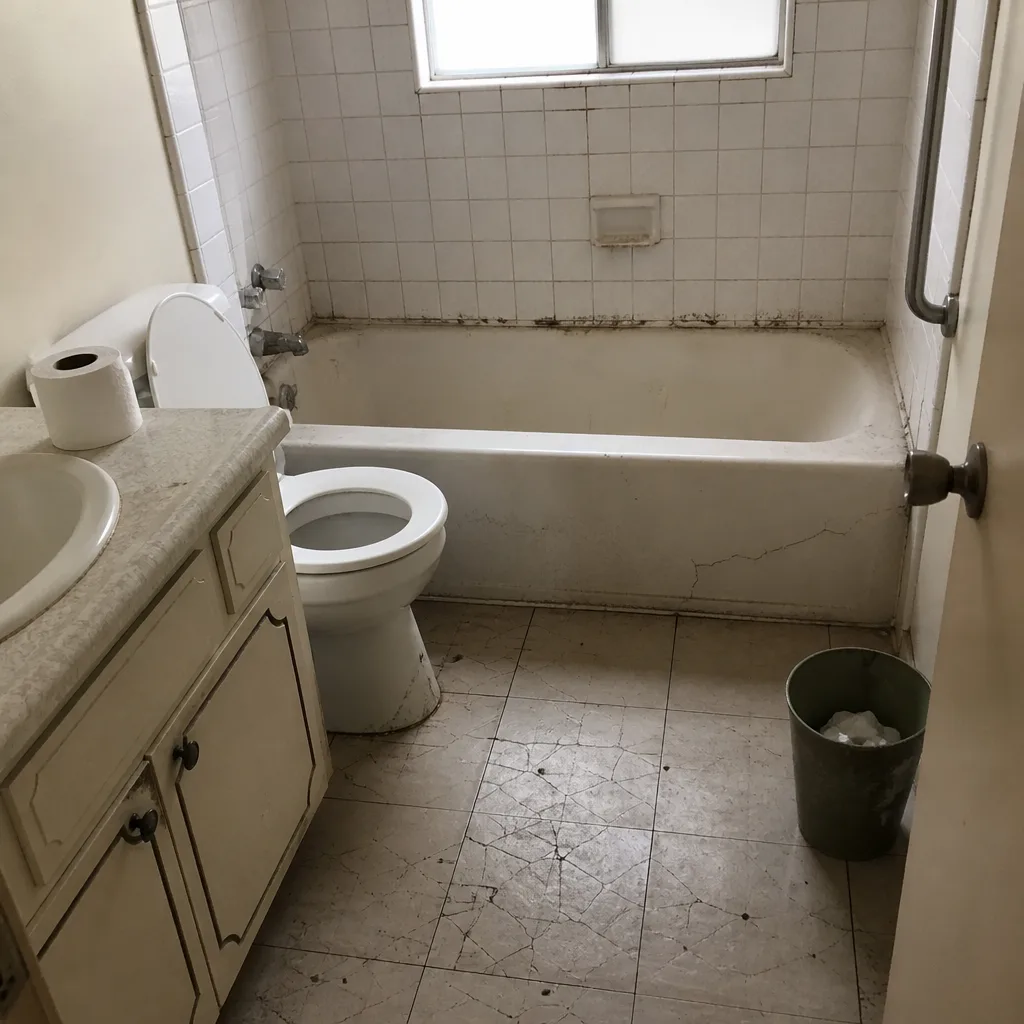
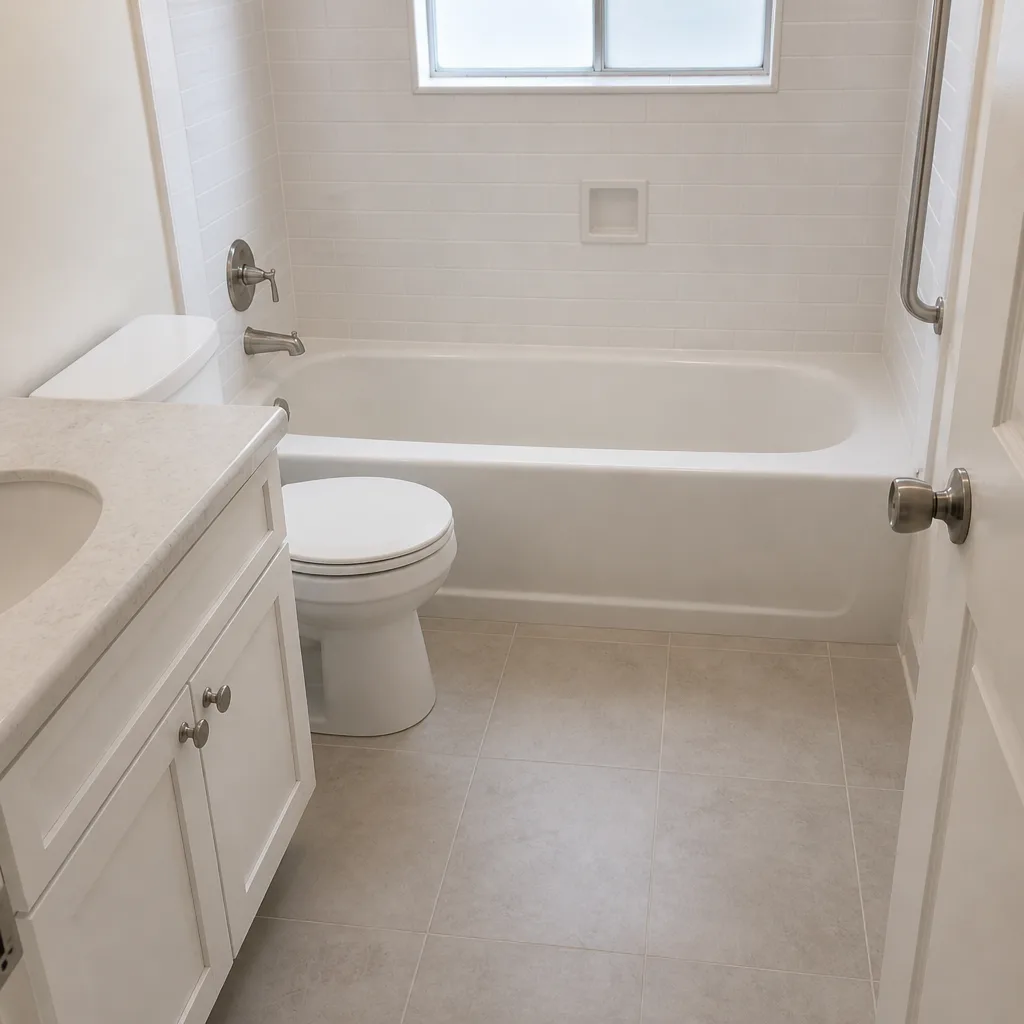
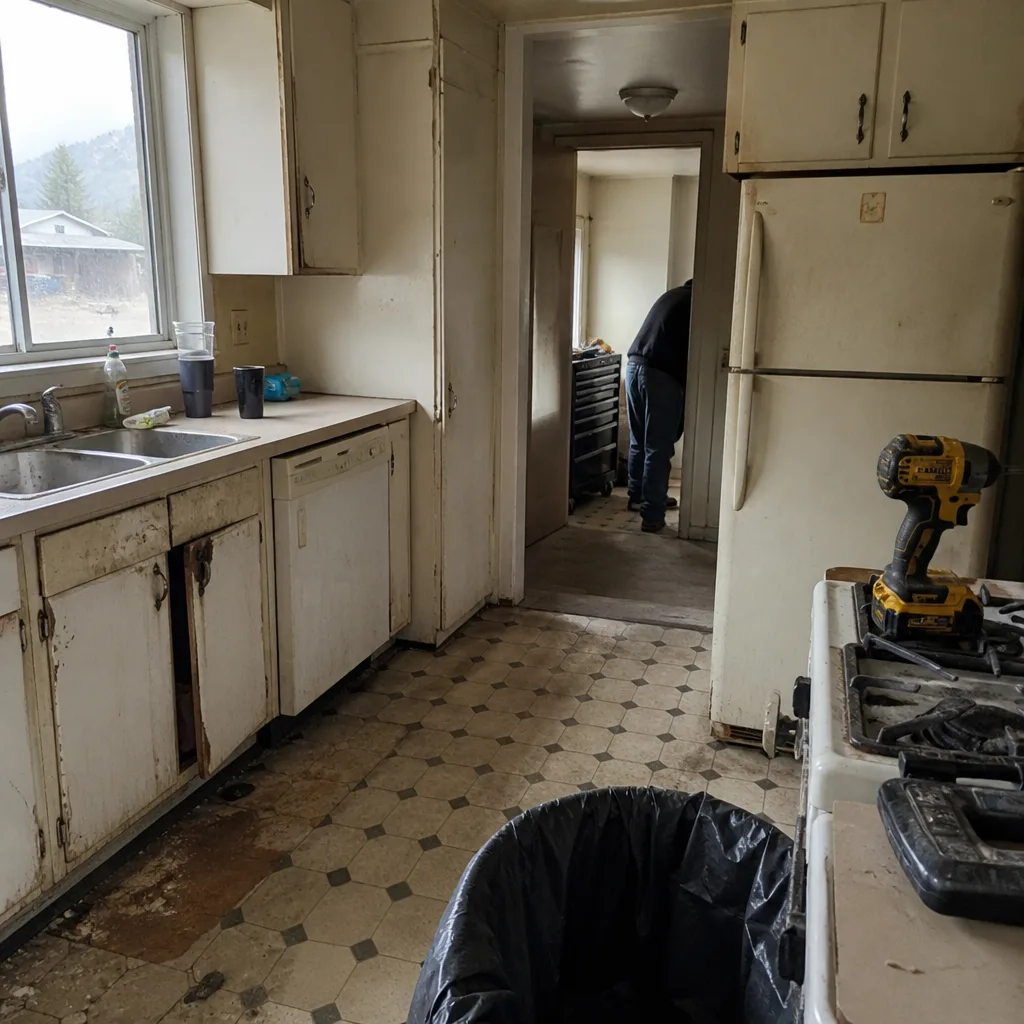
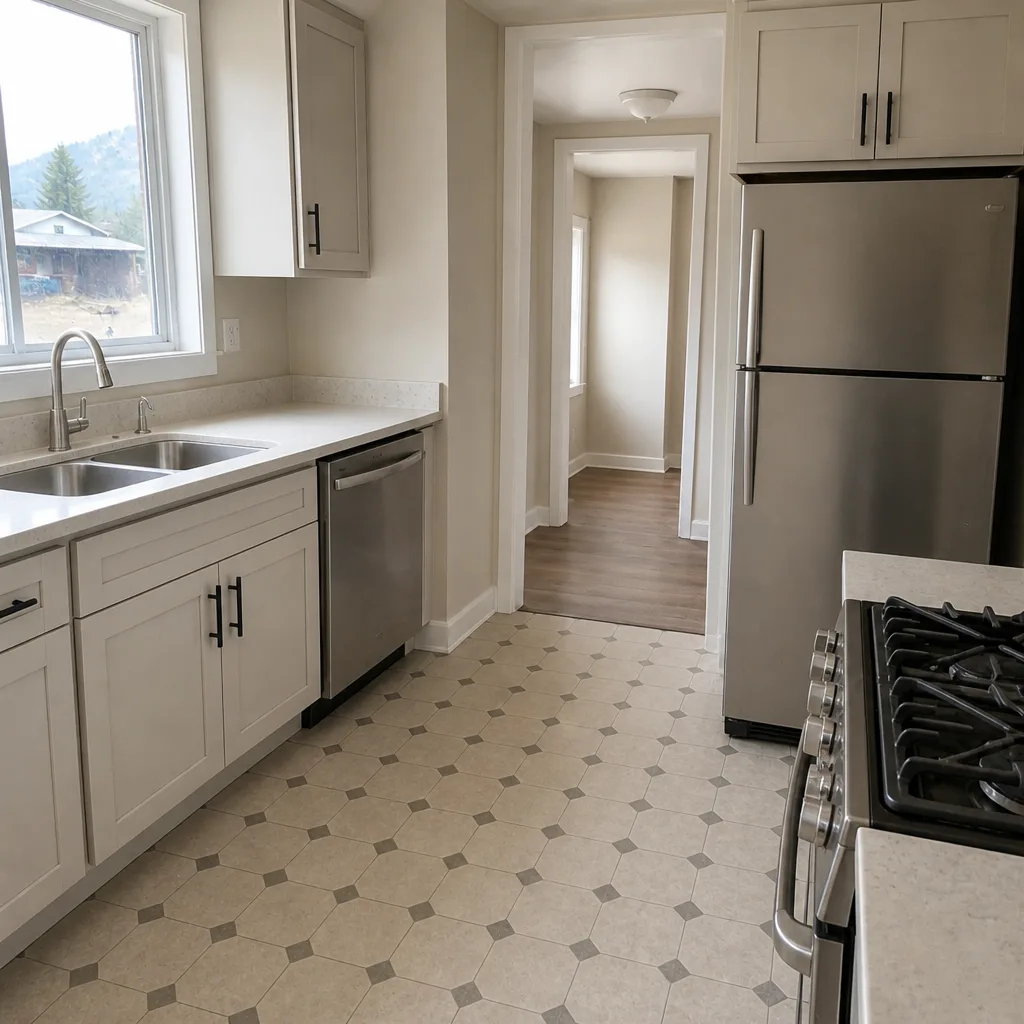
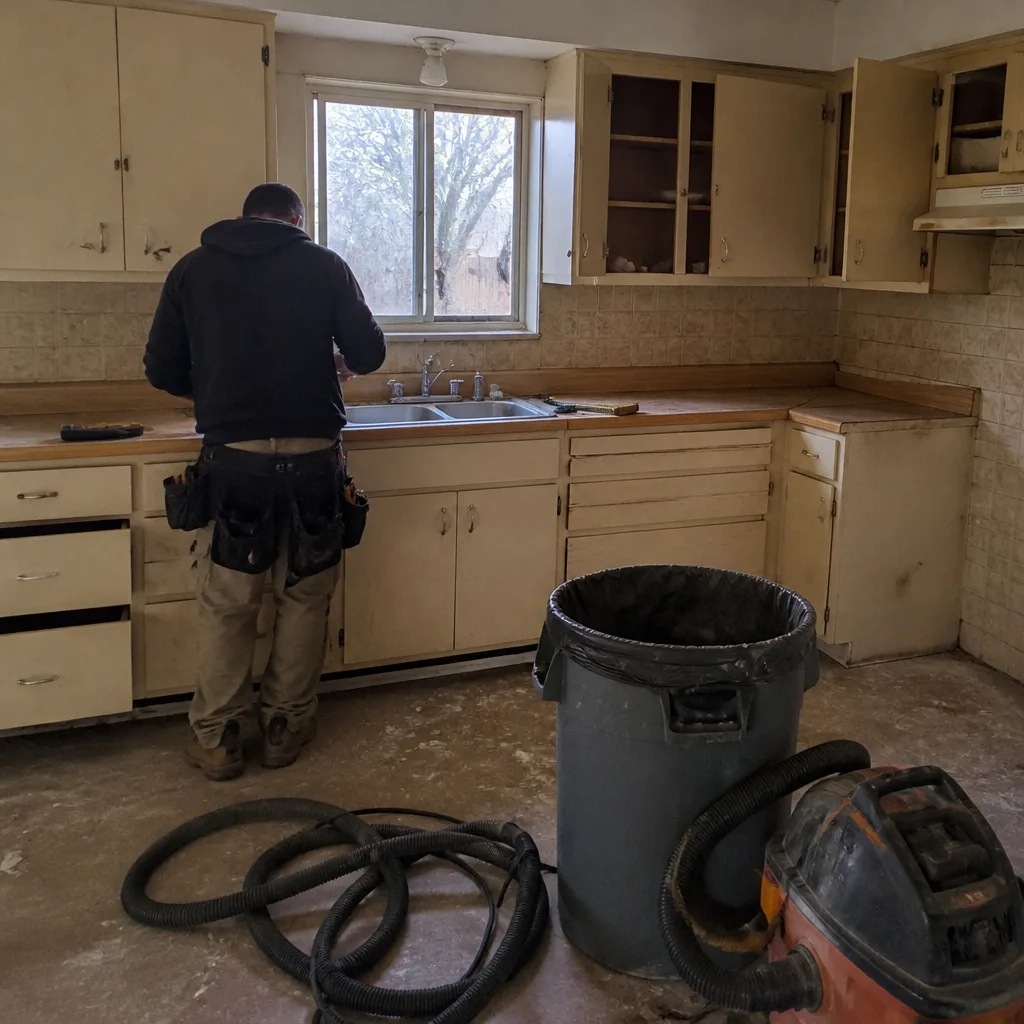
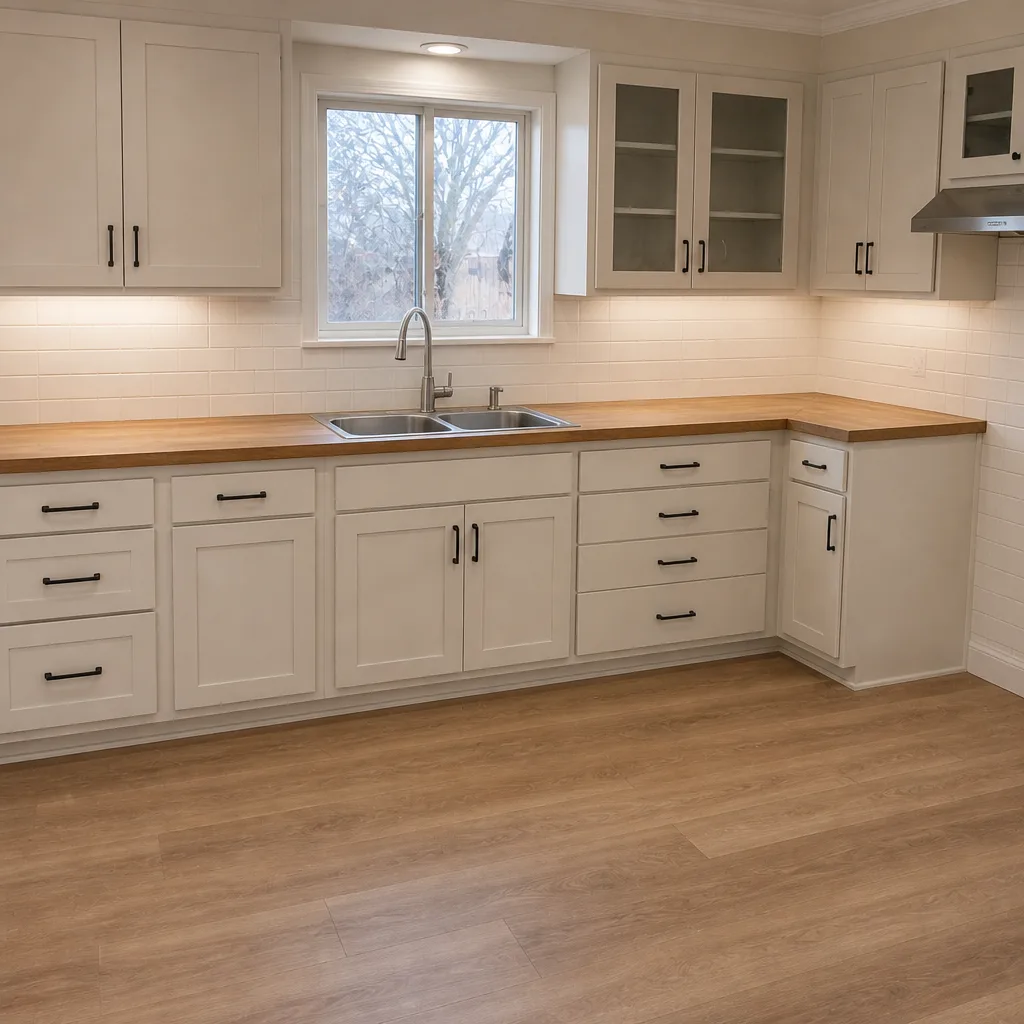
See the difference
 Before
 After
 Before
 After
 Before
 After
When to Call a Professional
Some projects are weekend DIY; others aren’t worth the risk. Call a licensed contractor in Enterprise when the work involves anything structural, when it touches plumbing or electrical inside a wall, when it requires a permit, or when the scope is bigger than a single room. Roof work and any high-tension component – garage doors, for instance, or anything involving springs or cables – belongs to trained professionals; those parts can cause serious injury and aren’t a DIY project no matter how many videos you watch. If you’re unsure whether your project crosses the line, that uncertainty is usually the answer. Mason Remodeling Enterprise offers free estimates in Enterprise – call (844) 797-6157 to schedule yours, and get a written price before any work starts.
Frequently Asked Questions
Search the Nevada State Contractors Board database using the license number, confirm the license is active and the classification covers your project, then open the complaint history tab and look for patterns. The whole check takes under four minutes at the state website. If you want a hand walking through it, call Mason Remodeling at (844) 797-6157 and we’ll point you to the right resources – estimates are free.
A written estimate is a good-faith projection that can move; a written line-itemized bid is a fixed promise for the stated scope. If the job runs over, a bid protects you and an estimate may not. Always ask for the bid in writing before any work begins.
With a properly itemized, fixed bid it shouldn’t – that’s the point of the bid over an estimate. Change orders should only happen when you request a scope change, and each one should be in writing before the extra work begins. Call (844) 797-6157 for a written price on your project; estimates are free.
Only if they’re undisclosed or unverified. Ask what percentage of the work your contractor’s own crew will do, whether subs are licensed and insured separately, and who verifies their background. Get the answers in writing in the contract’s scope section.
A modest deposit – commonly in the range of 10% to a third of the total, tied to material lead times – is normal. Anything more, or any request to pay for work that hasn’t started, is a reason to slow down and read the schedule line by line.
A real guarantee states its terms plainly: what’s covered, what’s excluded, and for how long. Ours is a 365-Day Done Right Promise – if the work isn’t right within a year of completion, we make it right at no cost to you. Ask every contractor to put their guarantee in writing before you sign.
The Bottom Line
“Get three bids and check reviews” is the floor, not the ceiling. The sequence that actually protects you in Enterprise is: verify the license and its complaint history, demand a fixed line-itemized bid, ask who will physically be on your property, surface any undisclosed subcontracting, and read the payment schedule against the work you can see. Each step is fast. Together they close the gaps that catch homeowners who thought they’d done enough. A contractor who can answer all five without flinching is the one worth your money.
Call (844) 797-6157 to schedule your free estimate with Mason Remodeling Enterprise. We’ll walk you through a written, itemized price before any work begins, and back the finished job with our 365-Day Done Right Promise. A live person answers every call, around the clock – no call trees, no voicemail.
Written by the team at Mason Remodeling Enterprise.