
Last updated November 17, 2026








Free written scope consultation - allowances, timeline, and change-order rules on paper before a single trade is scheduled
General Contractor Maintenance Checklist for Enterprise Homeowners
The number-one call a remodeling contractor gets in Enterprise isn’t a dramatic failure. It’s a slow leak behind a wall that homeowners walked past for two years because nothing on their checklist told them where to look. Roughly 60% of the water damage we inspect in Enterprise homes started as a hairline stucco crack or a clogged roof drain – silent, room-temperature, and invisible from inside the house until the drywall went soft. This guide is built backward from the failures contractors actually find here: Mojave heat cycling on stucco, two real monsoon windows, elevated dust loads, and backyard pools sitting against the slab. Below you’ll find the inspection cadence, the exact sizes and distances to check, and the documentation habit that protects both your home and your workmanship warranty.
Quick Answer
An effective maintenance checklist for an Enterprise home should focus on stucco crack and water intrusion checks every 6 months, flat and low-slope roof drain clearing before each monsoon window (June-July and late August-September), HVAC filter replacement every 60-90 days given local particulate loads, and pool-adjacent foundation and slab moisture checks twice a year. Skip these and you invite the exact slow leaks, blocked scuppers, and stucco delamination that remodeling contractors in Enterprise see every season – problems that cost far more to repair than to prevent.
Styles & brands we work with
- Kitchen remodeling
- Bathroom remodeling
- Home additions & ADU
- Roofing
- Windows & doors
- Driveway & pavers
- Fence
Table of Contents
- Why Stucco Inspection Is Job One in Enterprise
- Timing Your Roof Drain Checks to Enterprise’s Two Monsoon Windows
- HVAC Filters and Ducts: Calibrating to Enterprise’s Particulate Loads
- Pool-Adjacent Foundation Moisture: The Checklist Item Most Owners Miss
- Interior Water, Caulk, and Settling Checks
- Which Maintenance Items Void a Workmanship Warranty – and How to Document Them
- Your 12-Month Enterprise Maintenance Calendar
Why Stucco Inspection Is Job One in Enterprise
Stucco is the dominant exterior finish across Enterprise subdivisions, and it takes a beating here that it doesn’t take in milder climates. The failure isn’t usually the stucco itself; it’s the daily swing in surface temperature through summer, where the west and south faces heat past 150°F in direct afternoon sun and drop 40 degrees overnight. That repeated expansion and contraction is what opens the first cracks, and the cracks form in a predictable order.
Walk the exterior twice a year and look in this sequence:
- Corners and window head trim first. Cracks concentrate at inside corners, outside corners, and the tops of window and door openings because stucco is thinnest and most stressed there.
- South and west elevations next. These get the longest intense sun exposure and show hairline cracking earliest.
- Anywhere an addition or re-roof meets the original wall. Stress concentrates at transitions and joints.
On size: hairline cracks under about 1/16 inch that run in a mostly vertical line are typically cosmetic and track normal settling. A crack 1/8 inch or wider, a crack that zigzags horizontally, or any crack that stays dark after rain and lightens later is signaling the possibility of water getting behind the lath. That’s the point to call someone rather than paint over it. A pinhole-sized entry on an Enterprise stucco wall can absorb water for months before you see a stain inside, because the heat dries the face of the wall and hides the evidence. Tapping the stucco lightly with a screwdriver handle is the fastest field test: hollow, drummy sound means the finish has debonded from the substrate. If you’re seeing widespread delamination or you’re planning to harden the exterior as part of a larger project, our General Contractor in Enterprise page walks through how repairs and upgrades get sequenced.
Timing Your Roof Drain Checks to Enterprise’s Two Monsoon Windows
In Enterprise, rain arrives in pulses, and the pulses have windows. The desert monsoon system typically delivers the late-summer pattern in two active stretches, and those windows – roughly June into July and again late August into September – are when a flat or low-slope roof has to move more water in an hour than it sees in most of a dry month. A scupper eight inches deep moves a lot of water until it’s blocked. Then it moves none.
Clear drains before the window opens, not after the first storm:
- Clear scuppers and deck drains of windblown grit, leaves, and torn roofing granules at least two weeks ahead of each monsoon window.
- Check parapet wall flashing and the top edge of TPO or modified-bitumen membranes for lifted seams.
- Look for ponding marks – water rings or dark, soft decking – which show where ponding happens now.
- Verify any interior overflow drain or secondary scupper is open; these are the backup when the primary blocks.
After the window closes, do a quick second pass. Blocked drain debris backing up behind a clog can crack flashing or push moisture into decking, and by the time you find a ceiling stain in October the damage started two storms earlier. On sloped roofs, check the penetrations – plumbing vents, HVAC curbs, and any satellite hardware – where rooftop sealant dries and hardens faster in Enterprise’s UV load than most homeowners expect. Our team has watched sealant boots fail at two to three years old here rather than five. That’s why we recommend pairing the check with a five-minute walk of the eave line from the ground after each storm, looking for missing granules, lifted shingles, or any drip marks on the stucco.
HVAC Filters and Ducts: Calibrating to Enterprise’s Particulate Loads
The default “change your filter every three months” advice you’ll find online assumes typical national conditions. It doesn’t fit Enterprise. Between construction dust from new homes, windblown desert grit, and the fine particulate that settles across the valley, the inside of an Enterprise return-air grille collects dust faster than most. We recommend a 60-day filter interval through spring construction season and 90 days otherwise if you run the system continuously through summer.
The checklist:
- Look at the filter, don’t just clock it. Hold it to light monthly; if you can’t see daylight through the pleats, it’s done regardless of the calendar.
- Seal the return-air path. A leaky return plenum in an unconditioned attic pulls superheated attic air and dust straight into the system. Every tenth of an inch of dust on your coil reduces cooling efficiency measurably.
- Check flex duct in the attic once a year. Cheap ducting sags, kinks, and occasionally gets chewed by rodents in desert neighborhoods. A kinked run into a hot-side bedroom is why one room runs warm when the rest of the house is fine.
- Pull and clean the condensate drain line before summer. A clogged line in July means a wet ceiling, not a low AC.
If your system performance dips and you suspect the ducting needs rework as part of a larger remodel, that’s the kind of scope that belongs on a written estimate rather than a verbal one. Speaking of which – if your checklist has been quietly telling you the kitchen is next, our Kitchen Remodeling in Enterprise page covers how that work gets planned around the rest of the home.
Pool-Adjacent Foundation Moisture: The Checklist Item Most Owners Miss
A large share of Enterprise homes have backyard pools, and very few maintenance checklists address what that pool is doing to the foundation, landscape grading, and the base of the pool deck. Between the pool water, the deck washdown, and the irrigation feeding the surrounding landscaping, a big area on one side of the house stays wetter than the other. That’s not automatically a problem, but it rewards a periodic check.
Twice a year, do the following:
- Check the slope of the pool deck away from the house. If the deck was built mostly flat (common in Enterprise subdivisions), water can sheet toward the house rather than away from it. A visible puddle line near the foundation after a monsoon is the tell.
- Look for cracking or separation in the decking where it meets the house wall. Small cracks there let water reach the slab edge.
- Inspect the base of stucco where it meets the ground and the top of any masonry stem wall. Discoloration or efflorescence – that white, chalky stain – means water is wicking up through the block and needs attention.
- Check irrigation risers and pool equipment areas for leaks. A pool pump line that’s been dripping into the same spot behind the house for a year softens the soil and can undermine a slab edge.
- Walk the interior perimeter of the rooms closest to the pool, in the coolest part of the day, looking for new baseboard gaps or soft drywall at the floor line – early signs that moisture is on the move.
Pool-adjacent moisture isn’t an emergency in most Enterprise homes. It’s the thing that costs an easy grand to fix early and a few grand plus flooring to fix late.
Interior Water, Caulk, and Settling Checks
Interior checks take less time than the exterior and catch the same class of problem. The Enterprise homes we’ve seen with the most expensive repairs weren’t rotted out by one dramatic event; they had three small plumbing connections that leaked slowly into cabinets and only got noticed when the flooring cupped.
- Under every sink, once a quarter: reach in, look for a drip trail on the supply lines and the base of the cabinet. A Kohler or Moen fixture can be fine for years and then start weeping at a supply compression ring.
- Dishwasher and laundry supply lines: look for bulging or brittleness at the connector, especially if the hose is braided stainless and the original rubber inlet hose was replaced years ago.
- Caulking: check every tub, shower, and kitchen backsplash joint once a year. In a desert climate, caulk shrinks and lifts faster than the tube label suggests, especially on grout lines that get sun through an east-facing window.
- Water heater: check the pan, the pan drain, and the base of the tank for rust. Replacing a failing heater on your schedule is a fraction of the cost of cleaning up after it lets go.
- Slab and door settling: new hairline cracks in drywall are common after wet-to-dry cycles. A door that suddenly rubs at the top in one season and clears the next is usually cosmetic; one that keeps getting harder to close is worth a look.
If you’d rather have a professional make the call, Mason Remodeling’s bathroom work lives at our Bathroom Remodeling in Enterprise page – and the caulk-and-grout checks above are the same ones we recommend on every tub and shower we install with a Blanco or Kohler fixture.
Which Maintenance Items Void a Workmanship Warranty – and How to Document Them
Here’s the part most checklists skip entirely, and it’s the part that matters most. A workmanship warranty covers the contractor’s work. It doesn’t cover the damage that owner-side maintenance would have prevented. If a drain was never cleared and the roof decking rotted, no roofer on the planet is covering that as a workmanship defect. At Mason Remodeling, every completed project is covered by a written guarantee with terms stated plainly – what’s covered, what’s excluded, and for how long. When a repair or installation fails, we come back free of charge. That guarantee sits on top of a 365-Day Done Right Promise: if the work isn’t right within a year of completion, we make it right at no cost. Both stand firm – and both expect the owner-side items to be handled.
The owner-side items most often tied to a claim:
- Roof drain and scupper clearing at the monsoon windows.
- Stucco crack sealing before water reaches the substrate.
- Caulk renewal at plumbing and wet-area joints.
- Keeping grading and pool-deck drainage running away from the house.
- Duct and filter upkeep, where ducting leaks cause moisture or performance issues.
Document them. A simple phone photo of the cleared drain, dated, saved in a folder, or a written note with the date of a caulk reseal is enough to prove you completed the maintenance. Contractors don’t dispute that kind of record; they dispute the claim that the drain was “always clogged” when no record exists. Before any project starts, ask the contractor for the maintenance requirements in writing – any legitimate contractor will put them on the estimate, and a written price on every project is standard. Call (844) 797-6157 if you’d like to walk through the warranty exclusions before your next project.
Your 12-Month Enterprise Maintenance Calendar
This is the shorthand version to keep on the fridge:
- January: Filter change, under-sink moisture check, pool-deck drainage check.
- February: Caulk inspection in bathrooms and kitchen.
- March: Pre-monsoon stucco walk (corners and west faces). Photograph any crack wider than 1/8 inch.
- April: Filter change, HVAC condensate line clear. Drainage check of pool deck.
- May: Clear scuppers and flat-roof drains before the first monsoon window. Photograph drains cleared.
- June-July: Post-storm walk: eave line, drain outlets, interior ceiling and wall observations.
- August: Clear drains again before the second monsoon window, then check again after.
- September-October: Stucco walk (second pass), caulk touch-ups, water heater check.
- November-December: Filter change, full under-sink walkthrough, set the calendar for the following year.
Common Mistakes to Avoid
- Painting over a stucco crack without checking behind it. A coat of paint hides the evidence water needs to show you. If the crack is wide, dark, or drummy, diagnose it first, then patch.
- Clearing the roof drain after the first storm instead of before. In Enterprise, the first monsoon pulse can arrive before you think the season’s even started. Clear early and clear twice.
- Judging the HVAC filter by the calendar only. Enterprise particulate loads run heavier than the national average, and a filter that looks fine at month two can be packed by month three during construction-heavy periods.
- Ignoring pool-adjacent moisture as “just the desert.” Desert soil drains fast, but repeated pool water in the same spot compounds in the slab edge over years; check the deck slope every season.
- Not documenting maintenance. A photo dated to the week you cleared the scupper is your strongest record if a warranty question ever arises. Skip it and you’re relying on memory.
- Treating small interior cracks like an emergency. Most are cosmetic settling after a dry-wet swing. Watch them; if they widen over a few weeks, call a professional, but don’t panic over a hairline in a door frame.
- Waiting to call on a slow leak because it isn’t dramatic. The slow leaks we find in Enterprise homes are the ones with the highest repair bills, precisely because they went unnoticed.
See the difference
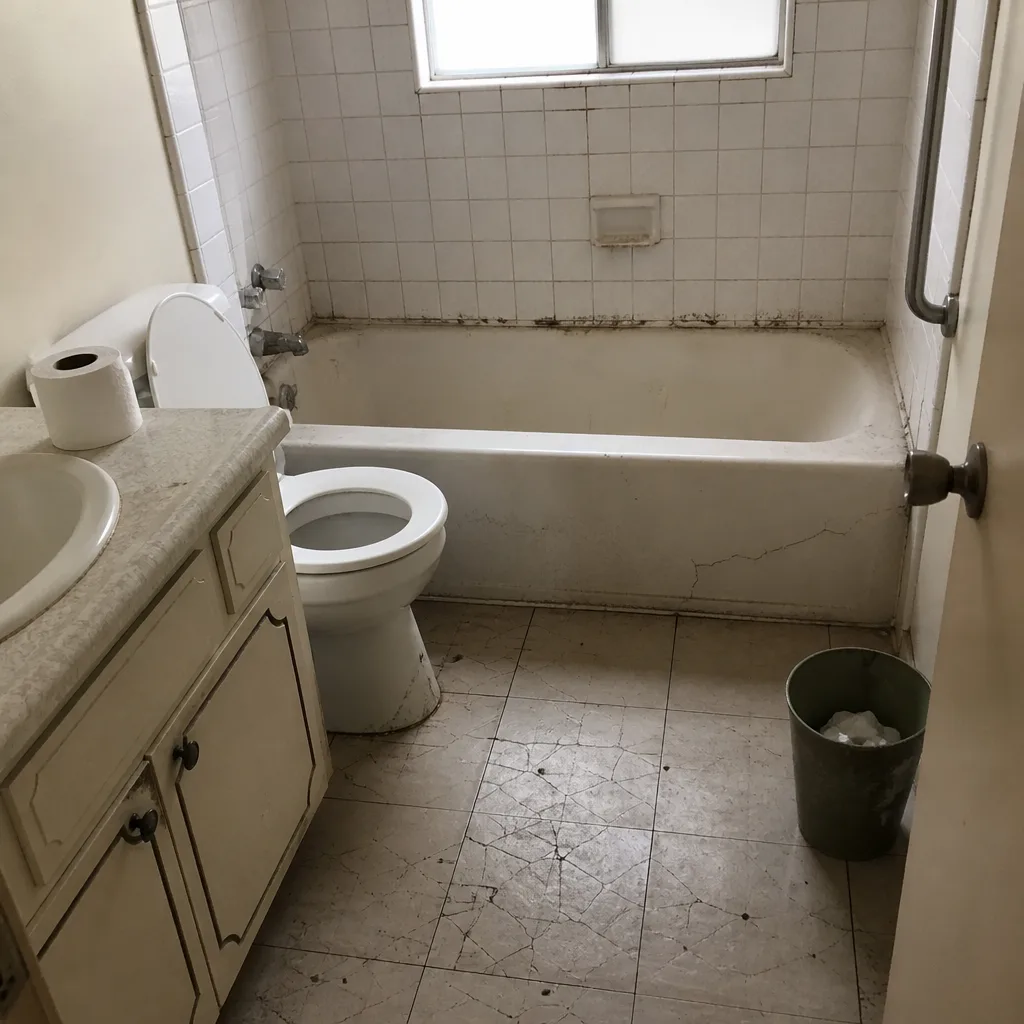 Before
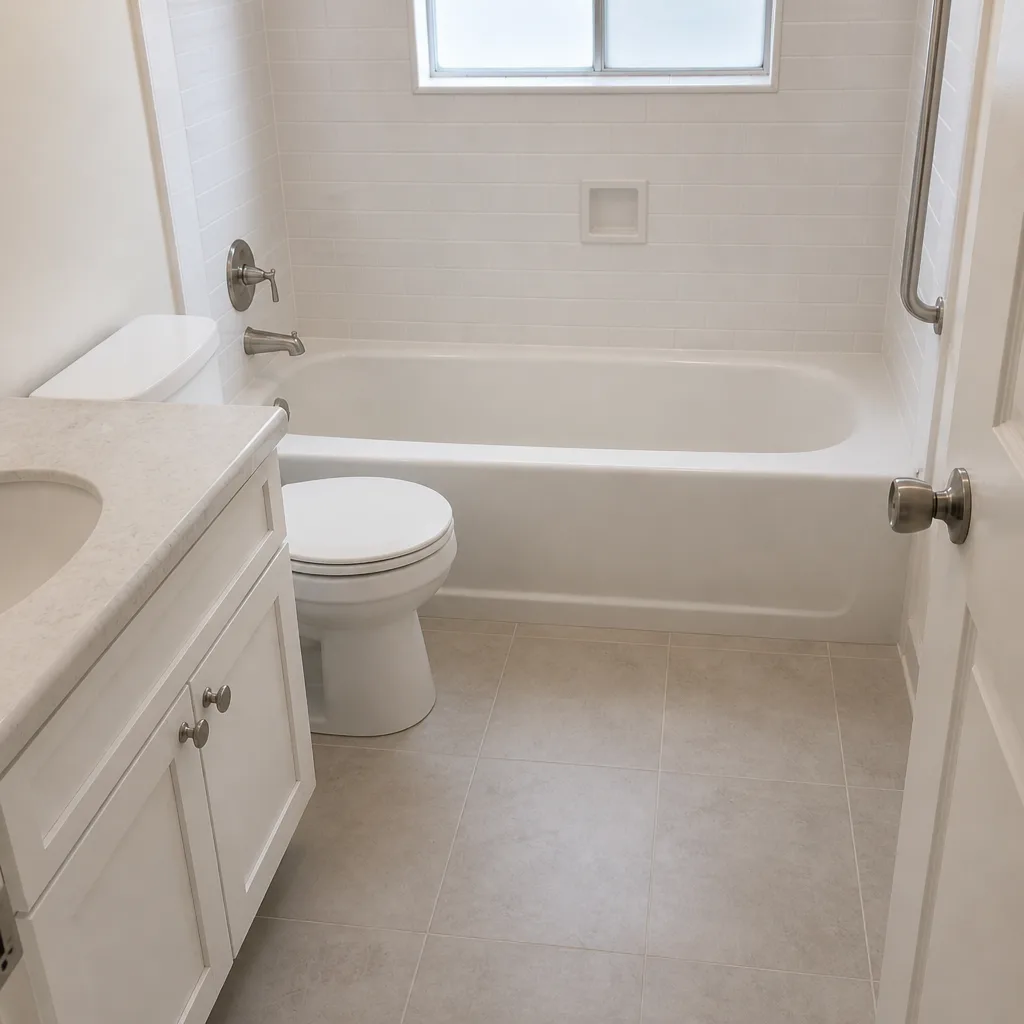 After
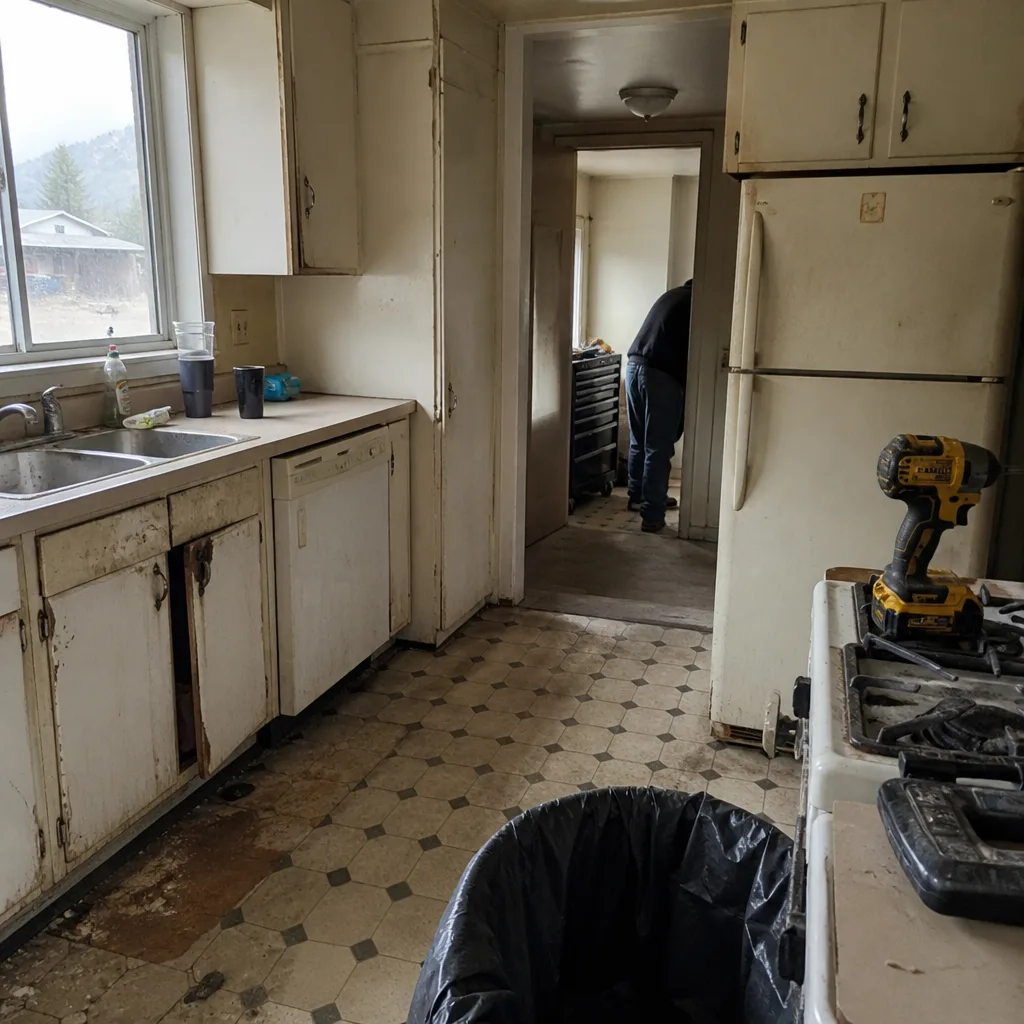 Before
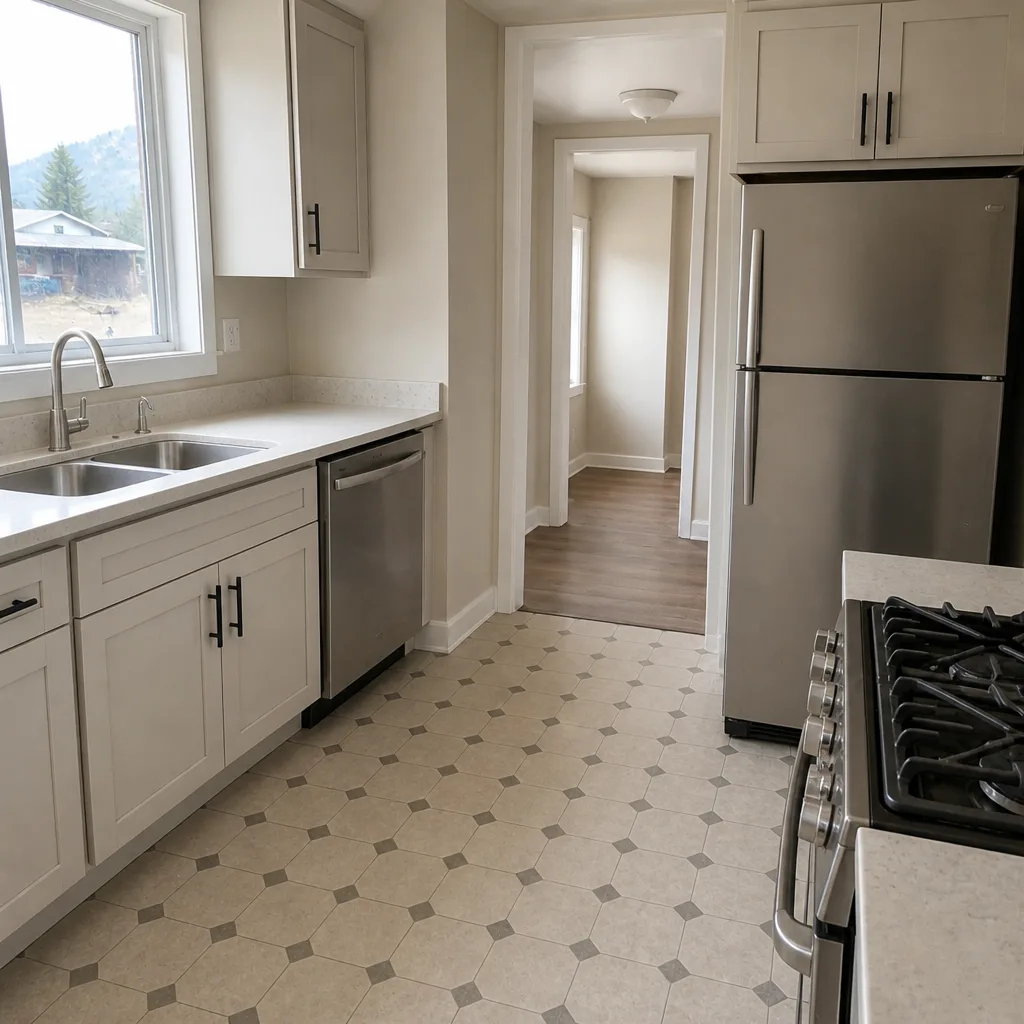 After
 Before
 After
When to Call a Professional
Call a professional if: any stucco crack is 1/8 inch or wider, or the finish taps hollow; water is visibly ponding near the slab or the pool-deck slope runs toward the house; a drain has clogged twice in a single season; you find new water staining on an interior ceiling or baseboard; a water heater’s base is rusting; or you’re planning a repair that touches the roof, electrical, gas, or structural framing. Those are the items where a written estimate and a proper scope save you more than DIY ever will. Mason Remodeling Enterprise offers free estimates in Enterprise – call (844) 797-6157. Our technicians have up to 22 years of experience, every crew member is identity-verified through The Threshold Standard before they reach your door, and you’ll get their name and photo before the visit.
Frequently Asked Questions

Twice a year – once in spring before the summer heat cycle peaks, and once in fall after the monsoon windows close. That cadence catches cracks while they’re still cosmetic and prevents the slow water intrusion that hides behind a sun-dried wall. If you see anything 1/8 inch or wider, or a hollow sound when you tap, call (844) 797-6157 for a free estimate.
Clear drains before each of the two monsoon windows – roughly June-July and again late August-September – and inspect once more after the second window. Enterprise gets its rain in short, intense bursts, and a blocked scupper that was forgiving in a dry month is the first thing to fail. Call (844) 797-6157 if you find ponding marks or soft decking.
Every 60 days through spring construction season and every 90 days otherwise, with a monthly held-to-the-light check to catch when it packs early. Local particulate loads – dust, grit, and construction debris – run above the national average, so a rigid calendar can miss it. Call (844) 797-6157 if you suspect a duct or return-plenum issue needs a proper look.
Yes, for the owner-side items – drains, stucco cracks, caulk, grading, and filters. Our written guarantee, and the 365-Day Done Right Promise, covers the workmanship; it doesn’t cover damage from maintenance that wasn’t done. Read the terms, keep photo records, and call (844) 797-6157 if you want to review what your specific project requires.
Watch for water pooling near the house after rain, cracking where the deck meets the wall, or white chalky stains at the base of the stucco. Those are signs the pool-deck drainage and grading need a look. Call (844) 797-6157 for a free estimate if any of them appear.
Yes, you’re home for the visit – and you’ll know exactly who’s coming. Through The Threshold Standard, each crew member is background-checked and identity-verified, and you receive their name and photo before the visit, then see a photo ID badge at the door. Call (844) 797-6157 to schedule your free estimate.
The Bottom Line
A maintenance checklist for an Enterprise home should be built around the local failure points, not the seasonal template you find online. Stucco cracks at corners and west faces, drains cleared before both monsoon windows, filters on a tighter-than-national cadence, and pool-adjacent moisture checks are what actually stop the slow leaks and soft drywall that cost homeowners most. Pair that with a simple photo record and you protect both your home and your workmanship guarantee. Start with two visits a year – and if it’s time for the kitchen, the bath, or a major general-contracting project, our Mason Remodeling Enterprise home page is the place to start.
Whether you’re scheduling maintenance, planning a remodel, or pricing a repair, call (844) 797-6157 for a free estimate. A live person answers every call, 24 hours a day, every day of the year. You’ll receive a written price before any work starts, and every project is covered by our written guarantee.
Written by the team at Mason Remodeling Enterprise.