Last updated November 17, 2026







Free written scope consultation - allowances, timeline, and change-order rules on paper before a single trade is scheduled
Bathroom Remodeling Troubleshooting: Common Problems and How to Fix Them
Grout cracking within the first year isn’t a materials problem. It’s almost always a substrate or movement problem that was present before the first tile went down. That single fact separates the problems worth worrying about from the ones worth ignoring. In our experience across Enterprise remodels, the same handful of failures show up again and again: cracked grout, caulk pulling away from the tub, a drain that slows months after the job wraps, a door that won’t clear a throw rug, and exhaust fans that leave the mirror fogged for an hour. This guide gives you the language to name what went wrong, the logic to sort cosmetic from structural, and the questions to ask so a failed remodel gets fixed instead of explained away.
Quick Answer
Most bathroom remodeling problems trace back to one of four root causes: movement in the substrate beneath the tile, missing or failed waterproofing, incorrect drain slope, or ventilation that doesn’t match the room. Cracking grout and separating caulk are usually movement or waterproofing failures, slow drains point to slope or debris, and a foggy, damp bathroom points to an undersized fan. Cosmetic issues you can often live with or patch yourself. Functional and structural problems belong with a licensed plumber or tile contractor, and on a recent remodel they should fall under the written guarantee.
Styles & brands we work with
- Kitchen remodeling
- Bathroom remodeling
- Home additions & ADU
- Roofing
- Windows & doors
- Driveway & pavers
- Fence
Table of Contents
- The Five Most Common Post-Remodel Failures
- Cosmetic, Functional, or Structural? How to Tell
- What You Can Fix Safely vs. What Needs a Pro
- How to Document a Defect So It Can’t Be Dismissed
- Questions to Ask When Evaluating Someone Else’s Failed Work
- Why Enterprise Bathrooms Fail Differently
- Design Decisions That Prevent the Problem Up Front
The Five Most Common Post-Remodel Failures
Nearly every complaint we hear about a finished bathroom fits one of five patterns. Each has a specific root cause, and each root cause is diagnosable before the problem gets expensive. When we look at a bathroom during an initial assessment, these are the five we’re checking first.
- Grout cracking. Hairline cracks that appear in the first year usually signal deflection in the subfloor or a missing uncoupling membrane beneath the tile. The tile itself is fine. The layer underneath is moving.
- Caulk separation at the tub or shower. A bead that pulls away within months means either the wrong caulk was used (a paintable or latex product instead of a siliconized or 100% silicone caulk) or the joint was filled before it was completely dry.
- Slow drains. A shower that drained fine on day one and slows six months later typically has a slope problem in the pan, a partially blocked trap from construction debris, or a small misalignment where the drain meets the pipe.
- Door swing interference. A door that clears the floor by a quarter inch on installation day but scrapes a bath mat, a small rug, or a slightly thicker flooring material a year later was installed without accounting for the finished floor build-up.
- Exhaust fan condensation. The mirror fogs, the walls stay damp, and a faint musty smell creeps in. That’s a fan sized for a smaller room, vented into the attic instead of outside, or ducted with too many elbows to move air effectively.
You can see the pattern. None of these are random. All of them were set in motion by decisions made during planning, rough-in, or tile installation. A homeowner who understands the root cause can describe the problem accurately, and an accurate description is what makes a contractor take the call seriously.
Cosmetic, Functional, or Structural? How to Tell
Not every problem is a warranty call, and knowing the difference saves everyone time. We sort every complaint into three categories, and this framework holds up whether you’re evaluating a brand-new remodel or an older bathroom you inherited.
- Cosmetic. Discolored caulk, a chipped tile edge, a scuffed paint line, a slightly less glossy finish on a shower pan. The bathroom still works. Water still goes down the drain and stays inside the shower. Most cosmetic issues are safe to live with or patch yourself.
- Functional. Slow drain, door that won’t close, fan that doesn’t clear steam, a shower door that leaks at the bottom sweep, hot and cold reversed at the fixture. The bathroom is doing its job, but a piece is not working the way it was designed to. Fixable, and worth fixing, but rarely urgent.
- Structural. Water visible outside the shower envelope, soft spots in the subfloor or drywall, a crack that follows a line across multiple tiles rather than sitting at a joint, a wall that has visibly moved, or a strong musty smell that doesn’t go away after a fan runs. This category needs a professional inspection. Water that has migrated into a wall cavity will cost far more the longer it sits.
The quick test: run a shower, wait 20 minutes, and look for moisture outside the tiled area. If you can see water, feel softness, or smell dampness where there shouldn’t be any, you’re past cosmetic. Call a licensed plumber or tile contractor. If the tile is intact and the fixtures work, you can usually take your time. This is the point where the crew that did the work should hear from you first, and a written guarantee should cover the fix.
What You Can Fix Safely vs. What Needs a Pro
Some jobs a homeowner can handle on a Saturday afternoon. Some can cause serious injury, or void a warranty, or create a hidden leak that destroys a floor over six months. Here’s the honest division, based on the repairs we’re called out to correct.
Safe for a homeowner
- Replacing a failed caulk bead at a tub or shower joint with 100% silicone caulk (fully dry the joint first, and caulk is not a waterproofing fix, only a joint sealant)
- Replacing a flapper, fill valve, or toilet supply hose
- Cleaning or replacing a showerhead, aerator, or drain strainer
- Adjusting a door hinge or adding a door sweep for a small gap
- Replacing a bath fan grille or cleaning the fan housing
Requires a licensed plumber or tile contractor
- Any work inside the wall or under the tile: waterproofing, pan replacement, drain re-slope, in-wall pipe repairs
- Anything touching the electrical panel or the wiring behind the fan, lights, or GFCI outlets. Cutting into an electrical circuit carries real danger and should not be a homeowner task.
- Moving a drain, relocating a fixture, or diagnosing low water pressure
- Replacing failed tile over a shower pan or a crumbling backer board
Two rules survive every bathroom we’ve walked through in Enterprise. First, if a repair touches water inside a wall, or touches electricity, get a professional. Second, if the bathroom is under a written guarantee, call the original contractor before you touch anything, so you don’t give them a reason to say you caused the failure. Our team walks every homeowner through exactly what’s covered under our 365-Day Done Right Promise, and calling us first protects that coverage.
How to Document a Defect So It Can’t Be Dismissed
A contractor who can wave a problem off as “normal settling” rarely does it because they’re dishonest. Usually it’s because nobody handed them a clean record. A clear document makes the conversation short. Here’s the sequence we suggest, in order:
- Photograph at three distances. A wide shot with a fixed reference (a doorframe, a fixture) so the location is unambiguous, a mid shot of the whole problem area, and a close-up of the defect itself.
- Take a dated video with narration. Walk into the bathroom, describe what you’re seeing in plain spoken words, and use the same phrasing every time you describe the problem. “The caulk on the back wall of the shower is separating along a three-foot section” is better than “the caulk is bad.”
- Keep a simple log. Date, time, what you observed, and what the weather or use pattern was. A cracked grout line that appears only after a hot shower is different from one that’s visible at 6 a.m.
- Note the exact product and color codes. If the fix requires matching grout or caulk, either find the original grout brand from the packing slip or ask the original contractor in writing for the color code.
- Send everything by email, and ask for a response in writing. Not by phone. A written response is a record, and a written record is what makes a guarantee claim straightforward instead of a back-and-forth.
One last note: don’t attempt a repair yourself while waiting for the contractor to respond. Even a well-intentioned patch can look like the cause of the failure. Photograph, email, then wait. If the original contractor is unresponsive, a qualified second contractor can inspect and confirm whether the failure is covered under the original scope, which is often all a homeowner needs to press the issue.
Questions to Ask When Evaluating Someone Else’s Failed Work
One of the most common situations we’re called into is finishing or correcting a bathroom that a previous contractor never really completed. The homeowner is frustrated and worried about repeating the same mistake. These are the questions that surface the truth about the condition of the job, and about how the new contractor operates.
- “Can you tell me what scope is currently finished and what’s still open?” You’d be surprised how often a finished bathroom is missing a waterproofing layer or a permit sign-off.
- “What’s your inspection process before you quote a fix?” A contractor who quotes from a photo without looking inside a wall is guessing.
- “Will I get a written price before any work begins?” At Mason Remodeling we deliver a written price on every project, every time, never as a favor. That written price should list scope, materials, and exclusions.
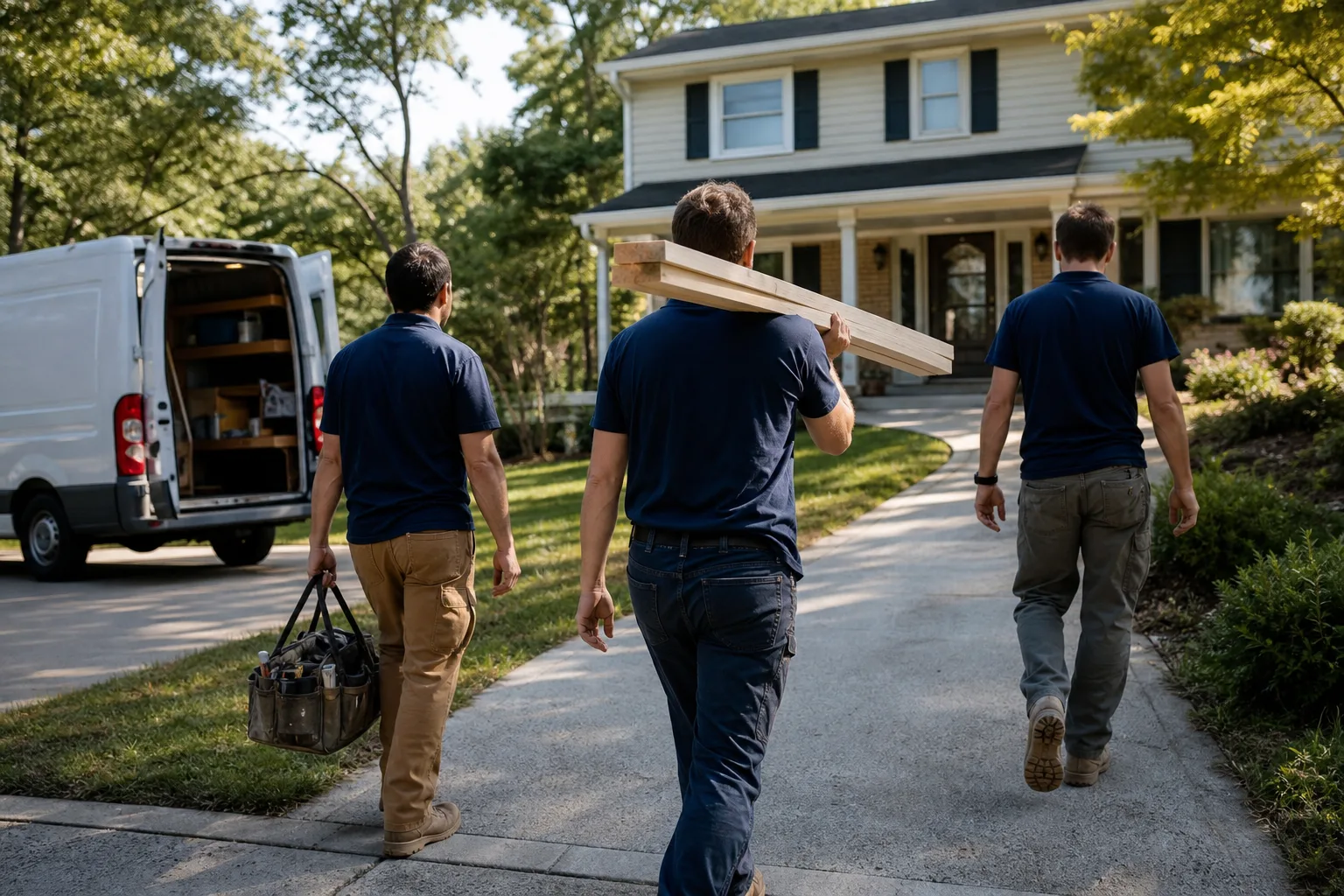
- “Who will actually be at my door, and can I see their name and photo before they arrive?” This matters more than most homeowners realize. Under The Threshold Standard, every crew member is identity-verified and background-checked, arrives in a clean marked uniform, shows a photo ID badge, and is introduced to you by name and photo before the visit. Ask any contractor you’re considering whether they can do the same.
- “What does your guarantee say, exactly?” “Backed by our guarantee” is not a guarantee. You want the coverage terms in writing, including what’s covered, what’s excluded, and for how long. Ours is 365 days from the completion date on every project, and if a repair or installation fails, we come back at no charge.
If a contractor can’t answer these clearly, they aren’t ready to fix another contractor’s work. Our technicians have up to 22 years of experience untangling jobs that started this way, and a candid assessment up front is worth more than a fast quote. It’s also why we recommend reading our bathroom remodeling in Enterprise page before you start calling around.
Why Enterprise Bathrooms Fail Differently
Enterprise has one of the more demanding climates in the region for bathroom materials, and it shapes the problems we see. The summer heat and low humidity pull the wood framing and the drywall together and apart in ways the tile layer can’t always absorb. In the summer, a shower used three times a day and then hit with air conditioning will show caulk separation faster than it would in a milder climate. In the winter, the swing back toward cooler nights and higher humidity can stress the same joint from the other direction.
We routinely see failures in Enterprise that aren’t water problems at all. A grout line that opens during the first hot month is doing exactly what it was going to do, because the subfloor wasn’t isolated from the framing movement. A powder room in a newer build here can show more movement than a bathroom in an older home, because the framing dried faster and the panels were set before the humidity had stabilized. When we quote a bathroom remodel in Enterprise, we plan for the season the room will be finished, not just the month the job starts. Those are the decisions a homeowner rarely sees, and they’re the ones that determine whether the grout is still clean in year three.
If you’re planning a larger project at the same time – a kitchen, a laundry room, whole-home – the sequencing matters too. Coordinating a bathroom with a kitchen remodel in Enterprise or a full general contractor project in Enterprise changes which trades go in first, and a scheduling conflict is one of the more common reasons a bathroom ends up in the wrong order.
Design Decisions That Prevent the Problem Up Front
The problems in this guide are easier to prevent than to fix. When we plan an Enterprise bathroom, we make a short list of decisions early that pay off for the life of the room.
- An uncoupling membrane beneath the tile. It’s the single most effective defense against the grout cracking that starts in year one, and it’s much cheaper installed during the build than retrofitted later.
- A waterproofing system that wraps the whole wet area, not just the shower floor. Pan liners alone leave corners and bench seats vulnerable. A full waterproofing layer behind the tile is the right call.
- A fan sized for the room, ducted to the exterior. CFM should match the cubic footage of the bathroom and the length of the duct run, and the duct should terminate outside the roof, not into the attic. This alone prevents the fogged-mirror problem.
- Finished-floor thickness planned before the door is hung. We deliver a written price that accounts for material build-up, so the trim carpenter and the tile setter aren’t arguing about the door in month two.
- Specification-grade fixtures. We work with Kohler, Moen, Toto, and Grohe because the internal cartridges and valve bodies are what fail on cheaper fixtures, not the finish. A cartridge that lasts 15 years costs less over time than one that lasts three.
There’s a version of every one of these decisions where the cheapest option is taken and the bathroom is done in half the time. It’s also the version most likely to show up on this list in year two. The teams that plan for the 10-year bathroom are the ones who never have to call us back for the same problem twice. When we bring a proposal to a homeowner, the choices are on the page, with a written price attached, so those decisions are made on purpose. If you’re weighing a full renovation against a targeted repair, our bathroom remodeling services overview is a good place to start.
Common Mistakes to Avoid
- Assuming a crack means bad grout. Nine times out of ten, the crack is telling you about movement in the substrate, and re-grouting without addressing the substrate just resets the clock on the same failure.
- Caulking over wet substrate. A caulk bead applied to a joint that’s still damp will fail within months, no matter how good the caulk is. Dry for 24 hours, then caulk, and don’t caulk over old caulk.
- Skipping the permit on a bathroom remodel. In Enterprise, a bathroom that relocates plumbing or electrical nearly always needs a permit and an inspection. An unpermitted job can follow you at resale and block a warranty claim.
- Ignoring the fan. A fan that isn’t vented to the exterior is a mold problem waiting to happen. If the fan was installed by the previous crew, verify where it vents before you trust it.
- Fixing someone else’s job without a written scope. Unwritten agreements make it nearly impossible to hold anyone accountable. When you hire a crew to correct a failed remodel, insist on a written price before work begins.
- Letting a “normal settling” answer end the conversation. Grout that cracks in the first 12 months is not normal settling; it’s a defect. Ask for the reason in writing.
- Choosing a low bid on a bathroom rebuild. A bathroom is the most waterproofing-dependent room in the house. The price difference between two quotes is usually the waterproofing and the substrate, and those are the two things you can’t see when the job is done.
See the difference
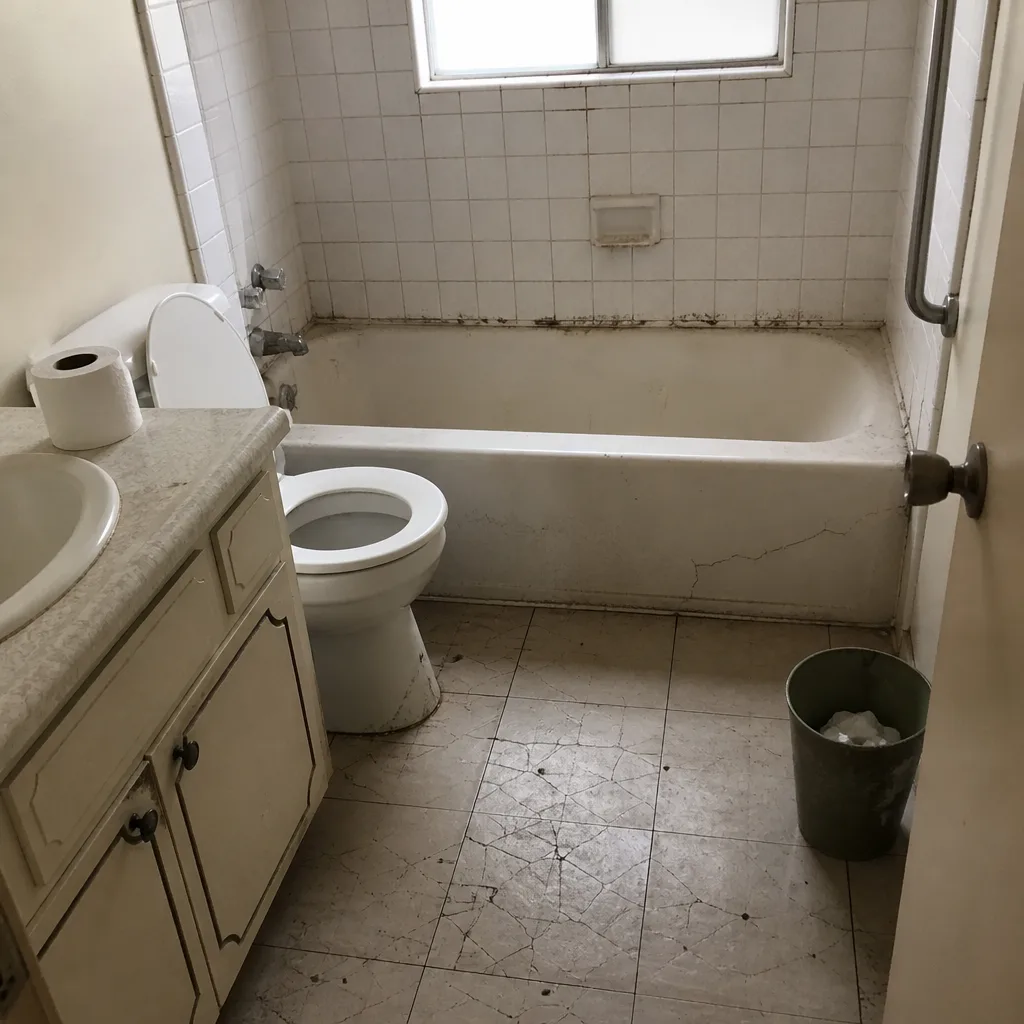 Before
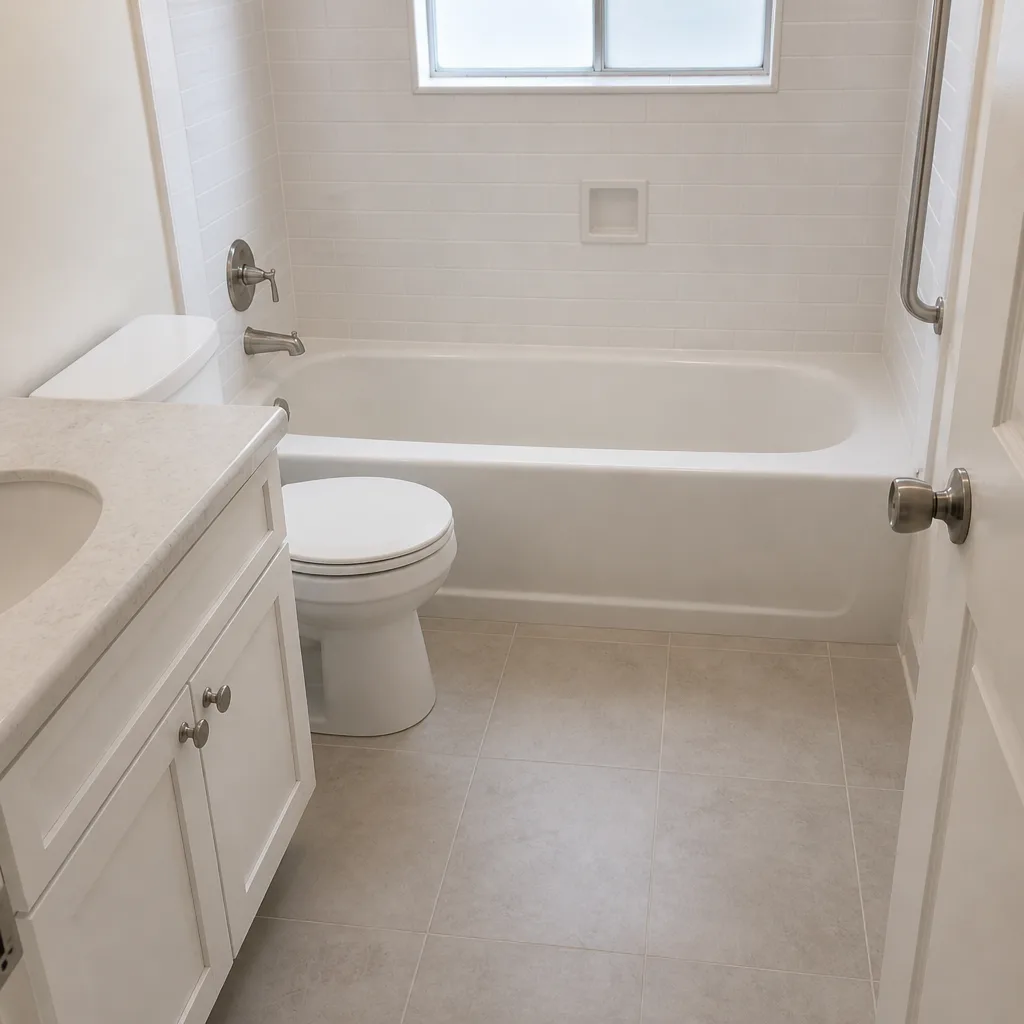 After
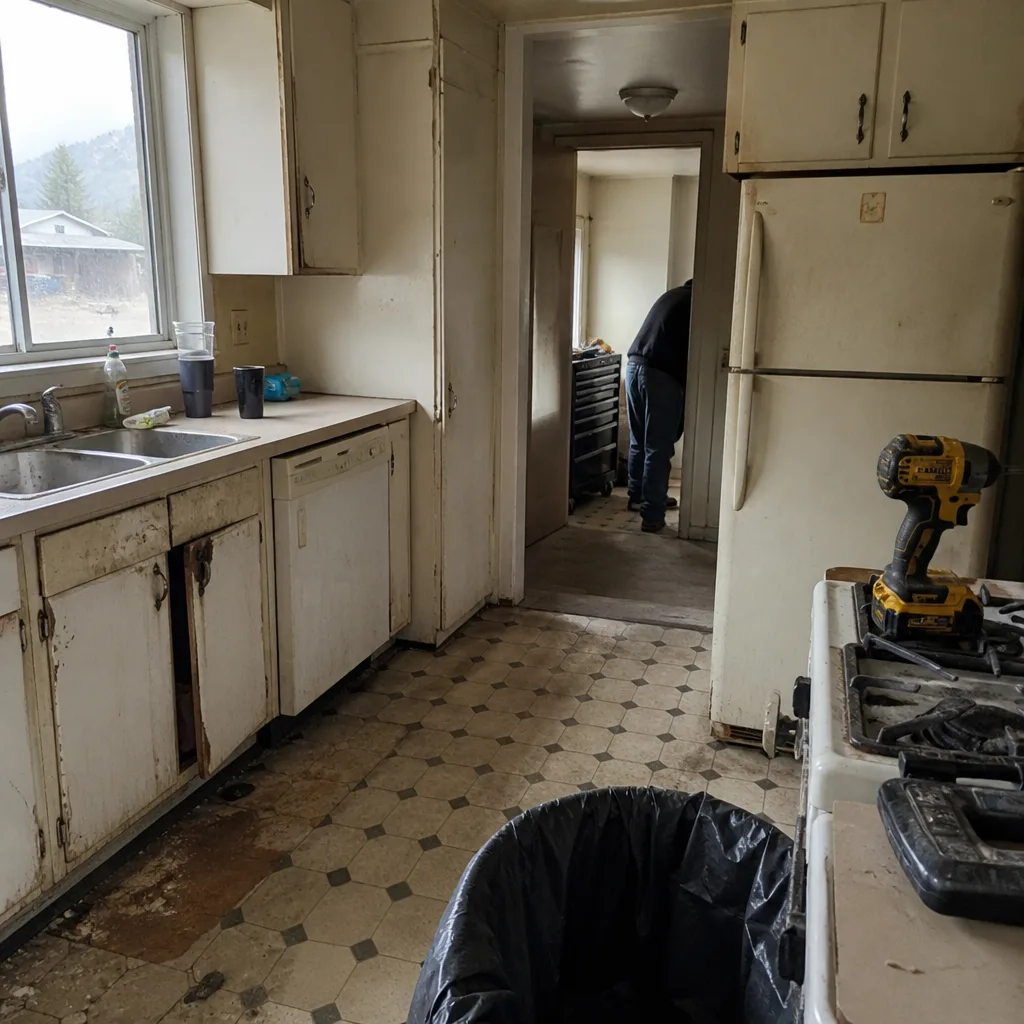 Before
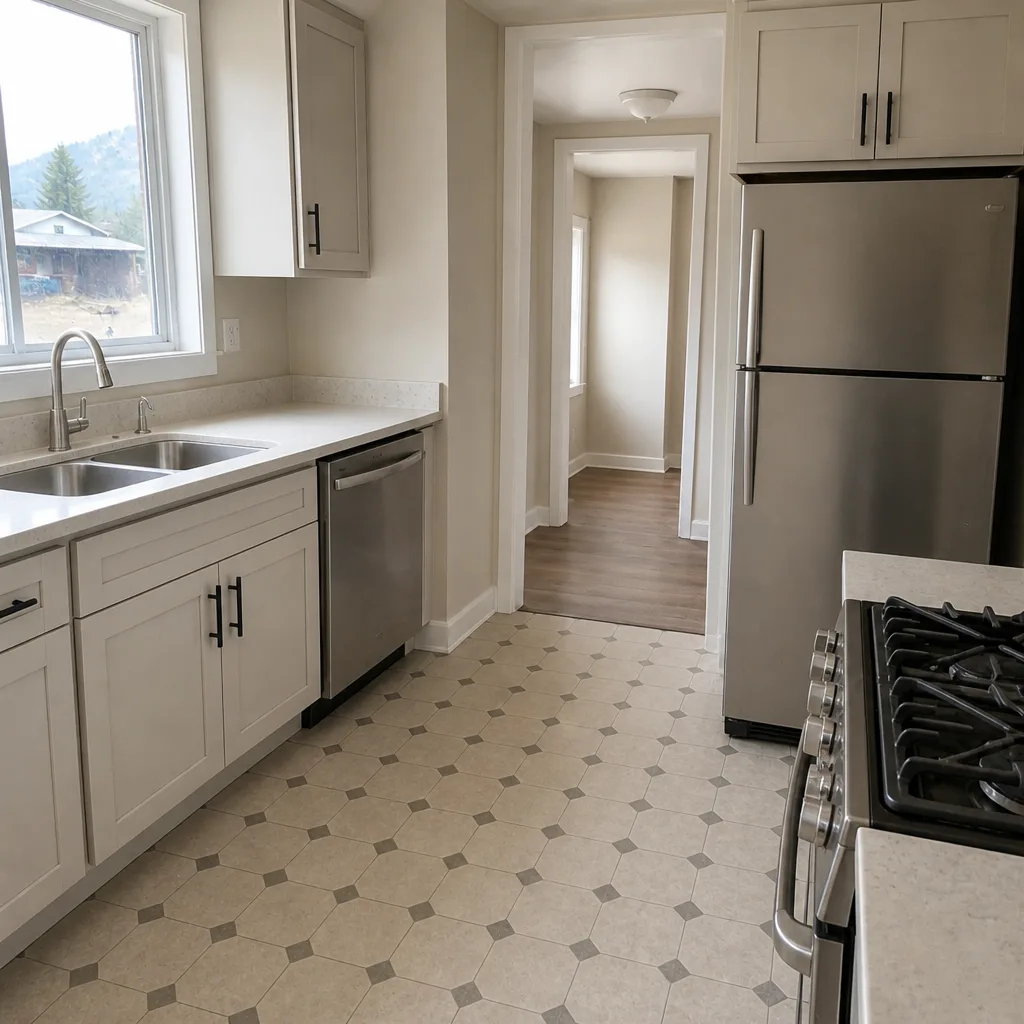 After
 Before
 After
When to Call a Professional
Call a professional the moment you see water where it doesn’t belong: staining on drywall below the shower, softness around the toilet flange, a musty smell that doesn’t clear after a long fan run, or a crack that crosses multiple tiles rather than sitting at a joint. Call if a fixture moved after installation, if a drain that once ran fast has slowed, or if the original contractor’s response was “that’s normal” without a written explanation. Call us if you don’t know who to call. Mason Remodeling Enterprise offers free estimates in Enterprise, we deliver a written price before any work starts, and we back every project with our 365-Day Done Right Promise. Call (844) 797-6157 for a free estimate. A live person answers every call, every day of the year, including weekends and holidays.
Frequently Asked Questions
The fan is almost certainly undersized for the room or ducted incorrectly. A fan needs to move enough air for the bathroom’s cubic footage, and its duct needs to run to the exterior with minimal elbows. A fan that vents into the attic moves the moisture problem out of the bathroom and into the framing. Call (844) 797-6157 to schedule a free estimate. We can size the right fan for the room and check where it’s actually venting.
Grout that cracks in the first year is not normal, and it isn’t a materials failure either. It usually points to movement beneath the tile, missing uncoupling membrane, or a substrate that wasn’t prepped correctly. Re-grouting without fixing the layer underneath will just reset the clock. Call (844) 797-6157 for a free estimate. Our technicians have up to 22 years of experience diagnosing substrate issues and giving you a written recommendation.
Usually yes, if the caulk is the only problem and the tile and substrate are intact. Remove the old bead fully, dry the joint completely, and apply a 100% silicone caulk made for wet areas. Don’t caulk over old caulk. If the separation keeps returning, the substrate underneath is likely the real cause, and that’s a professional job. Call (844) 797-6157 for a free estimate if the same joint fails more than once.
Check the written guarantee from the original contractor. On a Mason Remodeling project, coverage is 365 days from the completion date, and the terms are spelled out in writing so there’s no ambiguity about what’s covered, what’s excluded, and how to file a claim. If the work fails within that window, we come back at no cost to you. Call (844) 797-6157 if you’re unsure who to call first.
Slow drains after a remodel nearly always point to a slope problem in the pan, construction debris in the trap, or a small misalignment where the drain meets the pipe. A drain that ran fast on day one and slows months later almost never means normal wear. It’s a plumbing and tile issue, and it belongs with a licensed plumber or tile contractor. Call (844) 797-6157 for a free estimate and a written diagnosis.
Yes. When a bathroom project moves plumbing or electrical, permits and inspections are part of the job, and we build that into the written price from the start. An unpermitted bathroom can create problems at resale and can complicate a warranty claim. We deliver a written price before any work starts, and every crew member who arrives at your door is identity-verified and introduced by name and photo before the visit. Call (844) 797-6157 to schedule your free estimate.
The Bottom Line
Bathroom problems follow patterns, and the patterns trace back to decisions made in planning, rough-in, and tile installation. Grout cracks because the substrate moves. Caulk separates because it went on wet or the wrong product. Drains slow because the slope or the trap is wrong. Fans fog because they’re undersized or vented into the attic. Doors scrape because the finished floor was never planned. If you can name the category (cosmetic, functional, structural), document what you see, and ask the right questions before hiring, you can usually get a real fix instead of a reassuring answer. That’s the standard we hold ourselves to on every bathroom we touch in Enterprise.
Starting a bathroom project, or correcting one that’s gone sideways? Mason Remodeling Enterprise delivers a written price before any work starts, verifies every crew member by name and photo under The Threshold Standard, and backs every project with our 365-Day Done Right Promise. Call (844) 797-6157 for a free estimate.
Written by the team at Mason Remodeling Enterprise.